
Peoria, AZ Real Estate & Relocation Guide
Peoria, AZ Real Estate Experts
Kasandra & Gabriel Chavez of the Chavez Dream Home Team help buyers and sellers navigate Peoria's very different markets — from Vistancia and the Lake Pleasant corridor in North Peoria to Old Town and the Sports Complex — with local, data-driven guidance.
Moving to Peoria, AZ — Which Peoria Is Yours?
If you're thinking about moving to Peoria, Arizona, here's what nobody tells you up front: Peoria isn't one place. The city runs almost twenty miles north to south, and where you land changes everything — your price, your property taxes, even the kind of neighborhood you'll come home to. In the video below I walk the ground myself; underneath it, I've written out the breakdown so you can picture the move before you ever get on a plane.
The two Peorias
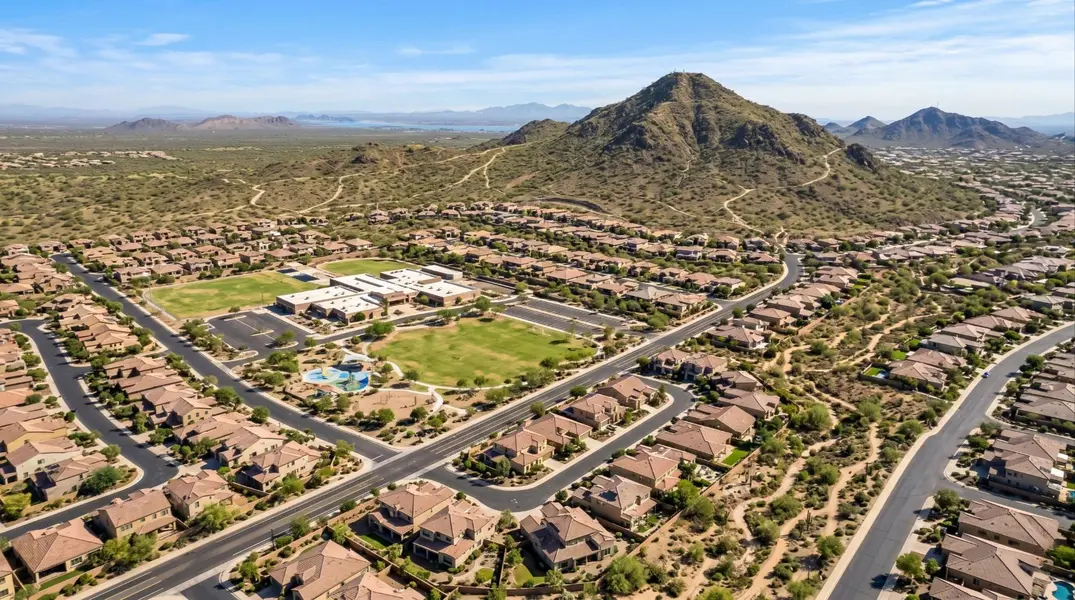
Picture Peoria as a long strip. Down south you have Old Town and the area around the Peoria Sports Complex — the historic core, built out and mature. As you head north across the Loop 101, the homes get newer, and by the time you reach North Peoria toward Lake Pleasant and the Loop 303 you're in newer communities with wider roads and mountain views. So when someone tells me they're "moving to Peoria," my first question is always: which Peoria? Up in the 85383 zip, the median home runs right around $660K. Drop into the older parts of town and some zip codes sit closer to the high $300s to mid $400s — 85345 near $379K, 85382 around $440K, 85381 around $445K. Same city name, nearly a $300K swing depending on which Peoria you pick.
North Peoria up close
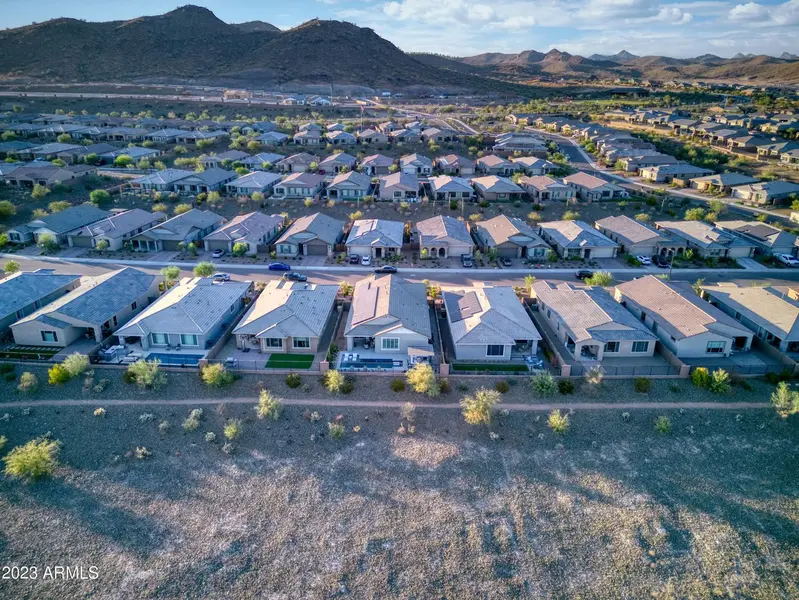
"North Peoria" isn't one neighborhood either. Most online searches point straight to Vistancia, the big master-planned community up here — it even has active-adult options like Trilogy built in — but it isn't the only way to live up north. Communities like Aloravita and Tierra Del Rio offer higher home values and big mountain-view lots with a less congested feel. Almost every community up here is built around walking trails, and almost every one has an HOA. On price, new construction generally starts in the high $400s (you can get in around $470K), with the typical new build closer to the high $500s to low $600s, and the newest neighborhoods like Northpointe running from the $500s up into the $800s.
Why North Peoria is booming: the jobs
Why is all of this getting built up here? Jobs — North Peoria is turning into a tech corridor, and that's the engine underneath the housing. Next door in North Phoenix, TSMC already has its first chip plant running, with a campus projected to bring around 6,000 high-tech jobs across its first three fabs. And right here in Peoria, Amkor broke ground at the end of 2025 on a $7 billion semiconductor packaging campus — up to 3,000 jobs — at what the city calls the Peoria Innovation Core. I'll be straight about the timeline: Amkor isn't open yet. Construction wraps around 2027 and production starts in 2028. That's not a job you walk into next month — but it's exactly why so many people are buying up here now. They can see what's coming and want to be in before it fully arrives.
The cost that isn't on the price tag: CFDs
When you're choosing between older Peoria and the newer communities up north, there's a cost that doesn't show up on the listing price. Many newer master-planned communities sit inside a Community Facilities District, or CFD — if you're coming from California, think Mello-Roos. It's an extra line on your property-tax bill that helped fund the roads, parks, and water that made the community possible, and it's tied to where you buy. A real example: two Peoria homes that both sold this past May at roughly the same price. One in the established 85381 area sold around $625K with property taxes near $2,145 a year and no CFD; the other in a newer 85383 community sold for a little less but carries taxes around $2,755 a year — about $610 apart, and the CFD is the difference. And if you buy brand-new, expect your property tax to step up the year after you close, once the county catches the home up to its finished value.
Established Peoria and the HOA divide
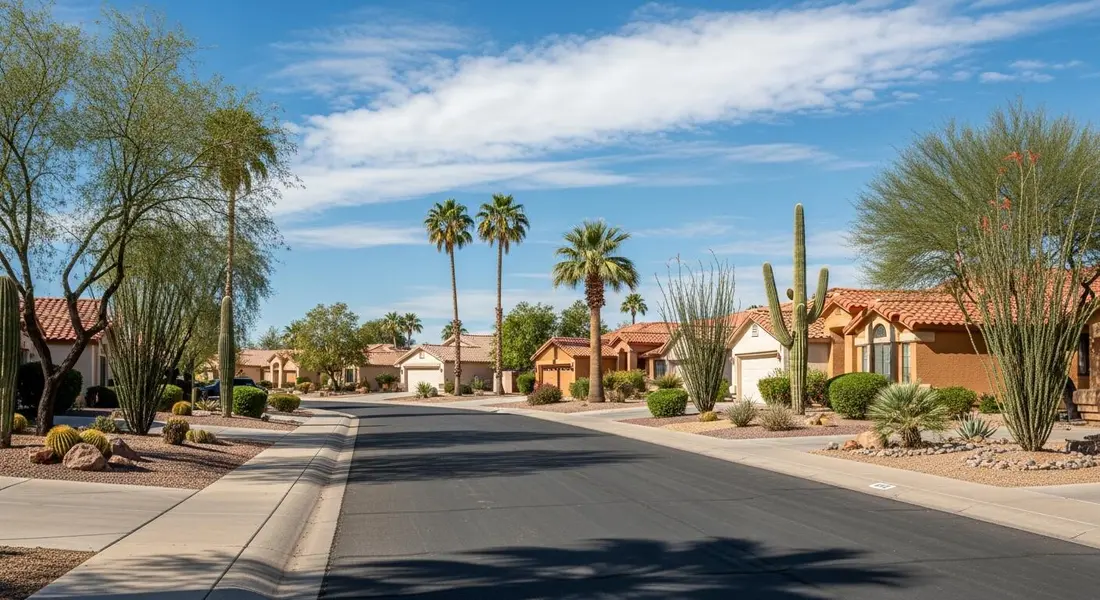
North Peoria isn't right for everyone. If you want to be closer to downtown Phoenix, that's the southern end — Old Town, the Sports Complex area, the P83 district — with more resale homes, more established neighborhoods, and many communities without an HOA. Some of those older zip codes sit in the high $300s to mid $400s versus that $660K up north. The HOA question is a real lifestyle difference: up north almost every community has one, which keeps trails, parks, and front-yard standards consistent; down south you'll find many homes with no HOA at all, or one that just maintains a park. Less brand-new, but often simpler on the tax side and more freedom with your own place.
Things to do
Up north, the outdoors is the whole draw — Lake Pleasant is right there for boating, kayaking, paddleboarding, and hiking along the edge of the desert, and people build their weekends around it. The shopping and dining are catching up to the rooftops: The Trailhead at 83rd Avenue and Happy Valley Road is a new Safeway-anchored mixed-use spot, with Jinya Ramen Bar already open and Crust Italian Kitchen and more dining arriving in 2026. In spring, the Peoria Sports Complex hosts spring training — the Mariners and Padres share it — and the P83 district brings restaurants and nightlife, with Westgate over in Glendale an easy hop for concerts and the arena.
Commute and getting around
The Loop 101 and Loop 303 are the main arteries up here, feeding onto the I-17 into town. If your job is downtown Phoenix or near Sky Harbor, going further north is a real trade-off — from Vistancia you're looking at roughly 45 minutes off-peak, longer at rush hour. But that's shifting because of the jobs: a lot of people moving up here aren't driving downtown at all. If your work ends up tied to the tech corridor — TSMC in North Phoenix or Amkor here in Peoria — you're talking a short hop on the 303 or 101 rather than an hour on the I-17. The commute question isn't just "how far from downtown" anymore; it's "where is my work actually going to be." Either way, drive it yourself at the time of day you'd really be making it, before you decide.
Which side fits you
If you want brand-new or a newer planned community, amenity-heavy, with the outdoor lifestyle and room to see the Sonoran Desert around you — and especially if your work will be up here — North Peoria is probably your lane. If you want closer-in, more established, simpler on the tax side, maybe no HOA, look south around Old Town and the Sports Complex. Neither side is "better." It's about which Peoria fits the life you're actually trying to build — which is exactly the conversation worth having before you move, not after. If any of this sounds like your situation, reach out; no obligation, just real information, and we'll figure out which Peoria is your Peoria.
Commuting from Peoria to Phoenix — How to Choose the Best Peoria Neighborhoods?
If you'll be driving to Phoenix for work, the neighborhood you pick matters more than the map suggests. A commute that looks like 30 minutes can run closer to 45 at 7:30 a.m., and the real question isn't just distance — it's which highway you're near and whether that highway goes where you actually work. Loop 101 serves central Phoenix, Scottsdale, and Tempe; Loop 303 is the West Valley connector toward Glendale, Goodyear, and I-17; and I-17 is fastest into downtown once you reach it. The Census-reported Peoria-to-Phoenix average is about 25–30 minutes, but where you land within Peoria's nearly-twenty-mile spread swings that number hard. In the video below I break down highway access, walk through how Vistancia, Westwing Mountain, and Fletcher Heights each commute differently, and share the one thing I tell every client: drive it yourself at the hour you'd really be driving it, before you commit.
Explore More About Peoria, AZ
Want a deeper feel for Peoria beyond the listings? These local guides cover lifestyle, location, cost of living, and the neighborhoods buyers are watching most closely.
Search Peoria, AZ Homes by Feature
Most Peoria buyers aren't starting with beds and baths — they're starting with the one thing the house has to have. These searches pull live from the Arizona Regional MLS and update daily, so you're always seeing what's actually available right now.
Peoria, AZ Featured Listings

Listed by Linda Booker of DeLex Realty


Listed by Kirby Beaver of RE/MAX Excalibur