


Should You Remodel Your Stetson Valley Home Before Selling?
With new coffee shops, dining, and retail announced along Norterra Parkway and Happy Valley Road, should I remodel my older Stetson Valley home before selling, or will buyer demand from TSMC and Deer Valley workers make updates less critical?
Skip the remodel, but don’t skip the preparation, because the demand you’re counting on actually raises the bar on condition rather than lowering it. Full pre-listing remodels rarely return their cost, and the TSMC-and-Deer-Valley buyer is typically a relocating, dual-income professional with no time for projects who is often cross-shopping your resale against new construction up the corridor, which makes move-in-ready presentation worth more, not less. The winning play in today’s more balanced market is targeted prep, honest repairs, and a pricing strategy built on what comparable Stetson Valley homes are actually doing, not a renovation budget.
The instinct behind your question is understandable. When the corridor around you is visibly booming, with restaurants signing leases at the Norterra node, hotels rising, and semiconductor money flowing up I-17, it’s tempting to believe the area will sell the house for you. The area will absolutely help. It will fill your showing calendar in a way a sleepier submarket can’t. But there’s a difference between demand for your location and an offer on your house, and the gap between those two things is exactly where condition, presentation, and pricing live. Here’s how I’d walk you through it if your Stetson Valley home were my listing.
What the New Retail Actually Does for Your Sale
The new retail near Norterra Parkway and Happy Valley Road helps a Stetson Valley sale in two ways, a deeper buyer pool and a stronger marketing story, but it does not do the work your house still has to do. The amenity growth at the I-17/Happy Valley node is real and worth featuring: the established Shops at Norterra already anchor the area, a new restaurant-and-retail district is opening in waves nearby with hotels alongside, and the broader corridor keeps adding the kind of daily-life conveniences that make a neighborhood easier to say yes to.
For your sale, that translates into two concrete advantages. First, a deeper buyer pool: every new amenity expands the set of people who want to live within a few minutes of it, and Stetson Valley, in the City of Phoenix (ZIP code 85083) and tucked against the Deem Hills with that node as its front door, sits squarely in the catchment. Second, a stronger marketing story: “minutes from a growing dining and retail district” is a genuine lifestyle pitch, not filler.
What the retail boom does not do is transfer any of its shine to your kitchen. Buyers drawn to the area by the amenities still walk your specific home with the same eyes they’d use anywhere, and in a market where they have multiple Stetson Valley listings to choose from, the neighborhood gets them in the door; your house still has to win the showing. Think of the amenity story as free advertising for the area, and your prep work as the thing that converts the traffic.
Who the TSMC and Deer Valley Buyer Actually Is, and Why That Raises the Bar
Demand from TSMC and Deer Valley employers is more likely to raise the bar on a Stetson Valley home’s condition than to lower it, because of who that buyer is. In this post, “Deer Valley” means the north Phoenix employment area around I-17 and Loop 101, and TSMC’s campus sits farther north at Loop 303 and I-17. Now to the heart of your question: will corridor demand make updates less critical? It’s more likely to do the opposite. The household relocating for a semiconductor or healthcare or corporate job up this corridor is typically dual-income, time-poor, and often moving from out of state on a compressed timeline, shopping first by photos and video and shortlisting only what presents well on a screen. That buyer pays a premium for move-in-ready and discounts hard for “needs work,” not because they can’t see potential, but because they have no bandwidth to realize it.
And there’s a second pressure your question doesn’t account for: many of these same buyers are cross-shopping your resale against new construction farther up the corridor, where everything is under warranty and nothing needs touching. Your home’s advantages over a new build are real: established neighborhood, mature landscaping, bigger lot, no construction wait, the Deem Hills at your back. But a dated, worn presentation hands the comparison to the builder. The employment boom fills your showings; it doesn’t lower the standard. If anything, it imports a more presentation-sensitive buyer than North Phoenix resales used to face. That’s also why your marketing needs to work remotely, and my guide to marketing a home to out-of-state relocating buyers applies to this corridor directly.
– Eva Waggoner
Remodel vs. Prepare: The Distinction That Protects Your Money
Here’s the line that saves Stetson Valley sellers five figures: a remodel changes what your house is; preparation changes how your house shows. Pre-listing remodels, such as new kitchens, gutted bathrooms and reconfigured spaces, rarely return their full cost at closing, and they carry three quiet penalties on top of the math. You renovate to your taste, and your buyer would have chosen differently. You spend months of carrying costs while contractors work, in a market where conditions can shift. And you anchor your list price to your spending rather than to the comps, which is how over-improved homes end up over-priced and sitting.
Preparation is a different animal with a different return profile. These are the prep items that tend to come back to you when a 2000s-era Stetson Valley home sells:
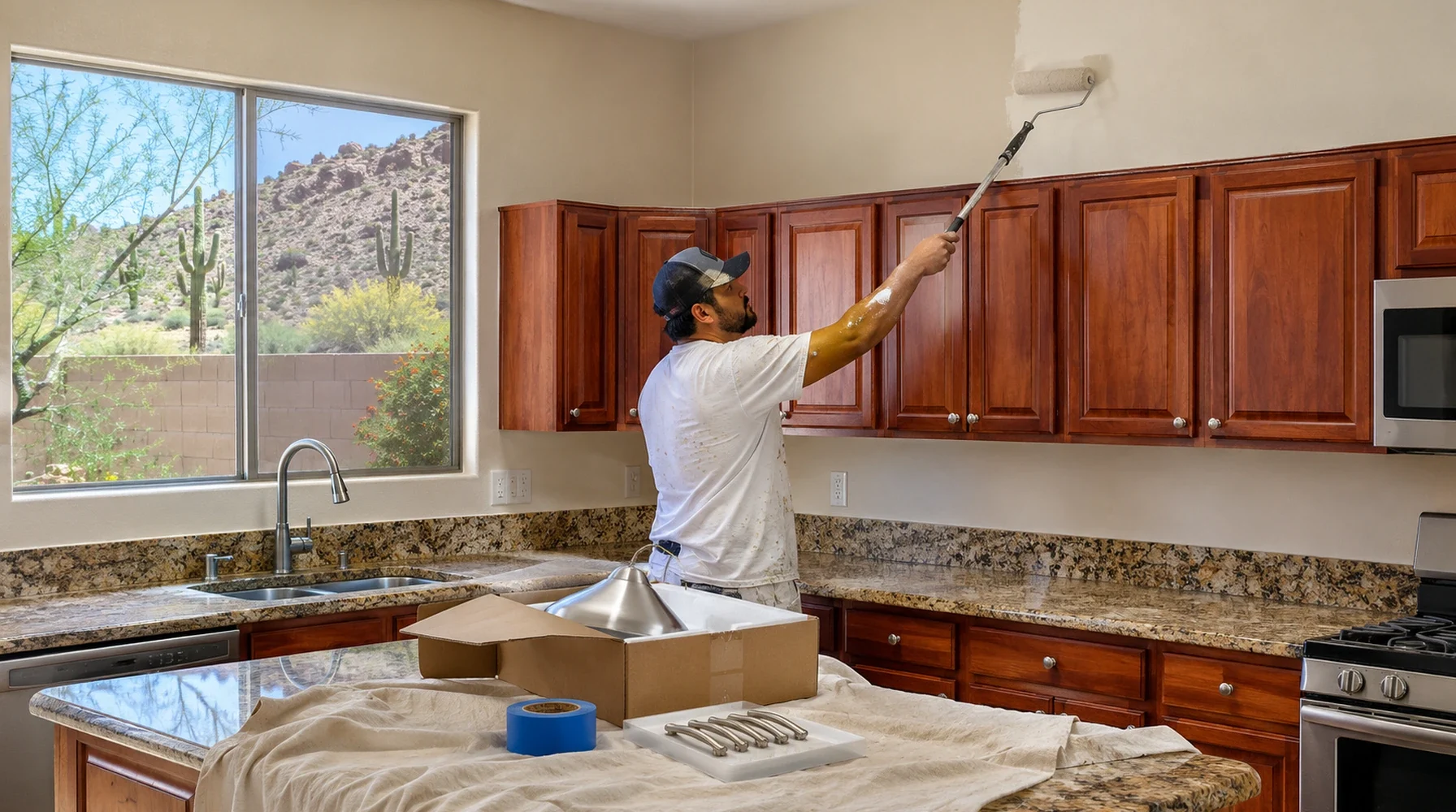
- Fresh neutral paint: New neutral paint changes how every room looks in person and in listing photos for a modest cost.
- Genuinely worn flooring: Replace flooring only where it is truly worn, rather than redoing every room.
- Lighting and hardware: Updated light fixtures and cabinet hardware bring an older finish palette forward without replacing cabinets or counters.
- Professional deep cleaning: A deep clean costs relatively little and shows up in every photo and every showing.
- Desert landscaping refresh: Refreshed desert landscaping and crisp curb appeal set the first impression from the street and in the first listing photo.
- Deferred maintenance list: Knocking out the small repairs you have put off matters, because visible neglect makes buyers wonder what they can’t see.
These are the dollars that come back, and the full breakdown lives in my guide to what to fix versus leave as-is before selling, with the budgeting side covered in how to budget for repairs and prep before listing. This is usually where I slow sellers down: the question isn’t “what would make my house nicer,” it’s “which specific dollars will this market repay.”
What a 2000s-Era Stetson Valley Home Specifically Needs
A 2000s-era Stetson Valley home usually needs a cosmetic refresh and a close look at its aging mechanical systems, not a gut remodel. Stetson Valley’s housing stock is largely from the 2000s build-out, which means most homes there share a predictable profile and a predictable buyer-objection list. The finish palette of that era (builder oak or cherry cabinetry, original granite, oil-rubbed bronze, heavy media niches) reads “dated but functional” to today’s buyer: usually a paint-hardware-lighting refresh problem, not a gut-remodel problem.
The bigger items are mechanical, because twenty Arizona summers are hard on equipment. HVAC systems, water heaters, and pool equipment from the original build are at or past typical service life, and tile-roof underlayment (the waterproof layer under the roof tiles) from that era is approaching its replacement window. This is where I strongly recommend a pre-listing inspection. In Arizona, the buyer’s 10-day inspection period under the AAR contract (the standard Arizona Association of REALTORS purchase contract) will surface these items anyway, and discovering them mid-escrow puts the negotiation on the buyer’s terms. Finding them first lets you decide whether to repair, disclose with a credit strategy, or price accordingly, and it keeps your SPDS (the Seller’s Property Disclosure Statement, where you share what you know about the home) clean and confident.
Then play your hand. Deem Hills views and hillside sightlines are Stetson Valley’s signature asset, so trim, stage, and photograph to feature them. And if you’re in one of the gated enclaves, gather your HOA information early; once you’re under contract, the HOA disclosure packet is delivered electronically through the title company.
Pricing Strategy Beats Renovation Budget
In today’s more balanced North Phoenix market, pricing your Stetson Valley home does more work than renovation ever will. In a balanced market, neither side holds a strong upper hand, so an over-priced listing has more competition to lose to.
Here’s the part the remodel question usually hides: in a market where listings compete, buyers negotiate, and homes take longer to move than they did in the frenzy, pricing is the lever. What I watch for here is the expensive double mistake: a seller over-improves, then over-prices to recover the spend, and the home sits while cleaner-priced competition sells. The disciplined alternative is to comp your home both ways before spending a dollar. A comp, short for comparable sale, is a recently sold home similar to yours. Compare what your home would likely command prepared-but-not-remodeled against what comparable updated homes are achieving, minus what the updates would actually cost you in money and months.
Sometimes that math says do the targeted prep and price confidently. Sometimes it says skip even some of the prep and position the price to let the buyer choose their own finishes. An honest “priced for your updates” strategy with a credit where appropriate often beats a rushed renovation, especially when relocation buyers simply want the math to work. Either way, the number comes from the comps, not from your receipts, and my framework in how much to list your West Valley home for walks through exactly how that analysis runs. At this stage, I help clients price the prepared version and the as-is version side by side, so the listing decision is a comparison, not a leap.
Frequently Asked Questions About Remodeling a Stetson Valley Home Before Selling
Should I remodel my kitchen before selling my Stetson Valley home?
Usually no. Full kitchen remodels rarely return their cost at closing, and buyers often would have chosen differently anyway. A refresh of paint, hardware, lighting and deep cleaning typically captures most of the presentation benefit at a fraction of the spend.
Do TSMC and Deer Valley workers pay more for updated homes?
They tend to pay a premium for move-in-ready, because relocating dual-income buyers have little time for projects and often cross-shop resales against new construction. Corridor demand fills showings; it doesn’t lower the presentation standard.
What should I fix before listing a 2000s-era home in North Phoenix?
Prioritize the mechanical items twenty Arizona summers stress, such as HVAC, water heater, pool equipment, and tile-roof underlayment, plus deferred maintenance buyers can see. A pre-listing inspection surfaces these before the buyer’s 10-day inspection period does.
Is new retail near Norterra Parkway and Happy Valley Road good for sellers?
Yes. The maturing dining and retail node deepens the buyer pool for nearby neighborhoods like Stetson Valley and strengthens the lifestyle story in your marketing. It helps the area attract buyers; your home’s condition and pricing still determine the offer.
Is it better to sell my Stetson Valley home as-is or do repairs first?
It depends on the math. Comp the home both ways, prepared versus as-is with adjusted pricing or credits, and compare against what the work would cost in dollars and time. In a balanced market, a clean price often outperforms a rushed renovation.
Is Stetson Valley in Phoenix or Glendale?
Stetson Valley is in the City of Phoenix, ZIP code 85083, in north Phoenix near the Deem Hills. It is not part of Glendale or Peoria.
Is the North Phoenix housing market balanced right now?
North Phoenix is in a more balanced market, where neither buyers nor sellers hold a strong upper hand. In that kind of market, a clean price often outperforms a rushed renovation.
Should I get a pre-listing inspection on my Stetson Valley home?
For a 2000s-era home it is often worth it. It finds aging HVAC, water heater, pool equipment and roof underlayment issues before the buyer’s 10-day inspection period does, so you can repair, offer a credit or price for them.
The Bottom Line
The corridor’s growth is your ally, but it’s not your stand-in. The new retail and the employment boom will bring buyers to Stetson Valley’s door in numbers most submarkets would envy, and those same buyers, time-poor and choice-rich, will reward the home that’s prepared, honestly disclosed, and priced from the comps rather than from a renovation invoice. So skip the remodel. Spend selectively on the prep that returns, get ahead of the inspection items a 2000s home will surface, feature the views and the location story, and let pricing strategy do the heavy lifting. Demand decides how many people walk through. What you do before listing decides which one of them writes the offer.
Knowing which dollars this market will repay is how you sell with clarity and confidence. That’s the planning I bring to every seller: we price the prepared and as-is versions side by side, so your decision rests on today’s market and your unique situation instead of a renovation guess.
If you want to talk through whether remodeling or targeted prep makes sense for your specific Stetson Valley home, let’s explore your options. You can reach me, Kasandra Chavez with the Chavez Dream Home Team, at 928-910-7401, or grab a time on my calendar.