


What Do Phoenix Transplants Wish They’d Known Before Buying?
What do recent Phoenix transplants wish they’d known before buying, and how can I avoid those mistakes?
The most common regrets cluster in four places: underestimating the summer, choosing an area before understanding the commute and community, rushing due diligence to win a home fast, and overlooking the desert-specific carrying costs. The good news is that every one of these is avoidable with research before you buy, which is exactly what separates transplants who love their move from the ones who wish they’d done a few things differently.
Nobody relocates hoping to have regrets, and most Greater Phoenix transplants are genuinely happy they came. But the ones who hit friction usually hit the same handful of predictable snags, and hearing them in advance is the cheapest insurance there is. As of mid-2026 the metro is more balanced than it was a few years ago, which gives you something valuable that recent buyers didn’t always have: time to do this right. What I’ll do here is walk through the regrets I hear most and how to sidestep each. None of these require insider knowledge to avoid, just a willingness to plan a few things before you sign rather than discover them afterward. Let’s turn hindsight into a plan.
Regret #1: Underestimating the Summer
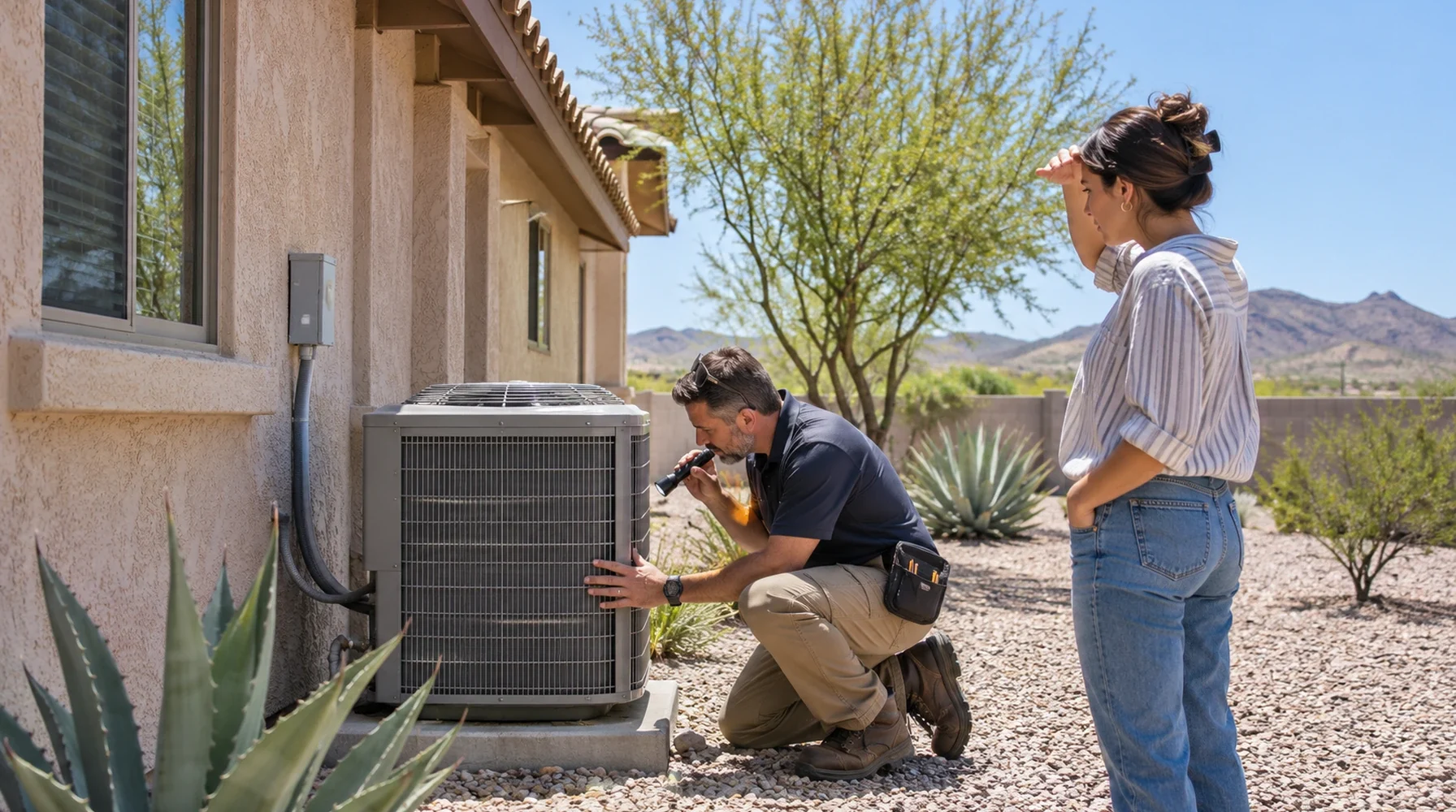
The single most common thing Greater Phoenix transplants wish they’d taken more seriously is the intensity of summer. The heat is real, air conditioning runs hard for roughly four months, and the cooling costs that come with it belong in your budget from day one, not as a surprise on your first July bill. This isn’t a reason not to move, the trade-offs are worth it for most people, but it’s a reason to plan. The City of Phoenix publishes heat-safety guidance and resources that are worth reading before your first summer.
This is usually where I slow buyers down, because a home’s efficiency, insulation, and AC condition matter enormously here in a way they may not have in a milder climate. Factor summer realities into both your budget and your home choice, and the season becomes something you’re prepared for rather than blindsided by. In practical terms, two homes at the same price can cost very different amounts to live in from June through September, and the older, less efficient one is the one that quietly stretches your monthly budget.
It also helps to visit, or at least closely research, what a specific area feels like in the peak of summer rather than only in the pleasant months. A neighborhood that charms you in February behaves differently in July, and things like shade, orientation, pool ownership, and the age of the cooling system shift from afterthoughts to daily-life factors. Transplants who account for the hottest weeks when they buy tend to settle in comfortably; the ones who picture only the postcard version of Arizona are the ones caught off guard.
Regret #2: Committing to an Area Before You Understand It
The second regret is choosing a community from photos or a quick visit, then discovering the commute is punishing or the neighborhood’s daily rhythm doesn’t fit. Greater Phoenix is large and car-dependent, so an area that looked perfect online can feel very different once you’re driving it every day. What I watch for here is out-of-state buyers who fall for a listing before they’ve mapped their real commute or spent time understanding how a community actually lives.
Slow down long enough to map the drive that matters most, in real conditions, and to understand the community’s texture before you commit. Buying remotely raises the stakes on this, which is why I put together guidance on buying a Peoria home from out of state via virtual tour and on timing your Peoria purchase well. The reason this matters so much: you can renovate a kitchen after you move in, but you can’t change the drive to work or the way a neighborhood lives day to day.
Regret #3: Rushing Due Diligence to Win a Home
The third regret is sacrificing protection to move fast. Even in a more balanced market, motivated relocating buyers sometimes waive or shortcut the very steps that protect them, then inherit problems they could have caught. Arizona’s standard contract gives you an inspection period, usually ten days, to investigate the home thoroughly and negotiate based on what you find. That window exists for your benefit, so use it fully.
Due diligence simply means the checking you do on a home after your offer is accepted and before you are fully committed: the inspection, reviewing documents, and confirming the numbers. The inspection period is the stretch of the contract set aside for that work, which is why giving it up is giving up your best chance to find a problem while you can still act on it.
The pattern I see most is buyers so eager to be done that they treat the inspection as a formality. It isn’t. A careful inspection and a well-structured offer are how you avoid the most expensive regrets of all, and the inspection period is your window to renegotiate or walk away based on what you actually find. Even in a faster-moving moment, the buyers who protected themselves rarely look back with regret, while the ones who waived that protection to win a bidding war sometimes spend years paying for what a thorough inspection would have surfaced. I walk through protecting yourself in guides on writing an offer that protects you after inspections and on weighing move-in-ready versus fixer-upper as a relocating buyer.
Regret #4: Overlooking the Desert Carrying Costs
The fourth regret is budgeting only for the mortgage and missing the desert-specific costs that come with homeownership here. Beyond summer cooling, new-build communities often carry desert-landscaping requirements, HOA rules, and other line items that newcomers don’t anticipate. Property taxes vary by county and community, and homeowner’s insurance is its own line item worth pricing before you commit rather than after. Water security is also a topic worth understanding as a long-term Arizona homeowner; the state’s Assured Water Supply program is a useful primer on how supply is managed across the region. Taken together, these are the costs that quietly separate a budget that holds from one that feels tight by the first summer.
Carrying cost is everything it takes to own the home each month, not just the mortgage payment: cooling, insurance, property taxes, and HOA dues (the fees a homeowners association charges to run the community and enforce its rules). Adding those up before you shop tells you the price range that truly fits, rather than the one a lender approves.
At this stage, I help clients narrow their focus to homes whose full carrying cost, not just the price, fits their budget, so there are no unwelcome surprises after closing. One resource I point relocating buyers to covers the hidden costs of desert-landscaping mandates on new North Peoria homes.
– Renee A, Phoenix, AZ
How to Buy Without the Regret
The thread running through every one of these is the same: research before you commit. Take the summer seriously and budget for it, understand a community and its commute before you fall for a listing, use your full inspection period, and price in the desert carrying costs from the start. Do those four things and you sidestep nearly every regret transplants mention. The buyers who love their move are almost always the ones who slowed down at the right moments, which is a very different thing from moving slowly. Slowing down at the right moments means using your inspection period fully, mapping the commute before you fall for a listing, and pricing the full carrying cost, not dragging your feet on a good home once you’ve done the homework. My job is to help you know where to slow down, so your relocation becomes the good decision you hoped it would be.
Four habits before you buy in Greater Phoenix cover nearly every regret transplants mention:
- Respect the summer: Budget for about four months of hard AC use and weigh a home’s efficiency and AC condition before you choose it.
- Learn the area first: Map your real commute in actual conditions and understand how a community lives before you fall for a listing.
- Use your inspection period: Arizona’s standard contract usually gives you ten days to inspect, renegotiate or walk away, so use all of it.
- Price the full carrying cost: Add cooling, HOA rules, property taxes, insurance and any landscaping requirements to the mortgage before you commit.
Frequently Asked Questions About Buying a Home as a Phoenix Transplant
What do most Phoenix transplants regret?
Most commonly: underestimating the summer heat and cooling costs, committing to an area before understanding the commute and community, rushing due diligence to win a home, and overlooking desert-specific carrying costs. All are avoidable with research first.
Is the summer really that big a deal?
For most people it’s a manageable trade-off, but it’s intense, with about four months of hard AC use. Budgeting for cooling and weighing a home’s efficiency and AC condition up front prevents the most common surprise.
How do I avoid buying in the wrong area?
Map your real commute in actual conditions and spend time understanding a community’s daily rhythm before committing, rather than deciding from photos or a quick visit. Remote buyers should be especially deliberate here.
Should I ever waive the inspection to win a home?
Arizona’s standard contract gives you an inspection period, usually ten days, to protect yourself. Even in a competitive moment, using that window fully is how you avoid the costliest regrets.
What costs surprise newcomers most?
Summer cooling, desert-landscaping requirements on new builds, HOA rules, and property taxes that vary by community. Building these into your budget from the start keeps the full carrying cost realistic.
How long is the inspection period in Arizona?
Arizona’s standard contract usually gives you ten days to investigate the home. Within that window you can negotiate based on what the inspection finds, or walk away.
Should I see a Phoenix-area home in summer before buying?
It helps to visit, or at least closely research, what an area feels like at the peak of summer. Shade, orientation, pool ownership and the age of the cooling system matter far more in July than in February.
Should I price homeowner’s insurance before buying in Phoenix?
Yes. Homeowner’s insurance is its own line item, and it’s worth pricing before you commit rather than after, along with property taxes, HOA rules and summer cooling.
The Bottom Line
Transplant regret in Greater Phoenix is remarkably predictable, and therefore remarkably avoidable. Respect the summer, understand the area and the commute, protect yourself with a full inspection, and budget for the real desert carrying costs. Those four habits turn a big move into a confident one. My role is to help you research the right things at the right time, so you join the large majority of transplants who look back glad they made the leap.
Knowing where to slow down is how you make your move with clarity and confidence, even from out of state.
If you want to talk through how these four regrets apply to your own move to Greater Phoenix, let’s chat. You can reach me, Kasandra Chavez with the Chavez Dream Home Team, at 928-910-7401, or grab a time on my calendar.