

Will TSMC Raise Property Taxes in North Glendale?
Will the TSMC Phase 2 Expansion Significantly Increase Property Taxes for Homeowners in North Glendale?
Not in the way most homeowners fear. Arizona caps how fast your taxable value can rise to 5% per year regardless of what the market does, so even a major industrial catalyst nearby will not produce a sudden tax spike. The bigger question is whether to hold for long-term appreciation or sell into the strength TSMC is already creating.
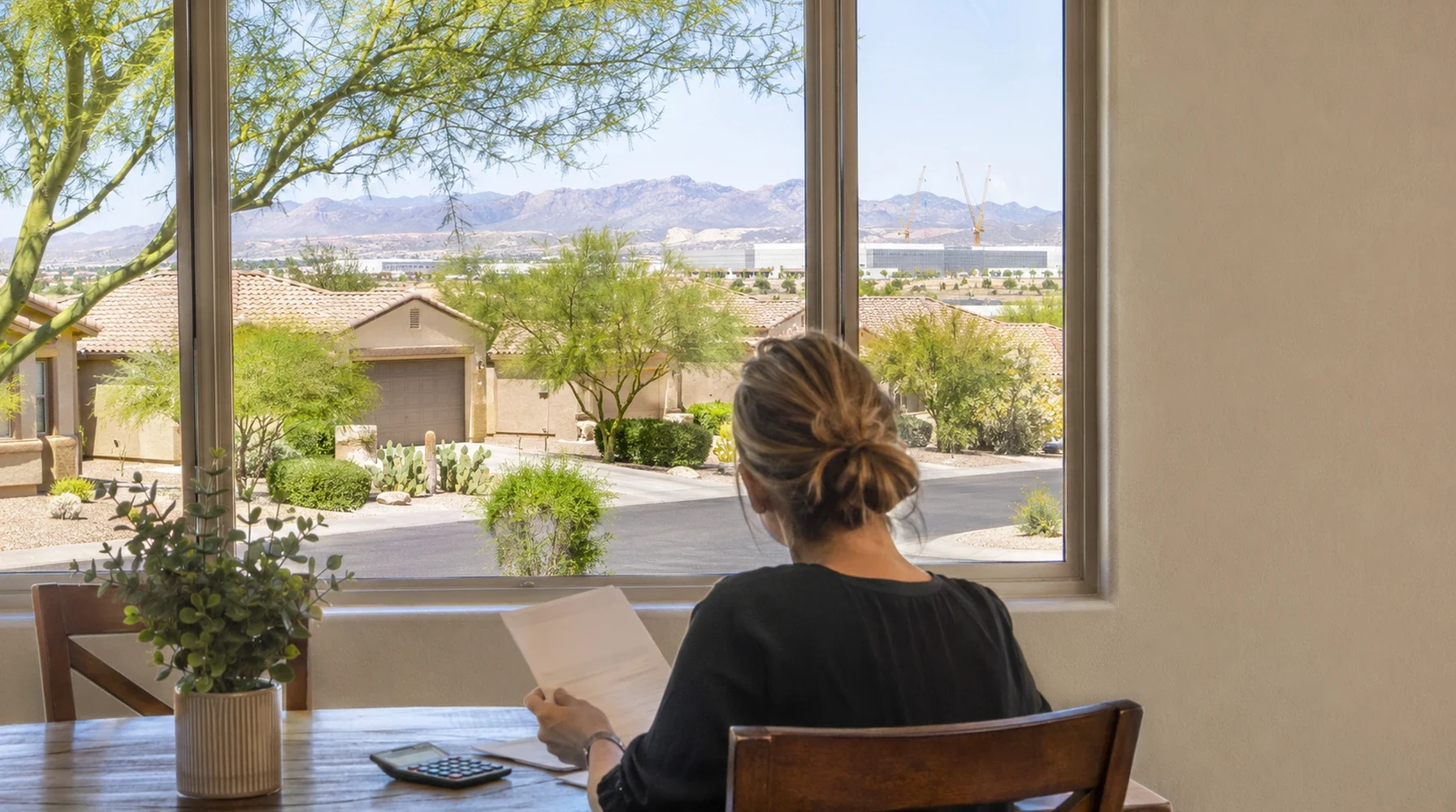
The TSMC story in north Phoenix is hard to ignore from anywhere in the West Valley. The investment numbers are unprecedented, the construction cranes are visible from the Loop 303, and homeowners in North Glendale keep asking the same question: if the chip plants drive home values up, are property taxes about to follow? The fear is reasonable. The math, fortunately, is more forgiving than the headlines suggest.
What Phase 2 Actually Means for the West Valley
TSMC’s commitment in north Phoenix is now $165 billion, covering six fabrication plants, two advanced packaging facilities and a research and development center on more than 1,100 acres. The campus sits near Loop 303 and I-17, at 43rd Avenue and Dove Valley Road, in the City of Phoenix’s North Gateway area.
The second fab is no longer a 2028 project. TSMC has pulled the timeline forward and is now installing equipment, with mass production targeted a year ahead of schedule. A 900-acre land purchase finalized in early 2026 cemented the campus expansion, and the multi-billion-dollar Halo Vista mixed-use development broke ground nearby this spring as a companion project. A fab, short for fabrication plant, is the building where the chips are actually made, so each one that opens means more permanent jobs in the area.
For North Glendale homeowners, the closest part of the campus is roughly 10 to 15 minutes from neighborhoods like Arrowhead Ranch and the master-planned communities along Happy Valley Road. That proximity is the reason your property taxes feel like an open question. Here is what I see when I walk through the actual mechanics with clients: the value impact and the tax impact are two different conversations, and they move on completely different timelines.
How Arizona Property Taxes Actually Work
Arizona uses two values when calculating your property tax, and the distinction is the entire reason a TSMC-driven price surge will not blow up your tax bill overnight. The Maricopa County Assessor sets a Full Cash Value, which tracks market value, and a Limited Property Value, which is what your taxes are actually based on. Under Arizona Proposition 117 and A.R.S. 42-13301 and 42-13302, the Limited Property Value is capped by law: it cannot rise more than 5% per year, no matter how much the market value jumps. You can confirm this directly through the Maricopa County Assessor’s Office, which administers the formula on every parcel in the county.
That cap is the homeowner’s protective floor. Even if a TSMC ripple sends North Glendale market values up 10 to 15% in a single year, the taxable portion the county can use against you only moves up by 5% at most. The Maricopa County Board of Supervisors has also held the primary tax rate flat at $1.1591 per $100 of assessed value for nine consecutive years. So unless your school district, city, or special taxing districts vote to raise their levies, which is a separate political process and not an automatic market response, your bill rises gradually, not abruptly.
The Real Question: Sell Now or Hold?
This is usually where I slow homeowners down. The actual decision is not “will my taxes go up?” They will, modestly, as Limited Property Value drifts upward each year. The actual decision is whether the appreciation TSMC is helping drive justifies holding the home longer, or whether selling into a strengthening market makes more sense for your timeline.
Industrial growth corridors create asymmetric outcomes. Properties closer to a campus, near the major commute arteries, in newer subdivisions with desirable schools, often appreciate faster than the broader county average. Properties further from the corridor, in older inventory, with deferred maintenance, can underperform even in a hot market. North Glendale is not one neighborhood. It is several, and the TSMC effect is showing up unevenly across them. If you bought your home five or more years ago, your equity has likely grown faster than your tax exposure, which is a position of strength regardless of what you ultimately decide.
– Julie S, Goodyear, AZ
How to Read Your Notice of Value
Your Notice of Value shows your Full Cash Value and Limited Property Value side by side, and it is the one piece of mail that tells you what next year’s taxes will be based on. Every February, the Maricopa County Assessor mails a new Notice. The Notice for the 2027 tax year went out in February 2026, and any North Glendale homeowner who believes the Full Cash Value is overstated has 60 days from the mailing date to file an appeal. The deadline for that Notice was April 21, 2026, according to the Assessor’s Notice of Value FAQ. The Limited Property Value cannot be appealed because it is already limited by law.
What I watch for here is a meaningful gap between the two values. If your Full Cash Value moved up significantly while your Limited Property Value barely budged, the cap is doing its job. If both moved in lockstep at the 5% maximum, you are catching the full benefit of any appreciation in your equity while the tax system protects you from absorbing that gain on your bill. For a deeper breakdown of how TSMC could reshape pricing across the West Valley, the TSMC home values analysis for Peoria and Glendale walks through where the appreciation pressure could concentrate.
What Could Actually Move Your Tax Bill
The levy side, not the value side, is what can move a North Glendale tax bill meaningfully. Tax rates are set independently each year by several bodies, and each one decides its own rate through a public budget process:
- School districts: The Deer Valley Unified School District, the Glendale Union High School District and any other district serving your address each set their own levy, and a voter-approved bond or override flows straight into your bill.
- Your city: The City of Glendale sets its own property tax rate each year, and homes across the line in the City of Phoenix pay Phoenix’s rate instead.
- Maricopa County: The Board of Supervisors has held the county’s primary rate flat at $1.1591 per $100 of assessed value for nine consecutive years.
- Community college district: The Maricopa County Community College District sets its own levy, which appears as a separate line on your bill.
- Community facilities districts: A community facilities district, or CFD, is a special taxing district that pays for a subdivision’s roads, water lines and other infrastructure through an added line on your tax bill, so check whether your subdivision has one.
If voters approve a bond, or if a new override gets passed, that flows into your bill more directly than anything TSMC does to the market. If you are weighing a newer home with a CFD, our guide to property taxes on new construction in the West Valley explains how those lines add up.
This is also the moment to mention assessment appeals and senior protections. Arizona has a Senior Property Valuation Protection Program that freezes the Limited Property Value for qualifying homeowners over 65, and your assessor’s office can confirm eligibility. The standard appeals process is genuinely accessible, too. If you believe your Full Cash Value is high relative to recent comparable Glendale sales, an appeal can reduce future tax exposure before any TSMC-driven change shows up in the comps (recent sales of similar nearby homes).
What This Means for Your Decision
For a North Glendale homeowner asking whether TSMC is going to cost you in property taxes, the short version is that the tax structure is built to protect you from sudden value-driven spikes. The long version is that the more important conversation is positioning. Industrial growth catalysts of this scale usually pull value forward by years. Whether you capture that gain now by selling into the momentum, or hold and let your equity continue to compound while the 5% cap shields your tax exposure, depends entirely on your timeline, your next move, and what your home actually does in the comps over the next 12 to 24 months. If timing is the open question, our post on whether to sell your Glendale house now or wait works through it, and how the TSMC expansion could affect home values in Peoria and North Glendale covers the value side.
Frequently Asked Questions About TSMC and North Glendale Property Taxes
Will TSMC raise my property taxes in North Glendale?
Not directly. Arizona’s 5% annual cap on Limited Property Value means even significant market appreciation cannot push your taxable value up faster than 5% per year. Rate changes by school districts and the city move bills more meaningfully.
How close is North Glendale to the TSMC campus?
Most North Glendale neighborhoods are a 10 to 15 minute drive to the TSMC campus near Loop 303 and I-17, at 43rd Avenue and Dove Valley Road in Phoenix’s North Gateway area.
Can I appeal my Notice of Value?
Yes. You can appeal the Full Cash Value within 60 days of the mailing date printed on your Notice. The deadline for the 2027 tax year Notice was April 21, 2026. The Limited Property Value cannot be appealed because it is already limited by law.
When does the Notice of Value arrive?
The Maricopa County Assessor mails Notices of Value every February. Your 60-day appeal window starts on the mailing date shown on the Notice.
Did Maricopa County raise its property tax rate?
No. The Board of Supervisors has held the county primary rate flat at $1.1591 per $100 of assessed value for nine consecutive years. Your city, school districts and special districts set their own rates.
Should I sell now to capture TSMC-driven appreciation?
That depends on your timeline and next housing move. The TSMC effect is showing up unevenly across North Glendale neighborhoods, so your own comps matter more than the headline.
Does the 5% cap apply to all Arizona homes?
Yes, the 5% Limited Property Value cap applies to all residential property in Arizona under Proposition 117. New construction and added improvements are treated differently in the year they are first valued.
What is a community facilities district?
A community facilities district, or CFD, is a special taxing district that pays for a subdivision’s roads, water lines and other infrastructure through an added line on your property tax bill.
Is there property tax help for seniors in Arizona?
Yes. Arizona’s Senior Property Valuation Protection Program freezes the Limited Property Value for qualifying homeowners over 65. The Maricopa County Assessor’s Office can confirm whether you qualify.
The Bottom Line
The TSMC Phase 2 expansion is a genuine economic shift for the West Valley, but Arizona’s property tax structure keeps homeowners insulated from rapid market-driven tax spikes. Your taxable value is capped, the county’s primary rate went down this year, and the levers that actually move your bill, like school bonds, city budgets and special district assessments, are the ones to watch, not the headline value of the home next door.
The bigger strategic question is whether your equity position and your next move favor selling now or holding while the cap continues to do its work. Either path is defensible, and both deserve real numbers. Separating the tax mechanics from the headlines is how you make your move with clarity and confidence, and it is the same clear, personalized guidance I bring to every homeowner I work with.
If you want to talk through how TSMC affects the property taxes and the sell-or-hold decision on your North Glendale home, let’s chat. You can reach me, Kasandra Chavez with the Chavez Dream Home Team, at 928-910-7401, or grab a time on my calendar.