



Will Tramonto and Anthem Become Employment Hubs or Stay Residential?
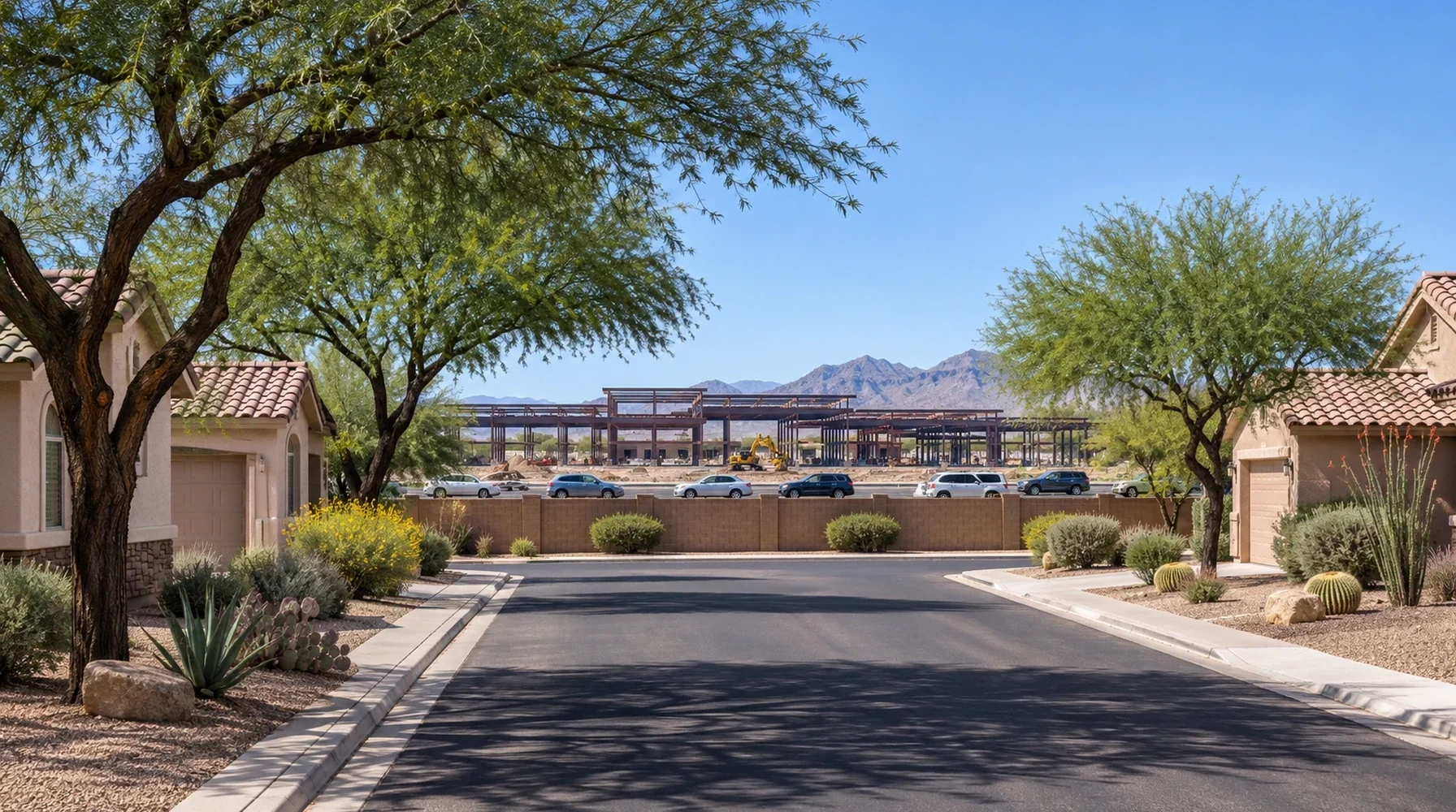
If Phoenix approves more housing and retail south of TSMC, are nearby North Phoenix neighborhoods like Tramonto and Anthem likely to feel more like busy employment hubs or stay relatively residential?
The most likely outcome for Tramonto and Anthem is that they stay fundamentally residential, but with more convenience, more traffic, and more activity around their edges than they have today. Established residential communities rarely transform into employment hubs; instead, the employment growth tends to land in dedicated commercial and industrial areas nearby, while the housing communities gain nearby jobs, retail, and services. For most buyers, that is a livability gain with a traffic trade-off, not a change in what the neighborhood fundamentally is.
If you are asking how a wave of nearby development will change the character of a community, you are asking one of the most important questions a buyer can ask, because you are not just buying a house, you are buying a daily environment. It is a thoughtful question, and a useful answer requires separating what changes from what stays the same. Let me walk through how I think about community identity when major development arrives nearby.
How Established Communities Respond to Nearby Growth
Established north Phoenix communities like Tramonto and Anthem tend to keep their identity when growth arrives nearby, so start with what they already are. Both are established North Phoenix residential communities with their own identities. Anthem in particular is a well-known master-planned community with a strong residential character, its own amenities, schools, and commercial centers. Communities like these have a settled identity that does not flip easily.
This is what I want buyers to understand: when major employment and development arrive in a region, established residential communities usually do not become the employment hub. The jobs, the large commercial projects, and the industrial uses tend to concentrate in dedicated areas, and the housing communities nearby become the places those workers live. So the realistic question is not “will Anthem turn into an office park,” but “how will Anthem feel as the area around it grows busier.” Those are very different questions, and the second one is the one worth working through.
What Development South of TSMC Actually Changes
Development around TSMC’s north Phoenix campus mostly changes what sits around Tramonto and Anthem, not what sits inside them. The TSMC campus and the development taking shape around it are reshaping north Phoenix on a large scale, and the region is seeing approvals for more housing and retail to support the growing workforce. For nearby established communities, that brings real, mostly positive changes: more retail and dining options within reach, more services, and a stronger local economy.
Halo Vista shows the pattern in practice. KJZZ reported in April 2026 that construction had started on Halo Vista, a 2,300-acre multiuse project surrounding TSMC’s campus that will include retail, housing and industrial space, and the project has been described as “a major hub for employment.” That is exactly where the jobs are meant to go: a dedicated district built for them, rather than the interior streets of an established neighborhood. What it means for you as a Tramonto or Anthem buyer is more places to shop and work within reach, plus more cars on the roads you share with that district.
It also brings traffic. More people living and working in the broader area means busier roads, especially along the main corridors and at peak hours. This is the genuine trade-off. What I watch for here is buyers who hear “growth” and picture either pure upside or pure downside. The truth is in between: more convenience and a stronger area economy, paired with more cars on the road. For a community like Anthem or Tramonto, that generally reads as enhanced rather than transformed.
– Lisa Ransom
Why “Residential With More Convenience” Is the Likely Path
Established communities like Tramonto and Anthem tend to keep their residential identity even amid regional growth, for a few reasons. Their existing housing stock, master-planned design, and community structures are already built and occupied, and that footprint does not get rezoned into an employment center. New large-scale commercial and industrial development needs land, and it typically goes to dedicated parcels rather than into the middle of a finished neighborhood.
What changes instead is the periphery and the convenience layer. New retail, restaurants, and services open to serve the growing population. Roads get busier. The area gains amenities. The neighborhood interiors, the streets you actually live on, generally stay residential. For a buyer, that usually means the things you liked about the community remain, while the things you have to drive to get shorter. If you are weighing how growth and timing affect a purchase decision, our overview of whether now is a good time to buy in Peoria offers useful market-context thinking that applies across the metro, and our comparison of Tramonto and Sonoran Foothills vs. future NorthPark and Halo Vista homes looks at the new-build side of the same growth.
How to Evaluate This for Your Own Purchase
Evaluating Tramonto, Anthem, or any north Phoenix community through this growth comes down to a simple framework I use with buyers. First, separate the community interior from its edges. Drive the actual streets you would live on, and drive the corridors you would use daily, because they may have different futures. Second, think about your traffic tolerance honestly: growth means more cars, and a community you love can still frustrate you if the commute corridors get congested. Test-drive your likely routes at real hours.
Third, weigh the convenience upside. More nearby retail, dining, and services genuinely improves daily life for many buyers, and a strengthening area economy tends to support housing demand. Whether you are relocating for a TSMC-area job or simply drawn to north Phoenix, our Peoria versus North Phoenix relocation guide and our look at how much house your budget buys in Peoria versus Phoenix can help you compare areas as you decide where the balance of quiet and convenience feels right.
The Bottom Line
Tramonto and Anthem are most likely to remain fundamentally residential communities, even as Phoenix approves more housing and retail south of TSMC. The employment growth tends to concentrate in dedicated commercial and industrial areas, while established neighborhoods gain convenience, services, and, yes, more traffic around their edges. For most buyers, that is an enhanced version of what these communities already are, not a transformation. Evaluate the interior streets and the commute corridors separately, weigh convenience against traffic tolerance, and decide on the real picture.
Frequently Asked Questions About Tramonto, Anthem and TSMC-Area Growth
Will Tramonto and Anthem become employment hubs because of TSMC-area growth?
That is unlikely. Established residential communities rarely convert into employment centers. Large commercial and industrial development typically goes to dedicated parcels, while nearby housing communities gain jobs, retail, and services around them.
How will development south of TSMC change these communities?
Mostly through their edges and convenience layer: more nearby retail, dining, and services, a stronger local economy, and busier roads. The residential interiors of established communities generally stay residential.
Is more nearby development good or bad for a buyer in Anthem or Tramonto?
It is a trade-off. The upside is convenience and a strengthening area economy that tends to support housing demand. The downside is more traffic, especially on main corridors at peak hours.
How should I evaluate a community before buying with this growth coming?
Separate the community’s interior streets from its surrounding corridors and drive both. Test your likely commute routes at real hours, and weigh the convenience gains against your personal tolerance for traffic.
What is Halo Vista?
Halo Vista is a 2,300-acre multiuse project surrounding TSMC’s north Phoenix campus that will include retail, housing and industrial space. Construction started in spring 2026, according to KJZZ.
How big is TSMC’s investment in Arizona?
TSMC’s Arizona commitment stands at $165 billion, covering six fabs, two advanced packaging facilities and a research and development center in north Phoenix.
Is Anthem part of Phoenix?
Partly. Anthem is a master-planned community in Maricopa County about 30 miles north of downtown Phoenix, and its western portion lies inside Phoenix city limits. Interstate 17 is its main connection to the rest of the Valley.
Will traffic get worse around Anthem and Tramonto?
More people living and working in the area generally means busier main corridors at peak hours. Drive your likely routes at the times you would actually use them before you buy.
Closing Thought
It is wise to ask how a neighborhood will feel in five or ten years, not just how it looks today. North Phoenix is growing, and that growth brings both convenience and congestion to communities like Tramonto and Anthem without changing what they fundamentally are.
My job is to help you think that through clearly: to separate what genuinely changes from what stays the same, and to test the corridors and streets that will shape your daily life. That is how you choose a community with clarity and confidence, whether you are ready to buy or just exploring your options.
If you want to talk through how growth around TSMC affects your specific search in Tramonto or Anthem, let’s chat. You can reach me, Kasandra Chavez with the Chavez Dream Home Team, at 928-910-7401, or grab a time on my calendar.