



Should I Trade Up From Desert Ridge to Aloravita?
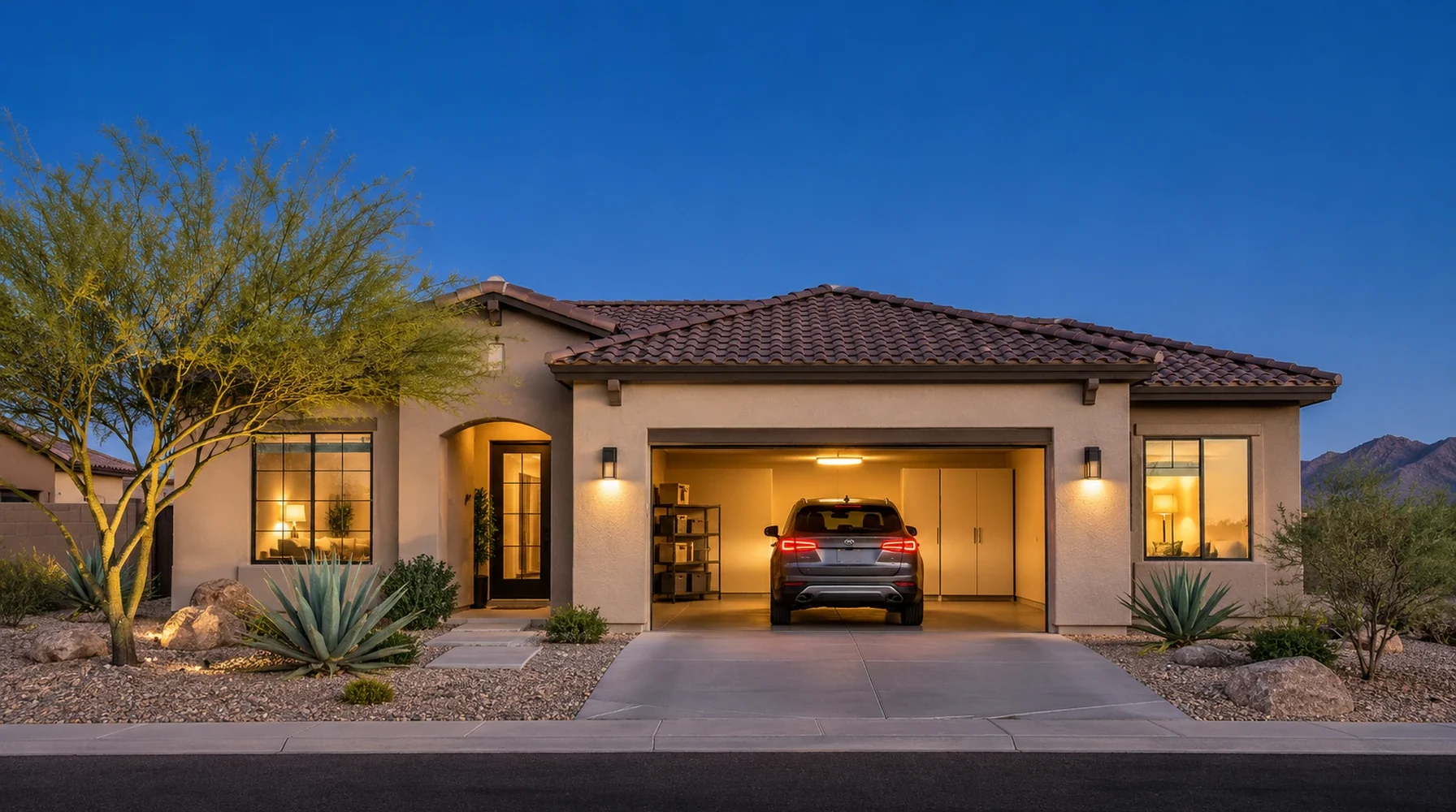
As a client commuting daily along the I-17 / Loop 101 corridor, am I better off selling my older home in the Desert Ridge area and moving to a newer build in Aloravita, or staying put?
The right answer hinges on three honest questions: do you genuinely want a newer home, do you want to be on the Peoria side of the corridor rather than the North Phoenix side, and are the transaction costs of a sell-and-buy worth it for your specific time horizon. If all three answers are yes, an Aloravita move can be a clean trade-up, with newer construction, established master-plan amenities and a different commute profile. If even one is shaky, staying put and modernizing the home you have is often the better financial path.
This stage is where I push sellers to separate the “I want a new home” feeling from the “is this actually the right move” math.
What Selling an Older Desert Ridge-Area Home Currently Looks Like
An older home in the Desert Ridge area of northeast Phoenix still sells when it is well priced and well presented, but it sells into a slower, choosier market than a few years ago. The Desert Ridge area has a strong resale story: a desirable Loop 101 location, proximity to Desert Ridge Marketplace, and access to the Mayo Clinic Phoenix campus near 56th Street and Mayo Boulevard, just south of Loop 101. Mayo Clinic is in the middle of a $1.9 billion expansion of that campus under its Bold. Forward. Unbound. strategy, announced in March 2025 and expected to be complete by 2031, according to Arizona’s Family. For a Desert Ridge seller, that means one of the area’s largest employers is still growing next door, which supports interest in your part of Phoenix over the long run.
For older homes in particular, the Desert Ridge market has more inventory and a more measured pace than the 2021 and 2022 surge years, but well-priced and well-presented Desert Ridge homes still find committed buyers.
What’s changed: the buyer is more discerning. Cosmetic dating, deferred maintenance and unupdated systems get penalized harder than they did three years ago. Phoenix’s overall market in early 2026 is the most balanced it’s been in several years, with a median sale price around $458,000 to $460,000, days on market in the 50 to 56 range, sale-to-list around 97%, and roughly 1.5 to 1.6 months of supply across the metro. That’s not a seller’s-market environment where condition is forgiven; it’s a normalized environment where presentation matters.
For sellers prepping an older Desert Ridge home for a clean trade-up, the question isn’t whether you can sell. It’s how much you should invest in updates before listing versus selling as-is. This West Valley what-to-fix vs. leave-as-is ROI guide covers the math that broadly applies across the metro, including Phoenix-side neighborhoods.
What Aloravita Adds on the Buy Side
Aloravita is a master-planned community on Happy Valley Road east of 83rd Avenue in North Peoria, with builders that have included Pulte, Shea Homes, Ashton Woods, Lennar and K. Hovnanian. It’s not the newest community in the West Valley anymore. Several phases have delivered and residents are in place, which means you can buy into Aloravita with most of the construction-zone phase behind you while still getting a relatively new home. Connectivity-wise, Aloravita ties into Loop 303, Lake Pleasant Parkway and the broader West Valley commute pattern.
The honest case for moving to Aloravita from Desert Ridge: a newer home, generally more square footage for the same dollar than the Desert Ridge area, lower-maintenance newer-construction systems, and a quieter master-plan environment than central Phoenix. The honest case against: it’s a different side of the corridor. Your weekly geography changes. Doctors, restaurants, social networks and routines all reset. If you’re commuting along I-17 / Loop 101 daily, the commute shifts meaningfully, because Aloravita’s drive into central Phoenix or to a North Phoenix worksite is different from the Desert Ridge-side trip.
The Honest Trade-Up Math
A trade-up from Desert Ridge to Aloravita stacks a real list of costs on the move. On the sell side: commission, title and escrow fees, possibly some pre-listing updates, and the cost of getting the home market-ready. On the buy side: closing costs, possibly builder upgrades or design center charges if you go new construction (the cost of the finishes and options you pick at the builder’s design studio), and the move itself. Mid-6% mortgage rates also mean that if you have a low-rate mortgage on your current Desert Ridge home, you’re trading it for a higher rate on the new home. That’s a real ongoing monthly cost that doesn’t show up in the headline trade.
The comparison I push sellers to make is the alternative: what would it look like to renovate or update the Desert Ridge home to address what you don’t love about it, instead of moving? If the issue is layout, kitchen age, primary suite size or system updates, the renovation path often comes out ahead financially, even after paying for the work, because you avoid transaction costs and you keep your existing mortgage rate. The trade-up move makes more sense if the issue is the neighborhood itself, the lot, or a structural factor you can’t fix.
This stage is usually where I help clients narrow their focus to one question: what’s actually wrong with the current home that a renovation can’t address. If the honest answer is “nothing, I just want something newer,” the trade-up math gets a lot harder to justify on its own.
– Amanda A, Anthem, AZ
The Commute Math from Aloravita
A daily I-17 / Loop 101 commute looks different from Aloravita than from Desert Ridge. Aloravita to a central Phoenix or eastside Phoenix worksite is a longer drive than from Desert Ridge, typically by a meaningful margin during rush hours. Aloravita to a North Phoenix or TSMC-corridor worksite is more manageable; the drive from Aloravita to the TSMC campus in north Phoenix runs about 20 to 25 minutes. Aloravita to a Loop 303 / West Valley worksite is the cleanest win. Our comparison of Aloravita and Sonoran Mountain Ranch against Norterra for a TSMC commute goes deeper on that drive.
If your commute pattern is anchored on the east side of the corridor (downtown Phoenix, the Sky Harbor area, ASU Polytechnic in Mesa), the move from Desert Ridge to Aloravita adds drive time in a way you’ll feel every weekday. If it’s anchored on the north or west (the TSMC corridor, Norterra-area employment, the Loop 303 industrial corridor), the move is neutral to better for your commute. Be honest about where your actual employment lives. The marketing for any West Valley community will emphasize how connected it is, and most are connected, but that doesn’t mean the commute is fast.
What Makes the Move Worth It
A few specific reasons genuinely justify the sell-and-buy move from Desert Ridge to Aloravita: your employment center has shifted to the TSMC corridor or the West Valley and your daily commute would meaningfully improve; your current home has structural or lot issues you can’t fix (busy-street backing, a floor plan that can’t be redone); your family stage has changed in a way the current home can’t adapt to; or you genuinely value the master-plan amenities and newer-construction systems enough to absorb the transaction costs.
A few reasons don’t usually justify the move: wanting a “fresh look” you could get from cosmetic updates; feeling restless about a home that’s served you well; thinking new construction is automatically better than a well-maintained resale; or assuming the price difference between Desert Ridge and Aloravita inventory is bigger than it actually is once you account for both transactions. For more on the new-versus-resale framing across the corridor, this North Peoria new construction vs. Phoenix resale comparison is the most direct read.
How to Decide Without Regret
If you’re seriously considering a Desert Ridge to Aloravita move, walk through this sequence: get an honest market valuation for the current home (not a marketing valuation, but a clinical one built on current comparable sales, or comps, meaning similar nearby homes that recently sold), get a quote for the renovation alternatives to address what you don’t love, compare the all-in math of the move against the renovation, and test-drive the Aloravita commute at your real morning and evening hours. Then sit with the numbers for two weeks before deciding. Trade-up moves driven by emotion at the moment of decision tend to come with buyer’s remorse 6 to 12 months later; the same moves made after a deliberate process tend to land well.
For sellers who decide to move forward and want to think through the broader corridor inventory and timing decision before listing, this Peoria vs. North Phoenix timing post walks through how to read the market on both sides before making the move.
The Bottom Line
For an I-17 / Loop 101 commuter, the sell-Desert-Ridge-and-buy-Aloravita move is a real option, but it only makes sense if your daily geography has shifted west, your current home has issues a renovation can’t fix, or you genuinely value newer construction enough to absorb the transaction costs and the higher mortgage rate. For commuters whose work is still anchored to the east side, the move usually adds drive time without solving an underlying problem. Pressure-test the math against the renovation alternative before assuming the move is the answer.
Frequently Asked Questions About Trading Up From Desert Ridge to Aloravita
Where is Aloravita located?
Aloravita is a master-planned community in North Peoria on Happy Valley Road east of 83rd Avenue, with connectivity to Loop 303 and Lake Pleasant Parkway.
Who builds at Aloravita?
Builders at Aloravita have included Pulte, Shea Homes, Ashton Woods, Lennar and K. Hovnanian. Tri Pointe and Pulte are now developing the community’s final 274-acre parcel, so confirm current active builders before assuming inventory.
How is the Phoenix real estate market right now?
Greater Phoenix in early 2026 sits in a more balanced market than the 2021 and 2022 surge years, with a typical median sale price in the high $400,000s, days on market in the 50 to 56 range, and roughly 1.5 to 1.6 months of supply. Conditions vary by neighborhood and price point.
How much does mortgage rate matter in a trade-up?
Mid-6% rates are higher than the sub-3% rates many homeowners locked in during 2020 and 2021. Trading a low-rate mortgage for a higher-rate one is a real ongoing monthly cost that can offset the benefits of a newer home, so model the full payment, not just the price.
Should I update my Desert Ridge home before listing or sell as-is?
It depends on the specific issues, the local comparable sales and the buyer pool. Cosmetic updates often return more than they cost; major renovations rarely do. A pre-listing consult should walk through which updates make sense for your specific home.
How long is the drive from Aloravita to TSMC?
The drive from Aloravita to the TSMC campus in north Phoenix runs about 20 to 25 minutes. Commutes from Aloravita to central Phoenix or the east side of the corridor run longer, so test-drive your real route at rush hour.
Is the Mayo Clinic expansion near Desert Ridge?
Yes. Mayo Clinic’s $1.9 billion expansion is on its Phoenix campus near 56th Street and Mayo Boulevard, just south of Loop 101, and it is expected to be complete by 2031.
Is renovating my Desert Ridge home cheaper than trading up?
Often, when the problem is layout, kitchen age, primary suite size or aging systems. Renovating avoids two sets of transaction costs and keeps your current mortgage rate. Trading up makes more sense when the issue is the neighborhood, the lot or something structural.
Closing Thought
A trade-up move is a sell decision and a buy decision stacked together, and both have to actually work for the move to make sense. At this stage, I help clients pressure-test the buy decision first (“would I want this home if I were buying fresh?”), then the sell decision (“is this the right moment to part with the current home?”), and only commit to the move if both answers are honestly yes. For an I-17 / Loop 101 commuter, that test has to factor in commute, neighborhood fit, transaction cost and mortgage-rate change, not just the home itself.
Running both sides of that math before you list is how you make your move with clarity and confidence, and it’s the clear, personalized guidance I bring to every seller weighing a trade-up, built around today’s market and your unique situation.
If you want to talk through how a Desert Ridge to Aloravita trade-up would work for your specific home and commute, let’s explore your options. You can reach me, Kasandra Chavez with the Chavez Dream Home Team, at 928-910-7401, or grab a time on my calendar.