

Should I Sell My Dynamite Mountain Ranch Home Now or Hold?
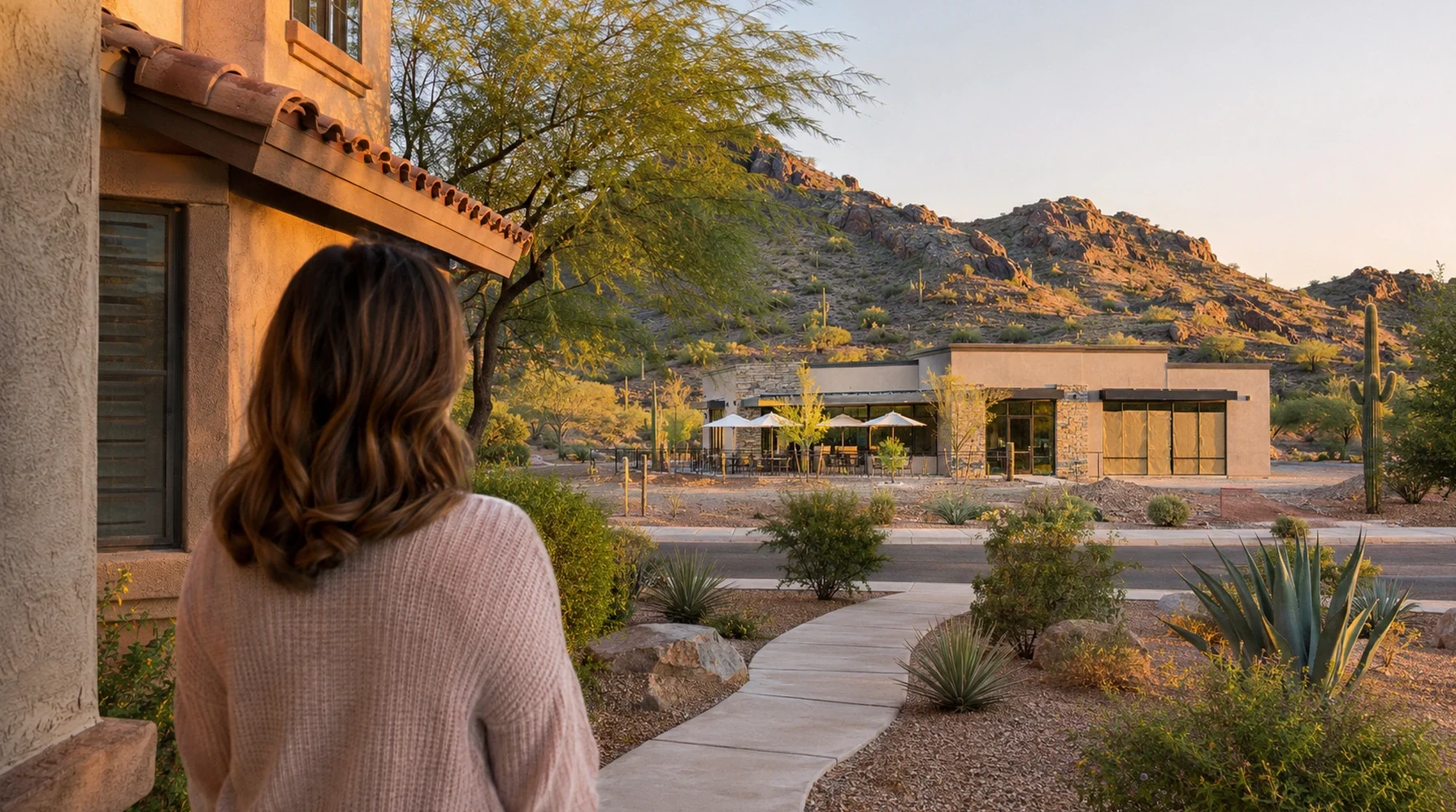
Is it better to hold my Dynamite Mountain Ranch home or list before the Norterra Parkway and Union Street Shops at Norterra projects open?
There’s no universally right answer, and anyone telling you otherwise is selling you something. Holding gives you a chance at near-term appreciation if amenity completions and continued Norterra build-out lift nearby values; listing now gives you certainty, a confirmed sale price in a known market. The right call depends on your personal timing, your tolerance for uncertainty, and whether you actually want to be in your current home in the meantime.
Listing now means you are not betting on construction timelines, builder incentives, or future inventory that could just as easily compress values as lift them. This is a timing question that often gets framed as a market-prediction question. A more useful framing is a personal-fit question with a market overlay.
Where Dynamite Mountain Ranch Sits in the Norterra Story
Dynamite Mountain Ranch is an established master-planned community in North Phoenix, located east of I-17 and north of Happy Valley Road, next to the Norterra area. The community comprises roughly 1,045 single-family homes nestled along the foothills of the Union Hills adjacent to the Sonoran Preserve, with access to the Sonoran Loop Trail. Schools associated with the area have historically included Norterra Canyon K-8 and Sandra Day O’Connor High School within the Deer Valley Unified School District; boundaries can change, so check the district’s boundary maps for a specific address. The community sits within an easy drive of Happy Valley Towne Centre and the existing Shops at Norterra.
That adjacency matters here. Amenity expansions and infrastructure additions in the Norterra orbit naturally affect demand patterns at nearby established communities like Dynamite Mountain Ranch. The question isn’t whether those additions exist; it’s whether the value lift, if any, will be enough to outweigh the risk of holding.
That adjacency matters here. Amenity expansions and infrastructure additions in the Norterra orbit naturally affect demand patterns at nearby established communities like Dynamite Mountain Ranch. The question isn’t whether those additions exist; it’s whether the value lift, if any, will be enough to outweigh the risk of holding.
What I watch for here is a quiet bias buyers and sellers both fall into: assuming that “nearby new amenities” automatically lift home values in a predictable way. Sometimes they do. Sometimes they don’t. And sometimes the lift is offset by the increase in new-home supply or the change in neighborhood traffic and density that comes with the new development.
The Case for Selling Now
Phoenix’s market in early 2026 is meaningfully more balanced than the surge years of 2021 and 2022. Median sale prices sit in the high $400,000s, days on market are in the 50 to 56 range across the metro, supply is around 1.5 to 1.6 months, and sale-to-list ratios are running near 97%. Mortgage rates remain in the mid-6% range. That environment isn’t a seller-takes-all market, but it’s still a workable one for well-prepared, well-priced homes in known communities like Dynamite Mountain Ranch.
Selling now means you can list, accept an offer, and close on a known timeline at a known price. In Arizona that closing runs through a title company, usually about 30 days after you accept an offer. You’re not betting on any specific project completing on schedule, any specific amenity opening as anticipated, or any specific market direction over the next 12 to 24 months. If you have life-stage reasons to move now (downsizing, relocation, family changes), adding a market-prediction layer to the decision often just slows it down.
The other piece: if you list now, your home is competing in today’s inventory pool. If you wait until the new projects open and other sellers in Dynamite Mountain Ranch try to time their listings the same way, you may face more nearby competition and less leverage. For a deeper read on how the corridor’s timing dynamics play out, this Peoria vs. North Phoenix timing post walks through inventory and commute patterns.
– Sonya D, Glendale, AZ
The Case for Holding
The case for holding a Dynamite Mountain Ranch home rests on participating in any further upside from continued Norterra-area development. New retail, new infrastructure, and continued residential build-out in the broader Norterra footprint can support demand at nearby established communities. The Norterra story has been one of continued densification, with the AC Hotel by Marriott and Element by Westin dual-brand recently adding hospitality density, and Union Park at Norterra’s 400-acre master plan continuing to deliver. As specific commercial and infrastructure projects in the orbit reach completion, the area’s amenity profile improves.
Our comparison of Union Park at Norterra and Dynamite Mountain Ranch home values looks at how the two neighbors stack up.
The reasonable expectation: established homes in well-located communities adjacent to active and improving submarkets tend to participate in area appreciation. That’s not a guarantee, since appreciation depends on broader market conditions, mortgage rates, and the specific phase of buyer demand, but it’s a defensible expectation for a hold horizon.
The riskier expectation: a specific dollar-amount lift from any specific project’s completion. That kind of precise prediction doesn’t hold up well in practice. Markets move on many forces at once, and project-specific value lifts often get absorbed into broader trends rather than appearing as a clean step-up at a specific milestone.
What I watch for here is whether the seller actually wants to live in the home during the hold period. A “hold for value” plan only works if the home still serves you. Living somewhere you’ve outgrown for two more years just to try to time a market gain is rarely worth it.
The Honest Risks on Both Sides
Both paths for a Dynamite Mountain Ranch seller carry real risk, and neither one can be priced away in advance. Selling now carries its own risk: if the area sees a real demand lift in the next 12 to 24 months from amenity completions and infrastructure improvements, you may sell for less than you could have. That’s a real cost. It’s also unknowable in advance.
Holding carries broader risks: mortgage rates could rise (compressing affordability and reducing buyer pools), inventory could swell from new-home phases or other sellers trying to time the same window (creating competition), or broader economic conditions could change. None of these are predictions; they’re the kinds of risks that any 12 to 24 month hold faces in any market.
Neither side knows the future, and anyone presenting either path as a sure thing isn’t being straight with you. The choice is between “take a known outcome now” and “accept market risk in exchange for potential additional gain.” That’s a personal-tolerance question, not a market-forecasting one. For a deeper look at pre-listing decisions specifically, what to fix versus leave as-is if you do choose to list, this West Valley ROI guide covers the updates that matter most for resale and the ones that rarely return what they cost.
How I’d Walk Through This with You
When a seller in Dynamite Mountain Ranch brings me this question, I usually push the conversation off the market angle first and onto life-stage and personal-fit questions. Do you actually want to be living in the home for the next 12 to 24 months? If you sell, where are you moving, and is that move available now or only later? What’s your tolerance for market risk over a hold period? What’s the carrying cost of staying (mortgage, taxes, insurance, maintenance), and does that math change anything?
Then, with personal factors clear, I’d run market-side numbers: what your home would realistically sell for today, what comparable sales (recent sales of similar homes nearby, often called comps) in Dynamite Mountain Ranch look like, what current days-on-market and offer dynamics show in your specific price band, and what near-future inventory looks like to forecast competition. That combination of personal honesty plus market diligence usually points clearly to one path.
For sellers who have an active 55+ or downsizing decision tied to this question, this guide on choosing between listing your Sun City West home as-is or making updates covers similar decision dynamics around timing and presentation that translate to other established communities. And if you want a second take on this same neighborhood, our post on selling near Happy Valley and Norterra now or later walks through it from a different angle.
The Bottom Line
Holding a Dynamite Mountain Ranch home in hopes of capturing appreciation from nearby Norterra-area projects is a defensible play if you genuinely want to live in the home during the hold and you’re comfortable with market uncertainty. Selling now is a defensible play if your life timing favors moving, your tolerance for market risk is low, or you’re satisfied with the certainty of a known sale today. Neither is wrong; pick the one that matches your real priorities rather than the one that promises the better forecast, because no one can deliver that forecast reliably.
Frequently Asked Questions About Selling in Dynamite Mountain Ranch
Where is Dynamite Mountain Ranch located?
Dynamite Mountain Ranch is an established master-planned community of roughly 1,045 single-family homes in North Phoenix, east of I-17 and north of Happy Valley Road, adjacent to the Sonoran Preserve.
What schools serve Dynamite Mountain Ranch?
Dynamite Mountain Ranch has historically been served by Norterra Canyon K-8 and Sandra Day O’Connor High School within Deer Valley Unified School District. Confirm current attendance boundaries with the district before relying on this for a specific address.
Is Dynamite Mountain Ranch part of the Norterra area?
Dynamite Mountain Ranch is adjacent to the Norterra area in North Phoenix but is its own master-planned community with its own HOA structure. Many residents use Happy Valley Towne Centre and Shops at Norterra for shopping and dining.
Where is Union Street at Norterra?
Union Street at Norterra is a two-building restaurant center at the northeast corner of Norterra Parkway and Happy Valley Road in North Phoenix, just off I-17.
Will nearby projects definitely lift home values in Dynamite Mountain Ranch?
Established homes in well-located communities adjacent to active and improving submarkets often participate in area appreciation, but a specific dollar-amount lift from any specific project’s completion is not predictable. Appreciation depends on broader market and rate conditions.
Is the Phoenix market a buyer’s or seller’s market right now?
Greater Phoenix in early 2026 sits in a more balanced market, with median sale prices in the high $400,000s, days on market in the 50 to 56 range, and roughly 1.5 to 1.6 months of supply. Conditions vary by neighborhood and price band.
How long does it take to close on a home sale in Arizona?
Closing usually takes about 30 days after you accept an offer. In Arizona, a title company handles the closing, and the buyer typically has a 10-day inspection period early in escrow.
Closing Thought
Timing the market on a specific project’s completion is one of those decisions that feels strategic in advance and looks unknowable in hindsight. Pick the path you’d choose if the market direction were neutral; that’s usually the right path even after you account for the market.
At this stage, I help clients narrow their focus to the question they can actually answer: what’s the right next move for my life, with the home as a contributor to that move rather than its driver. Weighing today’s market and your unique situation side by side is how you make your move with clarity and confidence, and it’s how I work with every seller.
If you want to talk through how the Union Street and Norterra changes affect your specific Dynamite Mountain Ranch home, let’s chat. You can reach me, Kasandra Chavez with the Chavez Dream Home Team, at 928-910-7401, or grab a time on my calendar.