

Surprise vs Peoria: Which Home Values Are Rising Faster?
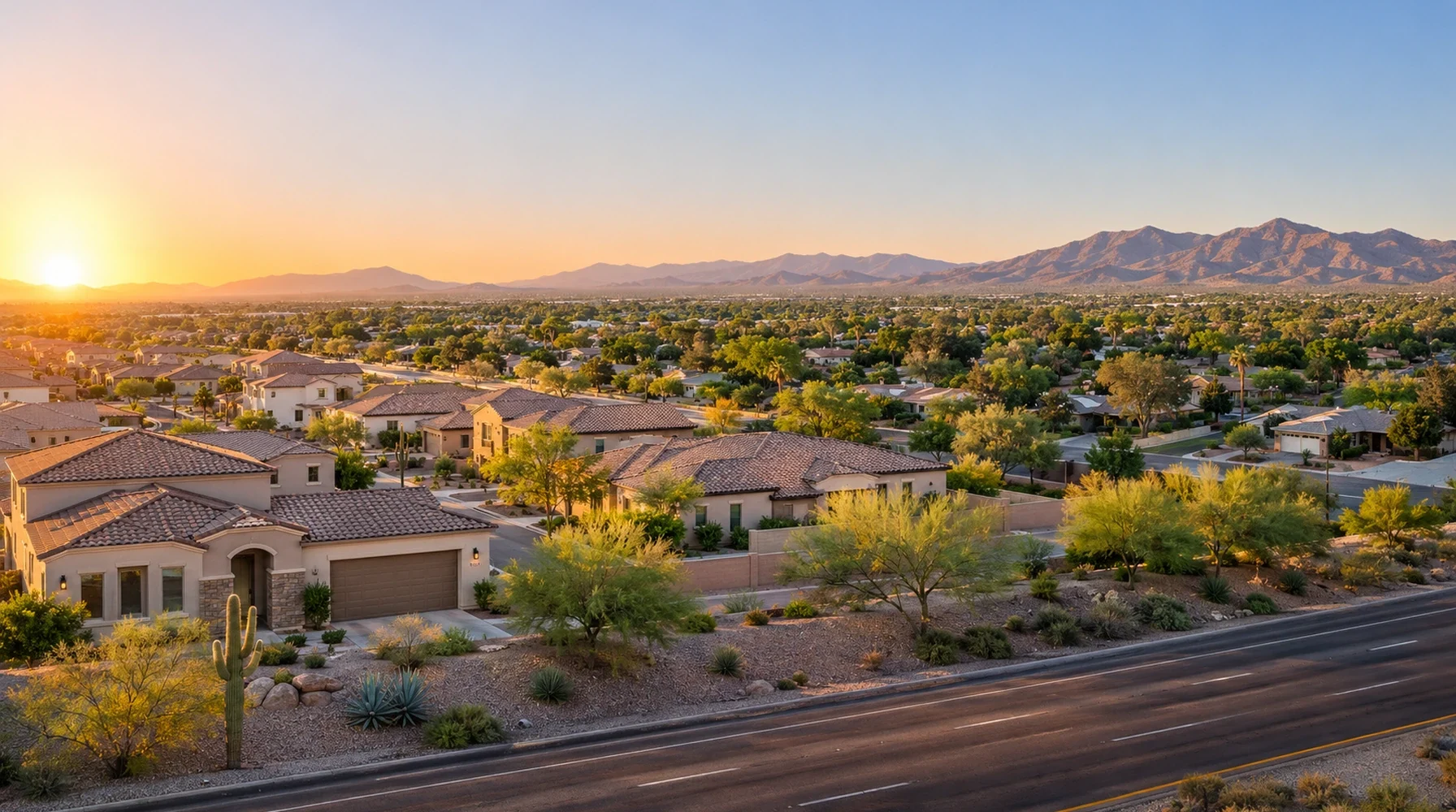
Is the Loop 303 corridor in Surprise appreciating faster than central Peoria, and what does that mean for buyers and sellers right now?
The Loop 303 corridor in Surprise is appreciating faster than central Peoria on percentage terms in 2026, driven by newer construction, better Loop 303 connectivity to the rest of the valley and ongoing infrastructure investment. Central Peoria is appreciating more slowly but from a higher established base, with shorter commute times to Phoenix and a more developed amenities ecosystem (P83 Entertainment District, Loop 101 access). For buyers, the choice is between appreciation upside in a still-developing area and entry into an established market, and for sellers, 303 corridor homes feel pressure from new construction while central Peoria homes benefit from limited resale inventory.
This is the question I’m fielding from buyers comparing offers across both markets and from sellers trying to understand what’s happening to their home’s relative position. “Appreciation” isn’t a single number; it varies by neighborhood, price band and home age. But the broad pattern is real: Surprise’s Loop 303 corridor is in a faster-appreciation phase, while Peoria is in a slower but more stable one.
The Geographic Setup
Loop 303 is the outer-loop freeway running through the West Valley, beginning at I-10 in Goodyear and connecting to I-17 in northern Phoenix. The “Loop 303 corridor” most commonly refers to areas of Surprise, northern Glendale and the Peoria/Glendale border where the freeway has unlocked development. Surprise specifically benefits because Loop 303 dramatically improved its connectivity to the rest of the valley: what was once a 60-minute drive to Phoenix is closer to 45 minutes, and the I-10 link gives Surprise residents access to Phoenix-side employment that wasn’t practical before.
Central Peoria is the older, established part of Peoria along Loop 101 and US-60. It includes neighborhoods built primarily in the 80s, 90s and early 2000s. The P83 Entertainment District is the regional anchor, a major hub for dining, theaters and nightlife, and Loop 101 provides direct access to Scottsdale, downtown Phoenix and Sky Harbor airport. Commute times from central Peoria to downtown Phoenix typically run 25 to 40 minutes, depending on traffic and origin neighborhood.
For buyers actively comparing the two cities on broader lifestyle and commute terms beyond just appreciation, the comparison of Peoria versus Phoenix on cost of living and mortgage affordability covers the West Valley positioning that affects long-term value beyond just price appreciation.
Why the 303 Corridor Is Appreciating Faster
Three factors are driving faster appreciation in the Surprise/303 area than in central Peoria.
The first is newer construction setting price floors. New construction continues to come online along the 303 corridor in Surprise, both in master-planned communities like Sterling Grove and Copper Canyon Ranch and in smaller infill subdivisions. Builder pricing on these new homes establishes a floor that nearby resale homes work upward toward. As newer homes sell at higher per-square-foot prices, comparable resale homes in the same area get pulled up.
The second is infrastructure investment. Loop 303 itself has been progressively expanded and improved over the last decade, most recently with widening projects between Happy Valley Parkway and Lake Pleasant Parkway, and ongoing improvements through the 51st Avenue and 43rd Avenue interchanges. The Northern Parkway corridor connecting Loop 303 to US-60 in Peoria is also under continued construction, with two more segments planned for 2026. These projects make the area more accessible, and accessibility drives price. For you, that means part of the access supporting corridor prices is still arriving, and construction is part of daily driving in the meantime.
The third is commercial development bringing employment closer. Loop 303 has attracted significant industrial and commercial development: Sub-Zero, Dick’s Sporting Goods, and Red Bull’s $280M manufacturing facility in northern Glendale at Reems and Peoria roads. As employment moves closer to the 303 corridor, the residential premium previously paid by people working further east narrows, and the case for living closer to the corridor strengthens.
For a closer look at Peoria-specific neighborhoods and how the city’s geography breaks into different appreciation tiers, the analysis of Peoria neighborhoods for commuting to Phoenix covers the central-to-northern Peoria spectrum that’s part of this conversation.
Why Central Peoria’s Slower Appreciation Isn’t a Weakness
This is usually where I slow buyers down. “Slower appreciation” is often misread as “worse investment.” In central Peoria’s case, slower appreciation reflects the fact that the area is already past the major catalysts that drive rapid value increases. The infrastructure exists. The amenity ecosystem (P83, Loop 101 access, established schools, mature retail) is built. The neighborhoods are not waiting for development to arrive; development arrived years ago.
What this means in practice: central Peoria has lower volatility, more predictable resale and stronger established comps (recent sales of similar homes nearby, which appraisers and buyers use to judge value). A home in central Peoria isn’t going to surprise you with 8% appreciation in a year, but it also isn’t going to surprise you with sudden weakness if the broader market shifts. That stability has value, especially for buyers who care more about reliable equity build than about catching a faster-rising wave.
The other factor: central Peoria has limited resale inventory in many established neighborhoods. New construction is largely concentrated in northern Peoria (Vistancia and surrounding areas) and along the city’s northern Loop 303 frontage rather than in the older central core. That limited inventory protects existing sellers when they list, because there’s less competition than in 303-corridor Surprise neighborhoods where new construction is constantly coming online.
– Mariah A, Phoenix, AZ
What This Means for Buyers
For buyers choosing between the two areas, the appreciation question is really a question about what kind of buyer you are. If you’re a long-hold buyer (10+ years) looking to maximize equity build through both organic appreciation and broader market growth, the 303 corridor’s faster appreciation phase favors you, but only if you accept the higher near-term volatility and the fact that newer-area markets can underperform during downturns. If you’re a moderate-hold buyer (5 to 7 years) prioritizing stable resale and shorter commute, central Peoria’s lower volatility is the more defensible choice, even if total appreciation is somewhat lower over the period.
The other consideration: monthly cost. Sales tax is one piece of it, and on that piece Peoria comes out ahead. According to the Arizona Department of Revenue’s city profiles for Surprise and Peoria, Surprise’s city retail sales tax rate has been 2.8% since October 1, 2024, compared with Peoria’s 1.8%. That difference shows up on everyday purchases rather than your mortgage payment, so it carries less weight than costs tied to the home itself. New construction in the 303 corridor often comes with builder rate buydowns that improve monthly affordability. A buydown is money the builder puts toward lowering your interest rate, either for the first few years or for the life of the loan. Central Peoria resale rarely matches that.
For buyers approaching this from a relocation standpoint specifically, the guide on writing offers that protect you after inspections in Peoria relocations covers how to use Arizona’s 10-day inspection period and the other offer protections that matter regardless of which side of the appreciation comparison you land on.
What This Means for Sellers
Sellers face a different decision matrix. If you own in the 303 corridor (Surprise side or northern Peoria/Glendale border), your home benefits from rising area comps but competes against constant new construction. The seller play in this market is to differentiate clearly from new construction (established yard, mature trees, character that builders can’t replicate) and to price relative to resale comps, not new construction comps that may have undisclosed builder concessions baked in.
If you own in central Peoria, you benefit from limited inventory but face slower headline appreciation. The seller play here is to lean into the stability story and the amenity ecosystem. Buyers in central Peoria are typically not first-time buyers. They’re move-up or relocating buyers who have already considered the 303 corridor and chose Peoria for specific reasons. Your listing should speak to those reasons (commute, schools, P83, established neighborhoods).
For sellers facing contract-deadline pressure or unfamiliar offer terms, the guide on Surprise AZ home sale contract deadline mistakes covers the protocol issues that come up regardless of which market you’re selling in.
The Northern Peoria Wildcard
Northern Peoria, particularly Vistancia and the areas along Loop 303’s Peoria frontage, behaves more like the Surprise/303 corridor than like central Peoria. New construction is active there, the corridor’s connectivity is real, and appreciation has been running closer to Surprise’s pattern than to central Peoria’s. If you’re comparing “Peoria” generally to “Surprise,” that hides a meaningful internal split.
Northern Peoria captures some of central Peoria’s commute advantages (still relatively close to Loop 101 access, P83 District is reachable) while also benefiting from Loop 303 dynamics. For buyers who can afford the higher entry price of Vistancia, that combination is genuinely strong. For sellers in northern Peoria, the relevant comp set is more 303-corridor than central-Peoria, so pricing accordingly matters. For one village-level example, see whether Five North at Vistancia will appreciate faster than central Peoria.
External Data Sources for Tracking This Comparison
The Arizona Regional Multiple Listing Service publishes monthly market reports that break down by zip code and neighborhood, which is useful for tracking appreciation differentials between specific Surprise and Peoria zip codes over time. The Maricopa Association of Governments transportation and growth resources at azmag.gov cover the infrastructure development plans that affect long-term corridor value, including the Northern Parkway and Loop 303 expansion projects.
Bottom Line
The Loop 303 corridor in Surprise is appreciating faster than central Peoria right now, but that doesn’t make it categorically better for every buyer or seller. The 303 corridor’s appreciation reflects newer construction, infrastructure expansion and commercial development arriving, which are characteristics of an earlier-stage market. Central Peoria’s slower appreciation reflects an established market past the major catalysts. Buyers should match their choice to their hold period and risk tolerance; sellers should price relative to the comp set that actually applies to their specific neighborhood, recognizing that “Peoria” and “Surprise” each contain meaningful internal variation. The right answer for your specific home or your specific search isn’t in either citywide average.
Frequently Asked Questions About Loop 303 and Central Peoria Appreciation
Is Loop 303 corridor appreciation faster than central Peoria specifically because of new construction?
New construction is one factor but not the only one. The 303 corridor also benefits from infrastructure investment (Loop 303 widening, Northern Parkway) and commercial development bringing employment closer. Central Peoria has fewer of these active catalysts.
How much faster is the 303 corridor appreciating?
Specific differentials vary by neighborhood and price band. Industry forecasts for Arizona going into 2026 suggested 2% to 4% statewide appreciation, with newer-construction areas like the 303 corridor typically at the upper end and established areas like central Peoria at the lower end.
Does central Peoria have any appreciation advantage?
Central Peoria’s primary advantage is stability rather than headline appreciation. Limited resale inventory protects existing sellers, established amenities support resale value, and shorter commute times to Phoenix maintain demand from move-up buyers and relocators.
Is northern Peoria more like central Peoria or like the 303 corridor?
Northern Peoria (Vistancia and surrounding areas) behaves more like the 303 corridor. New construction is active, Loop 303 connectivity is real, and appreciation patterns track closer to Surprise than to central Peoria.
Should I consider both areas if I’m relocating to the West Valley?
Yes, especially if your hold period is 5+ years. The areas serve different buyer profiles, and a comparison that looks tough at first often becomes clear once you weigh hold period, commute and lifestyle priorities.
Is the sales tax lower in Surprise or Peoria?
Peoria’s is lower. According to the Arizona Department of Revenue, Surprise’s city retail sales tax rate has been 2.8% since October 1, 2024, and Peoria’s is 1.8%. It affects everyday purchases more than your monthly housing cost.
Is Northern Parkway finished?
Not yet. The Northern Parkway corridor connecting Loop 303 to US-60 in Peoria is still under construction, with two more segments planned for 2026.
Should a 303 corridor seller price against new construction?
Price against resale comps, meaning recent sales of similar resale homes near you. New-construction prices may have builder concessions baked in, so lead with what a new build can’t offer, like an established yard and mature trees.
Closing Thought
Comparing Loop 303 corridor appreciation to central Peoria’s isn’t really about which area “wins.” It’s about understanding that the West Valley contains multiple distinct sub-markets, each at a different point in its development arc. The 303 corridor is in an earlier, faster-appreciation phase. Central Peoria is in a later, slower-appreciation phase. Both make sense for the right buyer or seller.
The buyers and sellers having the best outcomes are the ones who match their decisions to where they actually are in their own arc (hold period, lifestyle, financial position) rather than chasing whichever number is bigger this year. That match is how you make your move with clarity and confidence, and it’s the clear, personalized guidance I bring to every buyer and seller I work with.
If you want to talk through how the Loop 303 corridor and central Peoria compare for your specific home or search, let’s explore your options. You can reach me, Kasandra Chavez with the Chavez Dream Home Team, at 928-910-7401, or grab a time on my calendar.