


Loop 303 and Lone Mountain Parkway: Noise Risk for North Vistancia?
How could future traffic and commercial buildout around the Loop 303/Bob Stump Memorial Parkway and Lone Mountain Parkway interchange impact noise and congestion for homes on the north side of Vistancia?
It depends heavily on the specific home. More traffic and commercial buildout around the Loop 303 and Lone Mountain Parkway interchange are likely over time, and homes closest to the freeway and the interchange will feel more of it than homes set deeper into Vistancia. The risk is real but manageable, and it is something you evaluate at the address level, not the community level.
It is a fair concern. “North side of Vistancia” is not one thing: distance, orientation, sound walls and elevation all change the picture house by house in this part of north Peoria. If you are stress-testing the downside of a specific area before you buy, you are doing exactly what a careful buyer should. Freeway proximity is a classic trade-off, access on one hand and noise and traffic on the other, and it deserves a clear-eyed look rather than either dismissal or panic. Let me walk through how I help buyers evaluate this so you can decide on facts.
What Is Actually Happening Around the Interchange
Two things are changing around the Loop 303 and Lone Mountain Parkway interchange in north Peoria: the freeway itself is being expanded, and the Vistancia area is adding a commercial core. It is worth separating the two, because they affect a north Vistancia home in different ways.
First, infrastructure. The Loop 303 corridor has been the focus of ongoing improvement work, including widening and interchange upgrades intended to handle current and future traffic. According to the Arizona Department of Transportation (ADOT), Loop 303 is getting a third general-purpose lane in each direction between Lake Pleasant Parkway and Interstate 17, a new Loop 303/I-17 system interchange, and bridges for a future 67th Avenue interchange. ADOT’s schedule shows the Lake Pleasant Parkway to 51st Avenue widening running from late spring 2026 to late 2027 and the I-17 interchange work running to mid-2028. That is generally a good sign for an area: capacity is being added ahead of growth, not after it. What it means for you as a buyer is a couple of years of construction activity on the corridor, followed by a freeway built for more traffic than it carries today.
Second, development. North Peoria is growing, and the Vistancia area includes the long-range Five North commercial core, which will bring more activity over time. Five North at Vistancia is planned as a 320-acre mixed-use district with a main street of restaurants and retail. Those are destinations, and destinations bring trips, so the roads that feed Five North will carry more cars as each piece opens.
Together, these mean the area around the Loop 303 and Lone Mountain Parkway will see more traffic and more commercial activity in the years ahead. That is the baseline. What I watch for here is balance: the same freeway access that brings traffic is also what makes the location convenient and desirable. The question is not whether there will be more activity (there will be) but whether a specific home is positioned to be affected by it in a way that bothers you.
Why “North Side of Vistancia” Is Too Broad a Question
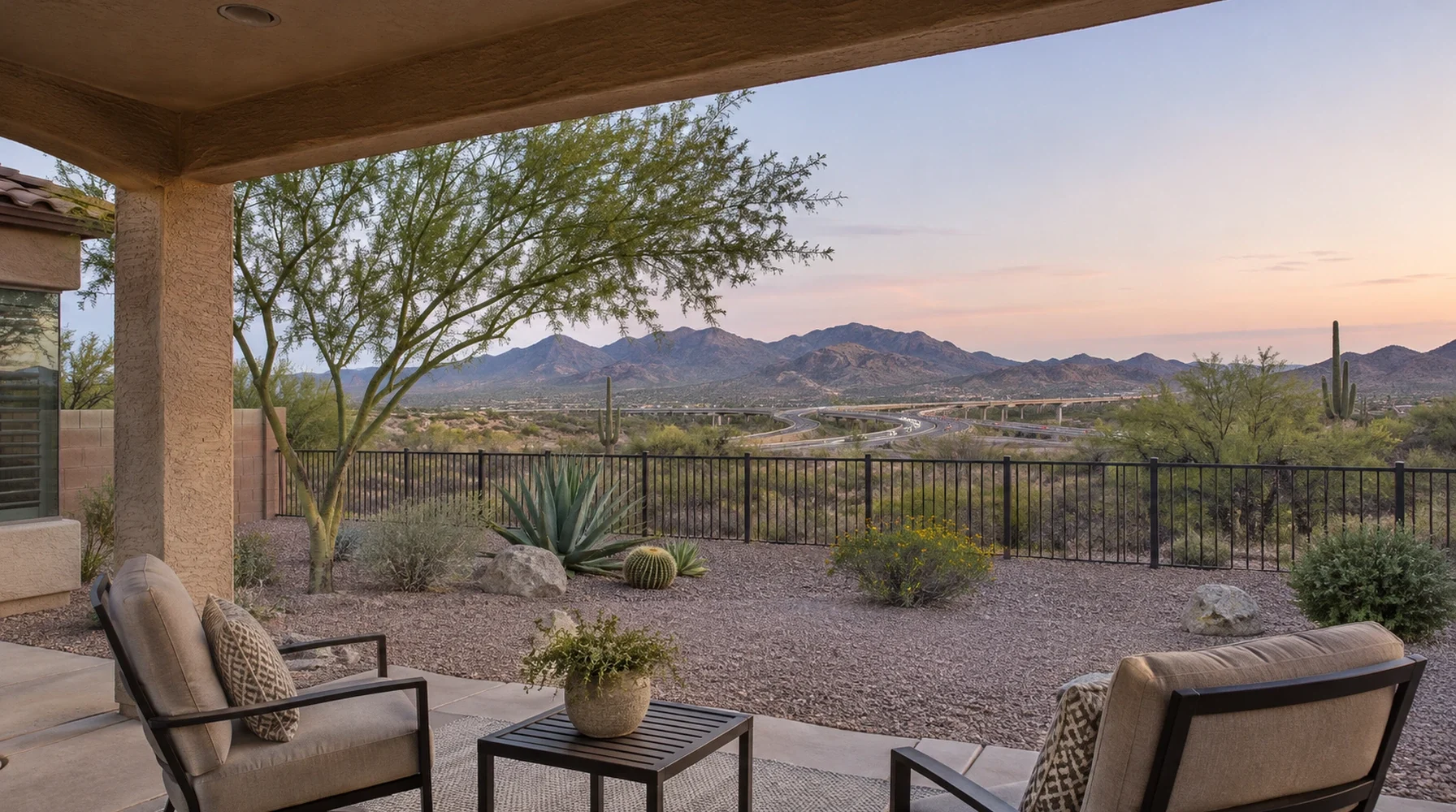
Noise and congestion exposure on the north side of Vistancia in Peoria is intensely local, so the area cannot be judged as one block. A home backing directly to the freeway corridor experiences something completely different from a home several streets in, even within the same community.
Five factors decide how much freeway noise and traffic a north Vistancia home actually gets:
- Distance from the corridor: How far the home sits from Loop 303 and the Lone Mountain Parkway interchange is the biggest single driver of what you hear.
- Orientation: A home whose backyard faces the freeway hears it differently from one that faces away, with the house itself blocking the sound.
- Sound walls and berms: The presence and height of walls or earth berms between the home and the traffic can change the experience a great deal.
- Elevation and terrain: A home that sits above or below the roadway, or behind a rise in the land, can hear more or less than its distance alone suggests.
- Street layout: The rows of houses and the streets between a home and the traffic absorb sound and shape which routes you drive every day.
This is why I always steer buyers away from judging “the north side” as a block. Two homes a few hundred yards apart can have very different noise profiles. The right approach is not to rule the area in or out. It is to evaluate the individual home. A community-level worry becomes a manageable, answerable question once you are standing at a specific address.
– Gloria B, Buckeye, AZ
How to Evaluate a Specific Home for Noise and Traffic
The way to judge freeway noise and congestion for a Vistancia home near Loop 303 is to go and experience it yourself at the times that matter. When a buyer is seriously considering a home near the corridor, here is what I encourage them to do.
Visit the home at different times. A weekday rush hour and a quiet weekend morning sound very different, and you want both. Stand in the backyard and on the patio, not just inside with the windows closed. Look at what sits between the home and the freeway: sound walls, berms, distance, other rows of houses. Ask about the home’s construction, since newer homes often have windows and insulation that meaningfully reduce interior noise.
Timing matters here too. Under the standard Arizona purchase contract from the Arizona Association of REALTORS® (AAR), you typically get a 10-day inspection period after your offer is accepted. That window is your chance to go back at rush hour and on a weekend before you are fully committed. You will also receive the Seller’s Property Disclosure Statement (SPDS), the form where an Arizona seller shares what they know about the home, and it is worth reading for anything the owner has noticed about noise or traffic.
Also think about the road network for congestion specifically. A home’s daily traffic experience depends on which streets you use to get in and out and how those connect to the interchange. None of this requires special expertise. It requires showing up and paying attention. Our guide to choosing a Peoria neighborhood based on your daily routine and drive times is a helpful companion for thinking through the commute side, and our look at how the Loop 303 expansion affects Vistancia property values and noise goes deeper on the freeway work itself.
Weighing Risk Against the Upside
Living near the Loop 303 and Lone Mountain Parkway interchange in Peoria carries real noise and congestion risk and real access benefits, and both deserve weight. Yes, proximity to a busy interchange can mean more noise and congestion, and a home very close to the corridor may feel that. But that same proximity delivers fast freeway access, and infrastructure investment in an area generally supports its long-term desirability. Buyers who want quiet should simply weight distance and orientation heavily and look at homes set deeper into the community.
For resale, the same logic applies: a home with a noticeable noise issue will face that same scrutiny from future buyers, so factor it into both your enjoyment and your eventual exit. If you are weighing whether the timing and trajectory of North Peoria growth work in your favor, our overview of whether now is a good time to buy in Peoria gives useful market context, and our breakdown of whether Five North will help or hurt Peoria home values covers the commercial side. The goal is not to avoid the area. It is to choose the right home within it.
The Bottom Line
Traffic and commercial buildout around the Loop 303 and Lone Mountain Parkway interchange will likely increase over time, and homes closest to the corridor will feel it most. But “north side of Vistancia” is far too broad to judge, because exposure is determined by the individual home’s distance, orientation, sound walls and street layout. Do not rule the area out or wave the concern away. Evaluate the specific address: visit at multiple times, stand outside, and weight distance and orientation. The risk is real, but it is manageable with the right home.
Frequently Asked Questions About Loop 303 Noise and North Vistancia Homes
Will traffic and noise increase around the Loop 303 and Lone Mountain Parkway interchange?
More traffic and commercial activity in the area are likely over time, as North Peoria grows and the corridor develops. How much any individual home is affected depends on its distance and orientation relative to the freeway and interchange.
Are homes on the north side of Vistancia all exposed to freeway noise?
No. “North side of Vistancia” covers many homes at varying distances from the corridor. A home backing to the freeway experiences something very different from one set several streets in. Noise exposure is evaluated home by home.
Is the Loop 303 improvement work a good or bad sign for the area?
Generally a good sign. Adding freeway capacity ahead of growth supports long-term access and desirability. It does mean construction activity in the near term, but the underlying investment is positive for the corridor.
What is ADOT building on Loop 303 near Peoria?
According to ADOT, Loop 303 is getting a third lane in each direction between Lake Pleasant Parkway and I-17, plus a new Loop 303/I-17 interchange. The work is scheduled to run into 2028.
How do I check a specific home for noise and congestion before buying?
Visit at different times, including a weekday rush hour. Stand outside, not just indoors. Note sound walls, berms, and distance between the home and the freeway, and consider the streets you would use to reach the interchange.
When should I test for freeway noise during the purchase?
Use your inspection period, typically 10 days under the Arizona AAR contract. Go back at rush hour and on a weekend before that window closes, and read the seller’s SPDS for anything they have noticed.
Will Five North add traffic near north Vistancia?
Likely, over time. Five North at Vistancia is a planned 320-acre mixed-use district, and each restaurant, shop and gym that opens there brings more trips to the surrounding roads.
Does freeway noise affect resale value in Vistancia?
It can. A home with a noticeable noise issue will face the same scrutiny from future buyers, so weigh it for both your own enjoyment and your eventual sale.
Closing Thought
A smart buyer asks “what could go wrong here?” before committing, and freeway noise near Loop 303 is a worthy question to ask about any north Vistancia home.
My job is to turn that broad worry into a precise, answerable one: not “is the north side risky,” but “is this home well-positioned.” We can visit at rush hour, look at what stands between the home and the corridor, and make the call together, so you make your move with clarity and confidence.
If you want to talk through how the Loop 303 and Lone Mountain Parkway interchange affects a specific home you are considering in Vistancia, let’s chat. You can reach me, Kasandra Chavez with the Chavez Dream Home Team, at 928-910-7401, or grab a time on my calendar.