


Should I Sell FSBO or Hire an Agent in the West Valley?
Is hiring a listing agent essential in the current West Valley market, or can you succeed with a DIY FSBO approach?
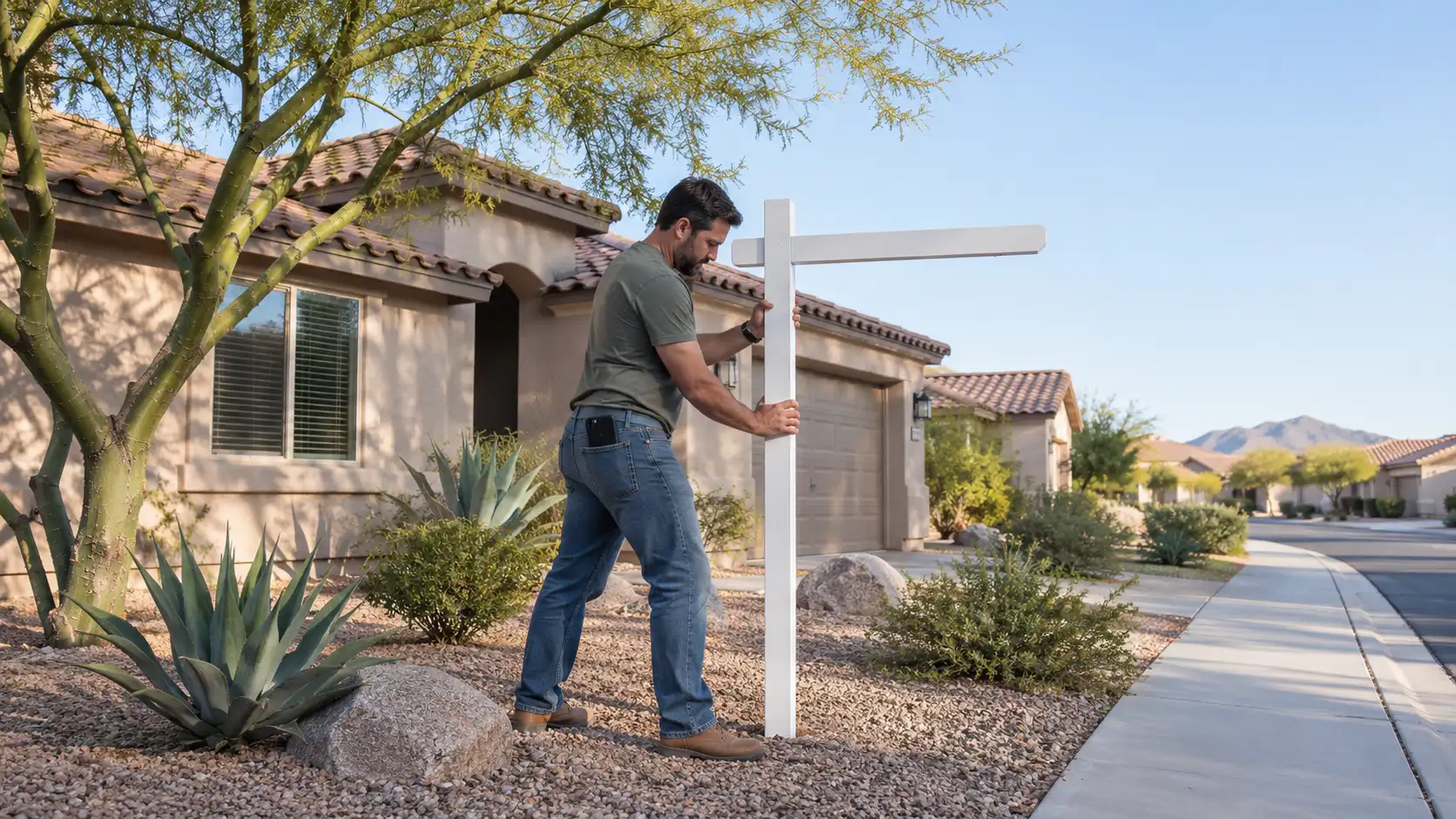
In the current West Valley market, it’s still possible to sell FSBO, but success depends less on demand and more on execution. Most sellers who struggle aren’t failing to find buyers; they’re losing leverage, pricing power, or legal protection without realizing it until late in the process. FSBO stands for “for sale by owner,” which means selling your home yourself without hiring a listing agent.
Why this question matters more now than it did a few years ago
The FSBO question carries more weight in the West Valley today because negotiations, inspections and pricing all matter again in a way they did not during the peak frenzy years.
This is usually where sellers feel conflicted. They’ve seen homes sell quickly, they’re aware of commission costs, and they wonder whether representation is still necessary. In practice, I slow sellers down here because the market no longer forgives small missteps the way it did during peak frenzy years.
Buyer behavior has shifted. Negotiations are back. Inspections matter again. And pricing errors now cost time, not just pride.
For you as a seller, that means a small mistake early in the sale no longer gets covered up by a fast market. It shows up later, as time on the market or as ground you give up in negotiation.
What FSBO sellers often underestimate in the West Valley
What FSBO sellers in the West Valley most often underestimate is strategy: managing the momentum of a sale, not just getting the home seen.
Selling on your own isn’t just about marketing the home. It’s about managing momentum. What I see most often is FSBO sellers focusing on exposure while overlooking strategy: how timing, concessions, and buyer psychology work together.
The risk isn’t that your home won’t sell. The risk is that it sells with unnecessary concessions, extended days on market, or contract fallout that could have been avoided with better positioning. According to the National Association of REALTORS®’ 2025 Profile, FSBO transactions comprised just 5% of home sales, an all-time low, while 64% of FSBO sellers conceded they did not achieve their desired sales price.
Concessions are money or credits a seller gives up to keep a deal together, such as repair credits or help with the buyer’s costs. Each one comes out of what you walk away with, which is why the question is not only whether your home sells, but how much of your price you keep along the way.
Pricing power vs. price visibility
Pricing is where a West Valley FSBO seller gains or loses leverage, because the first price you put out shapes every negotiation that follows.
FSBO sellers often believe they’re saving money by avoiding commission, but pricing is where leverage is either gained or lost. In the West Valley, buyers are watching price reductions closely. The first number you put out shapes every negotiation that follows.
This is where I help sellers narrow their focus. The goal isn’t to test the market; it’s to enter it correctly. Once a home is perceived as “chasing,” even strong offers become cautious. Understanding the biggest mistakes sellers make when pricing their home can help avoid this common pitfall.
A home that is “chasing” the market is one that keeps reducing its price after starting too high. Getting the first number right protects your leverage, because every later reduction is visible to the buyers you are negotiating with.
Contract protection and inspection leverage
One of the biggest gaps in DIY selling shows up after the offer is accepted. Inspection periods, repair requests, and appraisal conversations are where experience matters most.
This is where stress tends to show up if expectations aren’t clear. Sellers often feel blindsided by requests they didn’t anticipate, not because the buyer is unreasonable, but because the seller doesn’t know what’s standard versus strategic. Redfin reports that negotiating after a home inspection is where buyers typically save an average of $14,000, making this phase critical for protecting your sale price.
The inspection period is the window after an accepted offer when the buyer has the home inspected and can ask for repairs or credits. For an FSBO seller in the West Valley, that window is where knowing what is standard, and what is a negotiating move, protects the price you already agreed on.
– Michael R, Avondale, AZ
When FSBO can work, and when it usually doesn’t
FSBO tends to work best when the seller already has a buyer lined up, understands Arizona contract timelines, and is comfortable negotiating directly. Even then, most still bring in professional guidance for paperwork or pricing review.
Where FSBO struggles most is when sellers assume the market will “carry” the deal. In today’s West Valley environment, buyers expect structure, responsiveness, and clarity. When that’s missing, they push harder, or walk. NAR research shows that FSBO sellers most often struggled with pricing their home, preparing it for sale, and selling within their desired timeframe, with 40% not actively marketing their homes at all.
If you are weighing your own situation, the first condition matters most. A seller with a buyer already lined up is solving a paperwork problem; a seller without one is taking on pricing, marketing and negotiation at the same time.
What a listing agent actually controls in this market
A listing agent’s value today isn’t just exposure; it’s pressure management. At this stage, I help sellers control timing, set boundaries during negotiations, and prevent emotional decisions from driving financial outcomes.
This is the point where guidance matters most: not at the list date, but when multiple decisions stack quickly and the wrong yes costs more than a strategic no. For sellers preparing their home for market, understanding what to expect during inspections, HOA reviews, and walkthroughs helps prevent surprises during the negotiation phase.
The real comparison sellers should be making
The question isn’t FSBO versus agent; it’s unmanaged risk versus guided control. Selling your home is a financial transaction layered with emotion, deadlines, and legal obligations.
The sellers who feel confident at closing are rarely the ones who tried to save at the front end. They’re the ones who protected themselves through the middle. Research consistently shows that agent-assisted homes sell for significantly more than FSBO homes, with the median FSBO sale price at $380,000 compared to $435,000 for agent-assisted sales, according to HomeLight’s analysis of NAR data.
If you want to go deeper on this decision, our posts on whether you really need a Realtor to sell your house in Arizona, the pros and cons of selling by owner instead of using a full-service agent, and FSBO versus a flat-fee broker walk through the options side by side.
FAQ: FSBO vs listing agent in the West Valley
Can I still sell quickly without an agent?
Yes, but speed alone doesn’t guarantee a strong outcome. Strategy matters more than exposure.
Do buyers avoid FSBO listings?
Some buyers are cautious, especially if communication or documentation feels unclear.
Is pricing harder without an agent?
Often, yes. Market data is available, but interpretation and timing are where most mistakes occur.
Do I still need legal review if I sell FSBO?
It isn’t required, but it’s highly recommended. Contracts and disclosures carry legal obligations regardless of representation.
Can I switch to an agent after trying FSBO?
Yes, though pricing and market perception may already be affected depending on timing.
What does FSBO mean?
FSBO stands for “for sale by owner.” It means selling your home yourself without hiring a listing agent.
How common are FSBO sales?
According to the National Association of REALTORS®’ 2025 Profile, FSBO transactions made up just 5% of home sales, an all-time low.
Do FSBO homes sell for less than agent-assisted homes?
According to HomeLight’s analysis of NAR data, the median FSBO sale price was $380,000, compared to $435,000 for agent-assisted sales.
When does FSBO tend to work best?
FSBO tends to work best when the seller already has a buyer lined up, understands Arizona contract timelines, and is comfortable negotiating directly.
Closing perspective for West Valley sellers
Selling in the West Valley today isn’t about doing more; it’s about doing the right things in the right order. Whether you choose FSBO or representation, the outcome depends on how well decisions are sequenced and protected.
Clarity, not urgency, is what carries sellers across the finish line. That is how I work with sellers: building the plan around your timing and your next move, so each decision stays grounded and controlled and you can make your move with clarity and confidence.
If you want to talk through whether FSBO or a listing agent makes sense for your West Valley home, let’s chat. You can reach me, Kasandra Chavez with the Chavez Dream Home Team, at 928-910-7401, or grab a time on my calendar.