



HOA or No HOA in Surprise: Which Is Better to Buy?
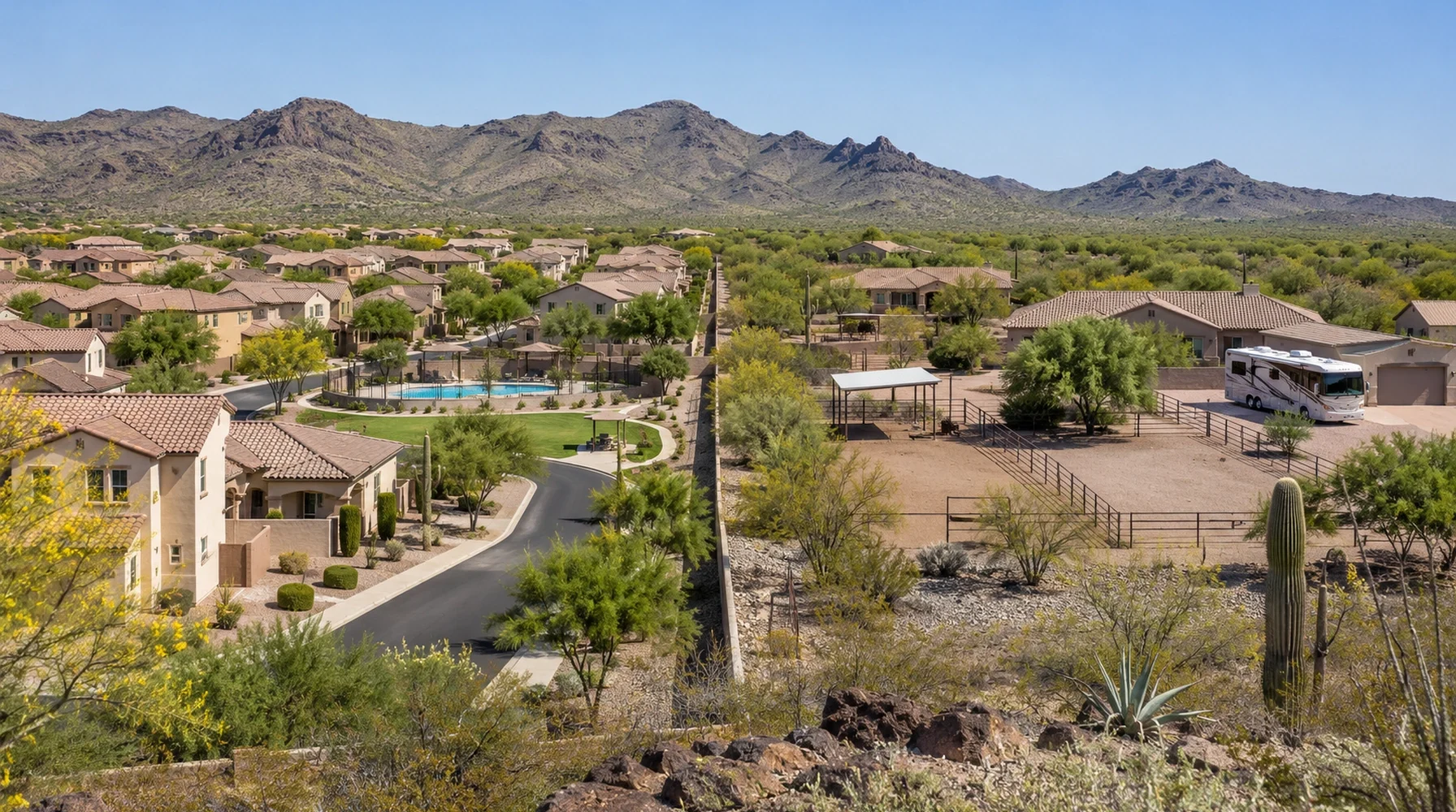
Is it better to buy in an HOA community in Surprise or look for a non-HOA neighborhood in the West Valley?
It depends on what you’re willing to manage yourself versus what you want handled for you, and whether the monthly fee feels like convenience or constraint. HOA communities in Surprise typically offer amenities, maintained common areas, and consistent neighborhood standards, but they come with fees and restrictions. Non-HOA neighborhoods across the West Valley provide more autonomy and lower monthly costs, but you’re responsible for all exterior upkeep and there’s less predictability in how neighbors maintain their properties.
This is usually where buyers feel pressure to pick the “right” answer before they’ve clarified what actually matters to their household. In practice, I help narrow the focus to three things: how you want to spend your time at home, what your monthly budget can absorb long-term, and how much control you need over your property decisions. The goal isn’t to avoid trade-offs. It’s to know which ones you’re making.
What You’re Actually Choosing Between
Choosing between an HOA community in Surprise and a non-HOA neighborhood in the West Valley isn’t just about fees. It’s about decision authority, maintenance responsibility, and how much predictability you expect from your surroundings. An HOA, or homeowners association, is the organization that manages a community’s shared areas and enforces its rules, paid for by a fee every owner pays.
In an HOA community, you’re buying into a managed environment. Someone else handles landscaping in common areas, enforces architectural standards, and maintains amenities like pools, parks, or fitness centers. You’re also accepting that major decisions, such as paint colors, fence styles and RV parking, require approval. The trade-off is consistency. Your neighbors can’t let their yard turn into a storage lot, and the community entrance stays maintained.
In a non-HOA neighborhood, you’re buying autonomy. You decide when to paint, what to plant, and whether to park a boat in the driveway. You’re also accepting variability. If your neighbor’s property maintenance habits don’t align with yours, there’s no governing body to enforce standards. The trade-off is flexibility and lower recurring costs, but you absorb all exterior upkeep yourself.
This is the point to pause and separate preference from assumption. The question isn’t which sounds better in theory. It’s which structure matches how you actually want to live and what you’re prepared to manage.
Monthly Costs and What They Cover
HOA fees in Surprise typically range from $50 to $300+ per month, depending on what’s included. Lower-tier fees usually cover common area landscaping and maintenance. Mid-tier fees often add amenities like community pools, playgrounds, or walking trails. Higher fees, common in master-planned communities, can include security, event programming, and premium recreational facilities.
The fee is recurring and non-negotiable. It doesn’t fluctuate with the housing market, and it doesn’t disappear when the mortgage is paid off. Buyers sometimes underestimate how a $200 monthly HOA fee affects long-term affordability, especially when combined with property taxes and homeowners insurance. According to the National Association of REALTORS®, the average monthly HOA fee nationwide was $259 as of March 2024, and these fees have been rising with inflation. Fees can also go up over time, which our guide to rising HOA fees and special assessments in the West Valley covers in detail.
Non-HOA properties don’t have this recurring charge, but that doesn’t mean they’re cheaper to maintain. You’re covering landscaping, exterior repairs, and any upgrades out of pocket. If the roof needs replacing or the driveway cracks, there’s no shared reserve fund (the savings account an HOA builds for big repairs). The cost structure is different: more unpredictable, but also more within your control.
What I watch for here is whether buyers are factoring HOA fees into their debt-to-income ratio upfront or treating them as an afterthought. Your debt-to-income ratio is the share of your monthly income that goes to debt payments, and lenders include HOA fees when calculating it, so a $250 monthly fee can reduce your purchasing power by $40,000 to $50,000 depending on current interest rates. If you’re already stretching to hit your price range, that matters, and our post on what you can afford in the West Valley walks through the full budget.
Amenities, Maintenance, and Daily Use
HOA communities in Surprise are built around shared amenities, so the fee feels justified only if your household will actually use them. If you’re someone who’ll use a neighborhood pool, fitness center, or walking trails, the fee can feel worth it. If you won’t, you’re paying for access you don’t need.
This is where timing protection becomes essential. Buyers sometimes choose HOA communities because the amenities sound appealing during the tour, but they don’t assess whether their household will realistically use them. A community pool is a value-add if you have young children or prefer not to maintain your own. It’s a recurring cost with no return if your schedule or lifestyle doesn’t align with it.
According to recent research, while homes in HOAs can command higher initial sale prices due to amenities and maintained common areas, the premium tends to decrease over time. Non-HOA neighborhoods don’t include these shared features, which means you’re free to invest in what matters to your household, such as a backyard pool, a workshop or a larger lot, without subsidizing amenities you don’t use. The trade-off is that you’re responsible for maintaining those investments yourself, and there’s no shared cost structure to distribute the burden.
The useful step here is separating aspiration from intention. The question isn’t whether an amenity sounds nice. It’s whether you’ll use it enough to justify the cost, and whether the trade-off in autonomy is worth it.
Rules, Restrictions, and Property Control
HOA communities in Surprise operate under recorded Covenants, Conditions, and Restrictions (CC&Rs), the community’s written rulebook that comes with the home. These govern everything from exterior paint colors to landscaping choices, parking rules, where solar panels can go, and whether you can build a casita. Before you buy, you receive the CC&Rs and have the right to review them. Most buyers don’t.
Solar is a good example of where the rules have limits. Under Arizona law (A.R.S. 33-1816), an HOA cannot prohibit solar panels, but it can adopt reasonable rules about where they are placed, as long as those rules don’t block the installation or hurt the system’s cost or efficiency. If solar matters to you, read the placement rules, not just whether solar is mentioned.
In practice, the HOA’s disclosure packet, which includes the CC&Rs, is delivered to you electronically through the title company. Plan to read it during your inspection period, which is typically 10 days on the Arizona AAR purchase contract, so you can raise concerns while you still have room to act. Our post on the HOA disclosure timeline in Surprise explains how that clock works.
This is where stress tends to show up if expectations aren’t clear from the beginning. You might assume you can park your work truck in the driveway, install a pergola, or paint your front door a specific color, only to discover those decisions require HOA approval, and approval isn’t guaranteed.
Non-HOA properties don’t have these restrictions. You’re governed by city zoning and building codes, but you’re not answerable to a neighborhood board. If you want to add a shed, change your landscaping, or park an RV, you can, as long as it complies with municipal regulations.
The benefit of HOA rules is consistency. The limitation is control. The benefit of non-HOA freedom is autonomy. The limitation is unpredictability. Neither is inherently better, but buyers need to know which trade-off they’re willing to accept before they’re under contract.
– Dustin T, Glendale, AZ
Resale Value and Market Perception
HOA and non-HOA homes in Surprise and the West Valley each appeal to a different kind of buyer, and neither is universally easier to resell. HOA communities in Surprise tend to attract buyers who prioritize move-in readiness, low-maintenance living, and access to amenities. These properties often appeal to families with young children, retirees, and buyers relocating from out of state who want a structured community experience.
Non-HOA properties appeal to buyers who prioritize flexibility, lower monthly costs, and property autonomy. These neighborhoods often attract families with specific lifestyle needs, such as space for RVs, room for home-based businesses, or the freedom to make modifications without approval processes.
Neither option is universally more desirable. Resale depends on market conditions, location, and buyer priorities at the time you sell. In a strong seller’s market, both HOA and non-HOA properties move quickly if priced correctly. In a slower market, HOA homes may take longer to sell if fees are high relative to what’s offered, while non-HOA homes may take longer if neighboring properties aren’t well-maintained.
In the Greater Phoenix area, market data through October 2025 showed the West Valley, including cities like Surprise and Goodyear, continuing to see steady activity with median prices holding relatively stable. A home’s monthly carrying cost, HOA fee included, gets more scrutiny from the next buyer, which is one more reason to know what you’re paying for. The thing to watch is whether you’re choosing based on your actual priorities or on assumptions about what will “sell better later.” Resale value is a consideration, but it shouldn’t drive the decision if it conflicts with how you need to live in the home.
When HOA Makes Sense, When Non-HOA Makes Sense
An HOA community in Surprise typically makes sense if you value structured maintenance, want access to amenities without managing them, and prefer a neighborhood with enforced standards. It’s a fit for buyers who don’t want to handle exterior upkeep themselves, who plan to use shared facilities, and who are comfortable with approval processes for property modifications.
A non-HOA neighborhood in the West Valley typically makes sense if you prioritize autonomy, want to avoid recurring fees, and are prepared to manage all property maintenance yourself. It’s a fit for buyers who need flexibility, whether for business use, vehicle storage, or custom modifications, and who are willing to accept variability in how neighbors maintain their properties. If you’re comparing specific cities, our Surprise HOA versus non-HOA Glendale comparison runs through reserves, special assessments and rule enforcement.
This is where I help buyers test their assumptions. If you’re drawn to an HOA community but resent the idea of asking permission to change your landscaping, that’s a signal. If you’re drawn to non-HOA freedom but don’t have the time or interest to manage exterior maintenance, that’s also a signal. The right choice aligns with how you actually operate, not how you think you should.
Frequently Asked Questions About HOA and Non-HOA Homes in Surprise and the West Valley
What’s the typical HOA fee range in Surprise, Arizona?
HOA fees in Surprise generally range from $50 to $300+ per month, depending on amenities and services. Basic fees cover landscaping and common area maintenance, while higher fees include pools, fitness centers, and other community facilities.
Can HOA fees increase over time?
Yes. HOA fees can increase annually based on rising maintenance costs, capital improvements, or reserve fund requirements. Review the HOA’s financial statements and fee history before purchasing.
What happens if I don’t follow HOA rules?
Violations of HOA rules can result in fines, liens, or legal action. Most HOAs have a formal process for addressing violations, including warnings and a chance to correct the issue before penalties are imposed.
Are non-HOA homes harder to sell in the West Valley?
Not necessarily. Non-HOA homes appeal to buyers seeking flexibility and lower monthly costs. Resale depends more on location, condition, and market demand than on HOA status alone.
Can I park an RV in an HOA community in Surprise?
It depends on the specific HOA’s CC&Rs. Some communities prohibit RV parking entirely, while others allow it in designated areas or with restrictions. Always review the CC&Rs before purchasing if RV parking is a priority.
Can an Arizona HOA stop me from installing solar panels?
No. Under A.R.S. 33-1816, an Arizona HOA cannot prohibit solar panels. It can set reasonable rules about placement, as long as those rules don’t block the installation or hurt the system’s cost or efficiency.
Do lenders count HOA fees when I apply for a mortgage?
Yes. Lenders include the HOA fee in your debt-to-income ratio, so a $250 monthly fee can reduce what you qualify for by roughly $40,000 to $50,000, depending on interest rates.
When do I get the HOA documents when buying in Surprise?
After your offer is accepted, the HOA disclosure packet, including the CC&Rs, is delivered electronically through the title company. Read it during your inspection period, typically 10 days on the Arizona AAR contract.
Final Considerations
The choice between HOA and non-HOA isn’t about which is objectively better. It’s about which structure supports your priorities, fits your budget, and aligns with how you want to use your property.
If you value maintained amenities, consistent neighborhood standards, and reduced maintenance responsibility, an HOA community in Surprise offers that, at the cost of ongoing fees and reduced autonomy. If you prioritize flexibility, lower recurring costs, and full control over your property, a non-HOA neighborhood in the West Valley provides that, at the cost of increased maintenance responsibility and less predictability.
What matters most is knowing what you’re trading and why. The right decision is the one you understand completely before you’re under contract. Reading the CC&Rs, pricing the fee into your budget and being honest about how you live is how you make this move with clarity and confidence, and it’s the kind of clear, personalized guidance I bring to every buyer I work with.
If you want to talk through how an HOA or non-HOA neighborhood fits your specific situation in Surprise or anywhere in the West Valley, let’s chat. You can reach me, Kasandra Chavez with the Chavez Dream Home Team, at 928-910-7401, or grab a time on my calendar.