



How Competitive Is the Glendale & Avondale Starter Market in 2026?
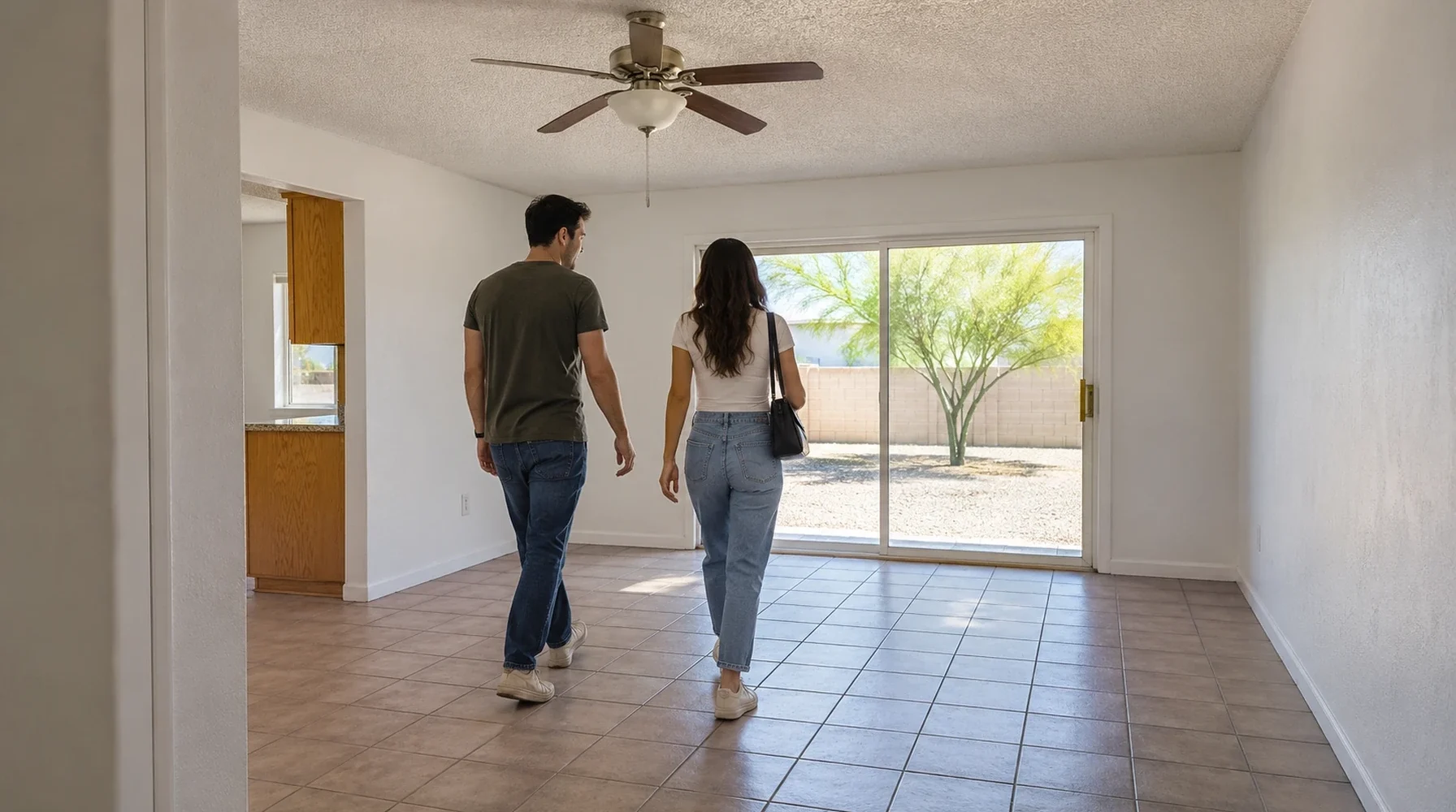
With more people relocating to the West Valley in 2026, how competitive is it really to buy a starter home in Glendale or Avondale right now?
Less competitive than the relocation headlines suggest, but not as relaxed as the “balanced market” framing implies, and the answer is genuinely different between the two cities. Glendale’s entry-level segment is moving fast with limited supply, while Avondale carries more inventory and gives buyers more breathing room. The competitive intensity for a starter home depends more on the specific submarket and price band than on the broader West Valley narrative.
Buyers searching for entry-level homes in Glendale and Avondale right now are reading two contradictory storylines at once. The first one says relocation pressure is making everything competitive: that you need to be ready to move fast, write strong offers and waive contingencies. The second one says we’re in a balanced market where buyers finally have leverage: that you can take your time, ask for concessions and negotiate freely. The honest version is that both stories are partially true depending on where you’re looking, what price band you’re in, and what condition the specific home is in. Painting Glendale and Avondale with the same brush is the fastest way to misread the market. Let’s walk through what’s actually happening at the entry-level price band in each city.
Two Cities, Two Different Markets
Glendale and Avondale are two distinct starter-home markets in early 2026: Glendale is functioning closer to a seller’s market in its tight segments, while Avondale is operating in clearly balanced conditions. Glendale’s housing data shows median sale prices in the high-$300s to mid-$400s depending on the data source, days on market in the 41-to-69 range, and inventory supply often well under one month in the most active segments. The sale-to-list ratio (what a home sells for compared with its final asking price), while not historically peak-frothy, is healthy enough to give sellers real pricing power.
Avondale tells a different story: median sale prices in the low-to-mid $400s, days on market closer to 60 to 80, and roughly three months of supply in some segments. Months of supply is how long the homes currently for sale would last if nothing new came on the market, so the lower the number, the more buyers are chasing each listing. That’s a meaningful difference.
| Early 2026 starter market | Glendale | Avondale |
|---|---|---|
| Median sale price | High-$300s to mid-$400s, depending on the data source | Low-to-mid $400s |
| Days on market | 41 to 69 | Closer to 60 to 80 |
| Inventory supply | Often well under one month in the most active segments | Roughly three months in some segments |
| Conditions in tight segments | Closer to a seller’s market | Clearly balanced |
If you’re cross-shopping the two cities, you’re not really comparing equivalents. You’re comparing two distinct micro-markets that share a freeway and a county line, and the offer that works in one can lose, or overpay, in the other. Our West Valley pricing strategy guide walks through how local data and buyer behavior converge in pricing decisions, and the same framework applies in reverse when you’re trying to decide whether the home you’re considering is overpriced, fair, or already aggressively positioned.
Why Glendale’s Entry Level Is Tighter
Three factors compress Glendale’s starter market: price, limited new construction, and the city’s entertainment profile. First, Glendale’s median price sits among the most accessible in the broader Phoenix metro, meaningfully below central Phoenix, Scottsdale, Chandler and most East Valley cities. That makes Glendale a natural landing spot for first-time buyers, relocators on tighter budgets, and investors targeting cash-flow-friendly purchases.
Second, the entry-level housing stock in West Glendale along the Camelback Road corridor and similar established neighborhoods has limited new construction supply. Most new development has shifted to Surprise, Buckeye and northern Peoria, leaving Glendale’s resale-only segment as the primary entry point. Third, Glendale’s sports-and-entertainment infrastructure (State Farm Stadium, Westgate, the Desert Diamond Arena and the planned VAI Resort) keeps the city’s profile elevated for both renters and buyers, supporting baseline demand.
The result: starter-home segments under $400,000 often see 30-to-45-day sale cycles with multiple offers on well-priced listings. For you as a buyer, that means a well-priced Glendale starter home is not one to sleep on, and your financing and inspection plans need to be in place before you tour.
– Jackson S, Phoenix, AZ
Why Avondale Gives Buyers More Room
Avondale gives starter buyers more room because more alternatives surround it, which limits how aggressively any single Avondale seller can price. The city has more new construction inventory in surrounding submarkets, which softens demand pressure on existing resale homes. The geographic spread of Avondale and its neighbors, Goodyear immediately to the west and Tolleson and Phoenix to the east, gives buyers more comparable alternatives.
Days on market in Avondale typically run longer than Glendale, supply is healthier, and the percentage of homes selling above asking price is meaningfully lower. For a starter buyer, that translates to more time to think, more room to negotiate, and more ability to ask for inspection-period repairs and closing-cost concessions (money the seller puts toward your closing costs). The trade-off is that some Avondale entry-level inventory tends to be older or in less-established subdivisions, which can affect long-term resale appreciation. Our piece on whether it’s a good time to buy in Peoria walks through similar buyer-leverage dynamics in a comparable West Valley submarket, and if you do negotiate hard in Avondale, it helps to know your options if an Avondale appraisal comes in low.
What “Relocation Demand” Actually Looks Like Right Now
Relocation demand for entry-level homes in 2026 is real, but the bulk of it is concentrated on master-planned new construction in Surprise, Buckeye and northern Peoria, not on resale starter homes in Glendale and Avondale. This is usually where I slow buyers down. Phoenix is consistently among the top destination metros for domestic relocation, particularly from California, Washington, Illinois and the Midwest. That demand is real.
Out-of-state relocators tend to want newer homes, modern floor plans and amenity-rich communities, which steers them away from Glendale’s older resale stock and toward newer Surprise and Buckeye builds. The relocators who do compete in Glendale’s entry-level market tend to be price-driven, looking for the most accessible entry into the metro and often planning to upgrade later. That’s a different competitive profile than the bidding-war narrative suggests. If you’re one of those relocators yourself, our guide to what to know before you commit to Greater Phoenix covers the bigger decision first.
Where The Real Competition Hides
The most competitive starter homes in either Glendale or Avondale right now are well-priced, well-kept homes in an established subdivision with a defensible school assignment, and those go fast in both cities. The least competitive segment is the over-priced or condition-challenged listing that has been sitting on the market for 60-plus days. The middle is where most starter buyers are actually shopping, and it’s the middle where preparation makes the biggest difference.
Lender pre-approval (a lender’s written review of your income, credit and assets, not just a quick estimate) is mandatory, not optional. Pre-arranging a ready-to-go inspector and a backup inspector matters when you’re working a 10-day inspection window. Knowing your absolute walkaway number, including total monthly housing cost and not just principal and interest, keeps you from getting emotionally pulled past your budget when you find a home you like. What I watch for here is whether the buyer is shopping with structure or shopping with hope. Structure wins this market.
Loop 303 And Long-Term Geography Matter More Than Most Buyers Realize
If you’re choosing between Glendale and Avondale partly as a long-term investment, factor in the broader West Valley growth corridor along Loop 303. Glendale’s commercial and lifestyle infrastructure is dense and established, but appreciation has been modest in recent years. Avondale sits along I-10 with growing access to Loop 303 and the future SR 30, putting it in the path of two decades of planned infrastructure investment that may support stronger long-term appreciation than Glendale’s more saturated market.
That’s not a guaranteed outcome, but the macro setup is meaningfully different, and it is worth weighing alongside how competitive each market is today. The Maricopa Association of Governments planning resources provide useful neutral context on regional infrastructure projections that affect both markets.
Frequently Asked Questions About Glendale and Avondale Starter Homes
Is Glendale or Avondale a more competitive starter home market in 2026?
Glendale’s entry-level segment is meaningfully tighter, with shorter days on market and lower inventory supply. Avondale offers more room to negotiate, longer days on market, and higher inventory in most segments.
What is the typical price range for starter homes in Glendale right now?
Median sale prices for Glendale’s entry-level segment hover in the high-$300s to mid-$400s, with the most accessible inventory concentrated in West Glendale and along the Camelback Road corridor.
How much inventory is available in Avondale compared to Glendale?
Avondale carries roughly 3 months of supply in most segments, while Glendale runs well under 1 month of supply in tight starter-home segments, a substantial difference for buyer leverage.
How fast do Glendale starter homes under $400,000 sell?
Starter-home segments under $400,000 in Glendale often see 30-to-45-day sale cycles, with multiple offers on well-priced listings.
Are out-of-state relocators driving competition in Glendale and Avondale?
Some, but the bulk of relocation demand for entry-level homes concentrates on master-planned new construction in Surprise, Buckeye, and northern Peoria, not on resale homes in Glendale and Avondale.
What should I have ready before making an offer on a starter home?
Have a lender pre-approval, a ready-to-go inspector plus a backup for the 10-day inspection window, and a walkaway number based on your total monthly housing cost, not just principal and interest.
Can I negotiate repairs and closing costs on an Avondale starter home?
Often, yes. With longer days on market and healthier supply, Avondale starter buyers generally have more ability to ask for inspection-period repairs and closing-cost concessions than buyers in Glendale’s tight segments.
Should I buy in Glendale or Avondale for long-term appreciation?
Avondale’s position along I-10 with growing Loop 303 and future SR 30 access may support stronger long-term appreciation than Glendale’s more saturated market, though no specific outcome is guaranteed.
The Bottom Line
The “competitive market” narrative breaks down at the city level. Glendale’s starter segment is genuinely tight, so preparation, speed and clean offers matter. Avondale’s starter segment gives buyers real room to negotiate, take inspection time, and ask for concessions. Knowing which market you’re actually in is the difference between writing offers that work and offers that lose to better-prepared buyers. Don’t let a generic West Valley headline drive a decision that should be made at the neighborhood level.
Calibrating your offer strategy to the specific submarket you’re actually competing in, and aligning it with your budget and goals, is how you make your move with clarity and confidence.
If you want to talk through whether a Glendale or Avondale starter home fits your budget and how to shape an offer for the market you’re shopping in, let’s explore your options. You can reach me, Kasandra Chavez with the Chavez Dream Home Team, at 928-910-7401, or grab a time on my calendar.