


Disclosing the Cotton Lane Expansion When Selling in Goodyear
What do I need to disclose about the Cotton Lane expansion when selling my Goodyear home?
Arizona’s SPDS asks whether you are aware of proposed or existing conditions in the vicinity that may affect the property, and a publicly announced City of Goodyear roadway project on your corridor falls squarely inside that question. Disclose what you actually know, point the buyer to the city’s own project page rather than characterizing the work yourself, and let the buyer investigate from there.
Disclosure is where otherwise straightforward Goodyear sales go sideways, and almost never because a seller lied. It goes sideways because a seller guessed, either guessing that something did not need mentioning or guessing at details they did not actually have. The Cotton Lane Roadway Improvement Project is exactly the kind of item that invites both mistakes: it is public, it is nearby, and most sellers know just enough about it to describe it inaccurately. What I watch for here is the gap between what a seller knows and what a seller thinks they know, because on the SPDS that gap is the entire risk.
What Does the Arizona SPDS Actually Ask About Nearby Projects?
The Arizona SPDS asks sellers to disclose known material facts about the property, including whether they are aware of conditions in the vicinity that could affect it, and a scheduled roadway reconstruction on your Goodyear corridor is a condition in the vicinity. The SPDS, or Seller’s Property Disclosure Statement, is the form an Arizona seller fills out to tell the buyer what they know about the home and its surroundings. It is a disclosure of the seller’s actual knowledge, not a warranty and not a research report. You are not required to investigate the City of Goodyear’s capital projects list. You are required to be honest about what you already know.
That distinction cuts both ways for a Goodyear seller. If you have received a city notice, seen the signage, attended a meeting, or discussed the project with neighbors, you know about the Cotton Lane project, and it goes on the form. If you genuinely have never heard of it, you cannot disclose knowledge you do not have.
Because the SPDS is a legal document and the AAR residential purchase contract (the standard Arizona Association of REALTORS® contract) builds specific timelines around it, the specific wording for your situation is worth reviewing with your agent and, where the facts are complicated, an Arizona real estate attorney. I am not offering legal advice here; I am telling you where the trap is. For the wider set of forms and dates a seller works through, our guide to the paperwork, disclosures and deadlines required to sell a home walks through the full list.
How to Disclose the Cotton Lane Project Without Overstating It
The safest disclosure of the Cotton Lane project on a Goodyear SPDS names the project, states what you know, and hands the buyer the source; it does not characterize the impact. Sellers get into trouble by editorializing in either direction. “There is minor road work nearby that won’t affect you” is a characterization you cannot support. So is “the road will be torn up for years.”
What works is plain and sourced: name the Cotton Lane Roadway Improvement Project, state that it is a City of Goodyear project affecting the corridor, note when you became aware of it, and direct the buyer to the City of Goodyear’s project page for scope, limits, and current schedule. The city publishes the authoritative version; you do not have to become the expert. That also means the buyer is reading the city’s description, not yours, so nothing on your form can later be called a promise about how the work will go.
One more precision point, because sellers and buyers conflate these constantly: the Cotton Lane Roadway Improvement Project is a City of Goodyear project. ADOT’s Loop 303 extension south of Van Buren Street is a separate freeway project run by a different agency (the Arizona Department of Transportation) on a different timeline. If you disclose “the Loop 303 construction” when you mean the city’s Cotton Lane work, you have introduced an inaccuracy into a legal document. If the freeway project is the one on your mind, our look at how the Loop 303 expansion affects Surprise and Goodyear home values covers that side separately.
– Ankita C, Gilbert, AZ
Why Over-Disclosing Protects a Goodyear Seller
Disclosing the Cotton Lane project costs a Goodyear seller almost nothing and protects against the one outcome that genuinely hurts: a buyer who feels something was concealed. Buyers who learn about a road project from the SPDS treat it as a fact to evaluate. Buyers who learn about it after inspection, from a neighbor, a sign, or a search, treat it as a reason to renegotiate or cancel.
Under the AAR residential purchase contract, the buyer has a ten-day inspection period to investigate the property and the surrounding area. Anything material they surface during that window becomes leverage. A project you disclosed on day one is not leverage; it is a known condition they accepted when they wrote the offer. In practice, that means your disclosure moves the conversation about the road from the middle of escrow, when you have the least room to negotiate, to the offer itself.
There is also a durability argument. A transaction that closes cleanly with full disclosure stays closed. This is the same reasoning behind how we handle other named nearby projects. Our guides to what goes on your SPDS when selling near Project Baccara and selling a Waddell home near the ERMCO plant apply the same standard to different developments.
What Goodyear Sellers Should Gather Before Completing the SPDS
Before you sit down with the SPDS on a Goodyear home near the Cotton Lane corridor, collecting four things makes the form faster and the disclosure stronger.
- City notices you received: Any mailer, door hanger, or email from the City of Goodyear about the Cotton Lane project establishes what you knew and when, which is exactly what the SPDS is asking.
- The current project page: Pull up the city’s project page the day you complete the form so the scope and schedule you reference match what the city is publishing at that moment.
- Your HOA’s communications: If your HOA has circulated anything about the corridor work, traffic routing, or construction access, that is part of your knowledge and belongs in the same file.
- Any other vicinity items: Sellers who disclose one nearby project sometimes stop there, but the SPDS question is broader, so think through anything else in the vicinity you are aware of at the same time.
With those four items in one folder, filling out the SPDS becomes a matter of writing down what the file already shows, rather than working from memory.
Frequently Asked Questions About Disclosing the Cotton Lane Project in Goodyear
Do I have to disclose the Cotton Lane project if I live a mile away?
The SPDS asks about conditions in the vicinity that you are aware of. If you know about the project and it plausibly affects your area, disclosing is the safer course. The cost of disclosing is low; the cost of omitting is not.
What if I only found out about the project from a neighbor?
Knowledge is knowledge regardless of the source. Disclose what you know, note how you learned it, and point the buyer to the city’s page rather than repeating secondhand detail.
Can I describe the project’s impact on my SPDS?
Avoid it. Characterizing the impact in either direction creates a statement you may not be able to support. Name the project and direct the buyer to the city’s own page.
Does disclosing a road project hurt my sale price?
Usually far less than a mid-escrow discovery does. A disclosed condition gets priced into the offer; a late-surfacing one becomes renegotiation leverage during the inspection period.
Is the Cotton Lane project the same as the Loop 303 extension?
No. The Cotton Lane Roadway Improvement Project is a City of Goodyear project. ADOT’s Loop 303 extension south of Van Buren Street is a separate freeway project run by a different agency on a different timeline, so name the one you actually mean.
Do I have to research city projects before filling out the SPDS?
No. The SPDS is a disclosure of what you actually know, not a warranty or a research report. You are not required to investigate the City of Goodyear’s capital projects list, only to be honest about what you already know.
How long does a buyer have to investigate a Goodyear home?
Under the AAR residential purchase contract, the buyer has a ten-day inspection period to investigate the property and the surrounding area. Anything material they find in that window can become negotiating leverage.
Who handles closing on a Goodyear home sale?
In Arizona, title companies handle closings. Closing typically runs about 30 days from an accepted offer under the AAR residential purchase contract.
What Actually Matters Here
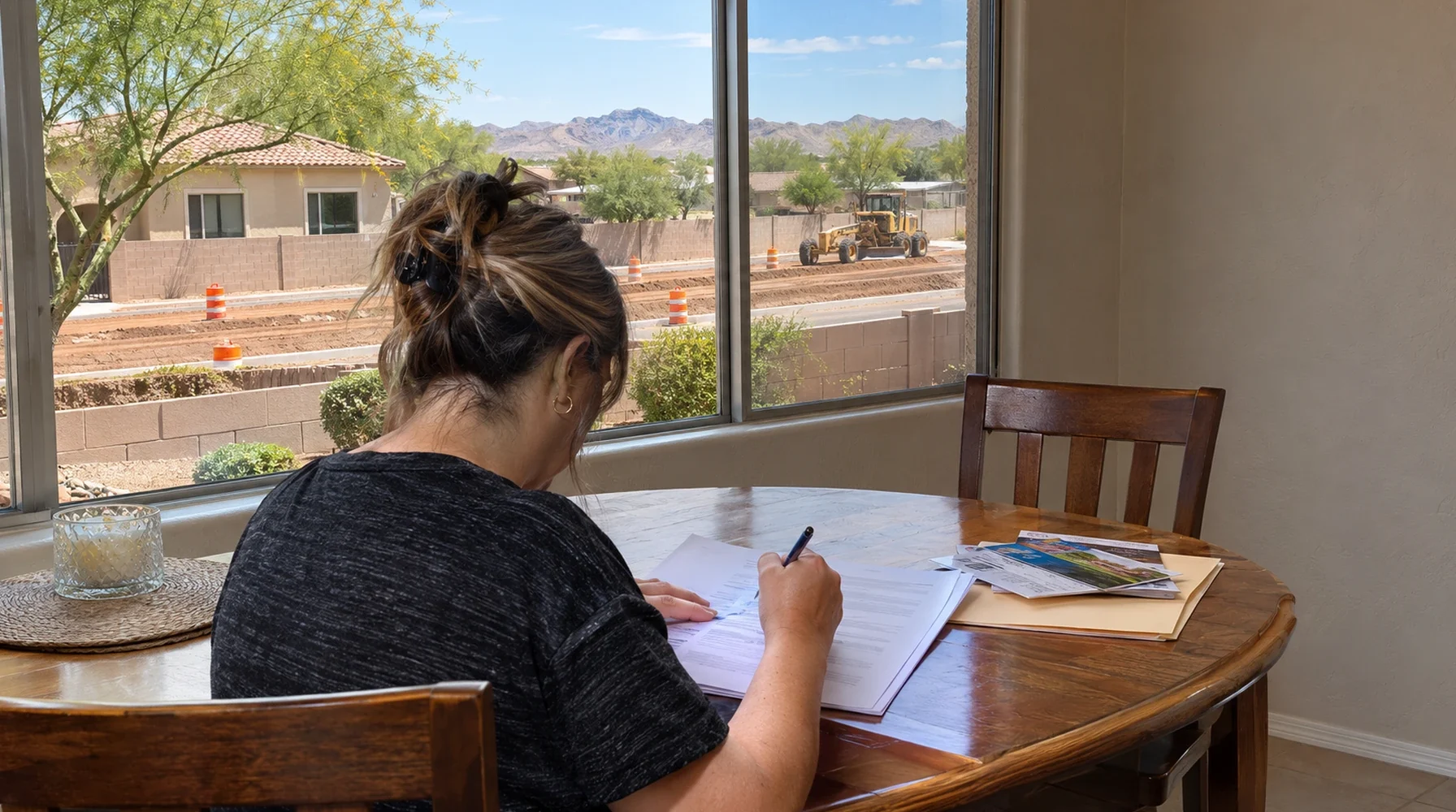
The Cotton Lane project is public information. Your buyer will find it during the inspection period, from a neighbor, or from a traffic cone on their second visit. The only variable you control is whether they find it from you first.
Disclose what you know, name the project accurately, hand them the city’s page, and stop there. That approach takes about ten minutes, keeps you out of the one dispute that reliably costs Goodyear sellers real money, and lets the rest of the transaction be about the house instead of about what you did or did not say.
Getting the disclosure right on day one is how you make your move with clarity and confidence, and it is why I walk the disclosure paperwork through with my sellers line by line before anything gets signed.
If you want to talk through how the Cotton Lane project belongs on the SPDS for your specific Goodyear home, let’s chat. You can reach me, Kasandra Chavez with the Chavez Dream Home Team, at 928-910-7401, or grab a time on my calendar.