


Is Desert Hills Worth the Acreage Premium Near TSMC?
If I’m moving from California to work in the Taiwan Semiconductor supplier ecosystem near Deer Valley, is Desert Hills worth the price premium for a larger lot?
It can be, but only if you actually want what the premium buys. In Desert Hills you’re not paying extra for the same house on a bigger lot; you’re paying for one to two-plus acres of unincorporated, mostly no-HOA land with well and septic systems and real rural freedom, paired with a workable I-17 commute to the TSMC campus and the Deer Valley corridor. For a California relocation buyer who genuinely wants space, autonomy, and room for horses, shops, or RVs, and who will budget for well, septic, and acreage upkeep, it’s often worth it.
If what you really want is square footage and a low-maintenance home, a conventional lot in a closer-in North Phoenix neighborhood or in neighboring Anthem may serve you better for the money.
Relocation buyers coming from California tend to run this decision on price per square foot (the sale price divided by the home’s living space) alone, which is exactly the wrong yardstick for Desert Hills. This is usually where I slow buyers down, because acreage isn’t a bigger version of a tract lot; it’s a different kind of ownership with different costs, different due diligence, and a different daily life. The good news is that the commute to the semiconductor corridor is very manageable from Desert Hills, so the decision really does come down to whether the land itself is what you want. Below, I’ll cover the commute, what the premium actually pays for, the ownership costs that catch newcomers off guard, and how I help California buyers pressure-test the choice.
One note on names before we start, because “Deer Valley” means different things in north Phoenix: a road (Deer Valley Road), an airport (Deer Valley Airpark), and a wider area. In this post, Deer Valley means that wider area, the north Phoenix employment and airport corridor around I-17 and Loop 101. TSMC’s own campus is a separate stop farther north, at Loop 303 and I-17 (43rd Avenue and Dove Valley Road) in Phoenix’s North Gateway area.
How Far Is Desert Hills From TSMC and Deer Valley in North Phoenix?
Desert Hills is about a 15-minute drive from TSMC’s north Phoenix campus, which sits on the opposite side of I-17, close enough for an easy commute but not right next door. The Deer Valley employment corridor near Loop 101 is farther south, and Desert Hills sits north of it along the I-17 corridor, which makes that commute one of the more manageable parts of this decision too.
Desert Hills is an unincorporated area near Carefree Highway and I-17, immediately adjacent to Anthem, and the drive south to the Deer Valley employment corridor is a straight shot down the interstate rather than a cross-Valley slog. For a worker in the semiconductor supplier network clustered around north Phoenix and Deer Valley, that north-to-south alignment keeps the daily drive reasonable in a way many California commutes never were.
The jobs at the end of that drive are part of a long build-out. According to Focus Taiwan, TSMC announced an additional $100 billion for Arizona in July 2026, bringing its planned Arizona investment to $265 billion. For you, that means the TSMC commute is worth judging as a long-term, everyday drive, the same way you would judge the land you plan to live on.
Commute is where relocation buyers most often over- or under-weight a location, so it’s worth grounding against alternatives rather than judging in isolation. A closer-in North Phoenix neighborhood will shave minutes off the drive to Deer Valley, while Desert Hills trades a slightly longer commute for acreage you can’t get closer to the fabs. Anthem sits just north of Desert Hills, so it offers a similar drive with a conventional lot rather than a shorter one. If you’re weighing how commute balances against inventory and lifestyle across the north Valley, my breakdown of timing a move between Peoria and North Phoenix walks through that same corridor and the way the TSMC-driven growth is reshaping demand there.
What Are You Actually Paying a Premium For in Desert Hills?
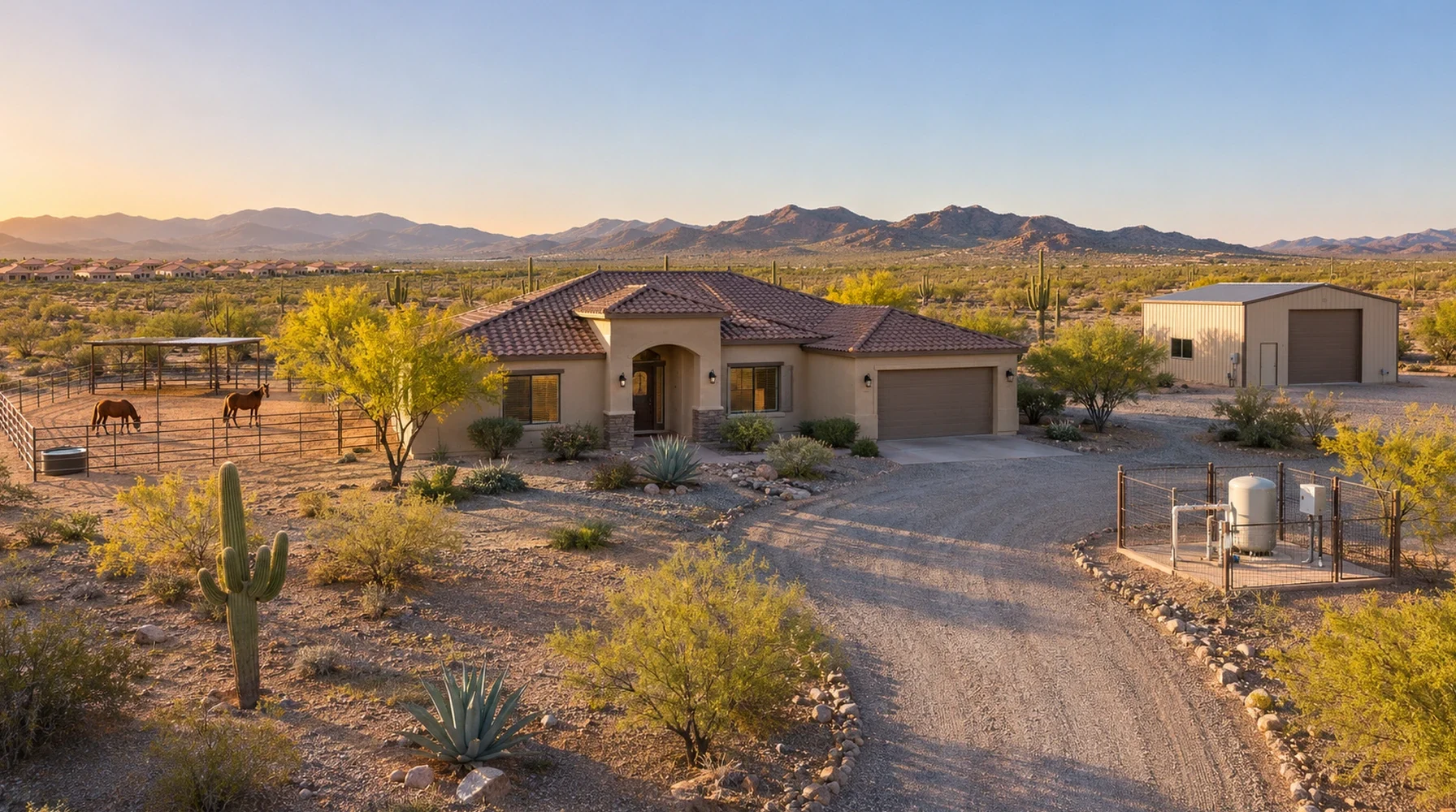
The Desert Hills premium pays for land and autonomy, not for a nicer house, and that distinction is the whole answer to whether it’s “worth it.” Homes in Desert Hills typically sit on one to two-plus acres in unincorporated Maricopa County, most without an HOA (a homeowners association, which sets neighborhood rules and collects dues), which buys you space for horses, a workshop, RV and toy storage, and the dark-sky quiet that the neighborhood is known for. That freedom is the product. A California relocation buyer who has spent years inside tight lot lines and strict HOAs is often paying the premium specifically to leave those constraints behind, and for that buyer the money is buying something concrete.
What I watch for here is a buyer paying the acreage premium while secretly wanting a low-maintenance tract-home lifestyle. Because Desert Hills is unincorporated, land use is governed by county rules rather than a city, which you can review through Maricopa County’s planning and zoning for unincorporated areas. That’s part of the freedom, but it also means fewer built-in guarantees about what a neighbor can do. The premium is genuinely worth it when the acreage and autonomy are the point; it’s a poor trade when you’re really buying it for the square footage and would have been happier with less land and less upkeep closer to Deer Valley.
– Christopher, Goodyear, AZ
Well, Septic, and Acreage Costs: The Desert Hills Trade-Off
The real cost of a Desert Hills home isn’t the price premium; it’s the ownership responsibilities that acreage carries, and they’re the items a California buyer is least likely to have encountered before. Many Desert Hills properties run on private or shared wells and septic systems rather than municipal water and sewer, and the land itself needs maintenance a small tract lot never does. A septic system treats your household wastewater in a tank and drain field on your own land instead of sending it to a city sewer. None of this makes Desert Hills a bad buy; it makes it a different buy, and the buyers who are happy here are the ones who priced these responsibilities in before closing rather than after.
Before you offer on a Desert Hills acreage property, these are the due-diligence items I make sure a relocation buyer understands, because each one can carry real cost:
- Water source and rights: A Desert Hills home may rely on a private well or a shared well agreement, so confirm the water source, the well’s condition and output, and exactly who owns and maintains it.
- Septic system: Most Desert Hills properties use a septic system that must be inspected and, in Arizona, transferred properly at sale, so budget for inspection and any required pumping or repair.
- County zoning and use: Because Desert Hills is unincorporated Maricopa County, verify the zoning and permitted uses for horses, outbuildings, or a business before you assume the land allows them.
- Road and access maintenance: Some Desert Hills parcels sit on private or shared roads, so confirm who maintains access and whether a road agreement exists.
- Utilities and services: Services like propane, trash, and internet work differently on acreage than in an HOA community, so confirm what’s available and what it costs at the specific parcel.
Each of these gets a fuller walk-through in my guide to buying acreage in Desert Hills, from wells and septic to roads. Here’s how the trade-off compares against a closer, more conventional north Valley option:
| Consideration | Desert Hills acreage | Closer North Phoenix / Anthem HOA home |
|---|---|---|
| Lot size | Typically 1 to 2.5+ acres | Standard subdivision lot |
| HOA / rules | Usually none; county zoning applies | HOA with rules and dues |
| Water & sewer | Often private/shared well + septic | Municipal water and sewer |
| Commute to Deer Valley / TSMC | About 15 minutes to TSMC; longer to the Deer Valley corridor, but a straight I-17 drive | Shorter from closer-in North Phoenix; similar from Anthem, which sits just north of Desert Hills |
| Ongoing upkeep | Acreage, well, and septic maintenance | Lower, more predictable |
What I Watch For With California Buyers Eyeing Desert Hills Acreage
For a California buyer relocating for a Deer Valley-area semiconductor job, the decision I help you pressure-test is whether you’re buying Desert Hills for the land or just for the lower price per foot, because those lead to very different outcomes. At this stage, I help clients narrow their focus to a simple test: if the acreage, the no-HOA freedom, and the room to spread out disappeared and only the square footage remained, would you still choose Desert Hills over a closer Deer Valley-area home? If yes, the premium is buying you the life you moved for. If you hesitate, a more conventional north Phoenix purchase probably fits better.
Relocating sight-unseen adds its own layer, and it’s very solvable with the right contract structure. Much of your protection comes from how inspection rights and timelines are written, which is the focus of my guide on buying sight-unseen from out of state and protecting yourself in the contract, and the logistics of a fast relocation close are laid out in the week-by-week closing checklist for an out-of-state buyer.
In Arizona, remember that a title company handles your closing, your inspection period under the AAR contract (the Arizona Association of REALTORS® purchase contract most resale homes use) is commonly ten days, and the seller provides the SPDS (the Seller’s Property Disclosure Statement). On an acreage property, use that window for the well and septic inspections specifically. For broader context on the market you’re moving into, Census QuickFacts for Phoenix is a useful reference point.
Frequently Asked Questions About the Desert Hills Acreage Premium Near TSMC
How far is Desert Hills from the TSMC area near Deer Valley?
TSMC’s campus at Loop 303 and I-17 sits on the opposite side of I-17 from Desert Hills, about a 15-minute drive. The Deer Valley employment corridor near Loop 101 is farther south, a longer but straightforward drive down I-17.
What does “Deer Valley” mean in this post?
Here it means the north Phoenix employment and airport corridor around I-17 and Loop 101. Deer Valley Road and Deer Valley Airpark share the name, and TSMC’s campus is farther north, at Loop 303 and I-17.
Do Desert Hills homes have city water and sewer?
Often no. Many Desert Hills properties rely on private or shared wells and septic systems rather than municipal water and sewer. Confirm the water source, well ownership, and septic condition during your inspection period.
Does Desert Hills have an HOA?
Most Desert Hills properties are in unincorporated Maricopa County without an HOA, governed instead by county zoning. That’s part of the appeal, but it also means fewer built-in rules about neighboring land use.
Is Desert Hills good for horse property?
Desert Hills is known for larger acreage lots that can suit horses, workshops, and RV storage. Verify the specific parcel’s county zoning and permitted uses before assuming a given use is allowed.
Which inspections matter most on a Desert Hills acreage home?
Alongside the standard home inspection, use your inspection period, commonly ten days under the Arizona purchase contract, for the well and septic inspections specifically, and confirm road access and who maintains it.
Who handles the closing when I buy in Arizona?
A title company handles your closing in Arizona. The seller also provides the SPDS, the Seller’s Property Disclosure Statement, which tells you what the seller knows about the home and the land.
Can I buy Desert Hills acreage while still living in California?
Yes. Much of your protection comes from how inspection rights and timelines are written in your contract, so plan video tours, local well and septic inspections, and a week-by-week closing plan from the start.
The Bottom Line
For a California buyer relocating to work near Deer Valley, Desert Hills is worth the acreage premium when the land itself is what you want (the space, the near-total absence of an HOA, and the room to keep horses or build a shop) and when you’ve budgeted for the well, septic, and upkeep that come with it. The commute down I-17 to the TSMC supplier corridor is manageable, so this really is a decision about how you want to live, not just where you want to work.
Price it as a different kind of ownership rather than a bigger tract lot, run the well and septic due diligence carefully, and you’ll know whether the premium is buying the life you’re moving for or just more square footage than you needed. Walking those trade-offs with you and building a calm, clear plan for each step is how I help relocation buyers make their move with clarity and confidence.
If you want to talk through whether Desert Hills acreage fits your move for a job near TSMC or Deer Valley, let’s chat. You can reach me, Kasandra Chavez with the Chavez Dream Home Team, at 928-910-7401, or grab a time on my calendar.