

Buy in Peoria Now Before the TSMC Corridor Lands, or Wait?
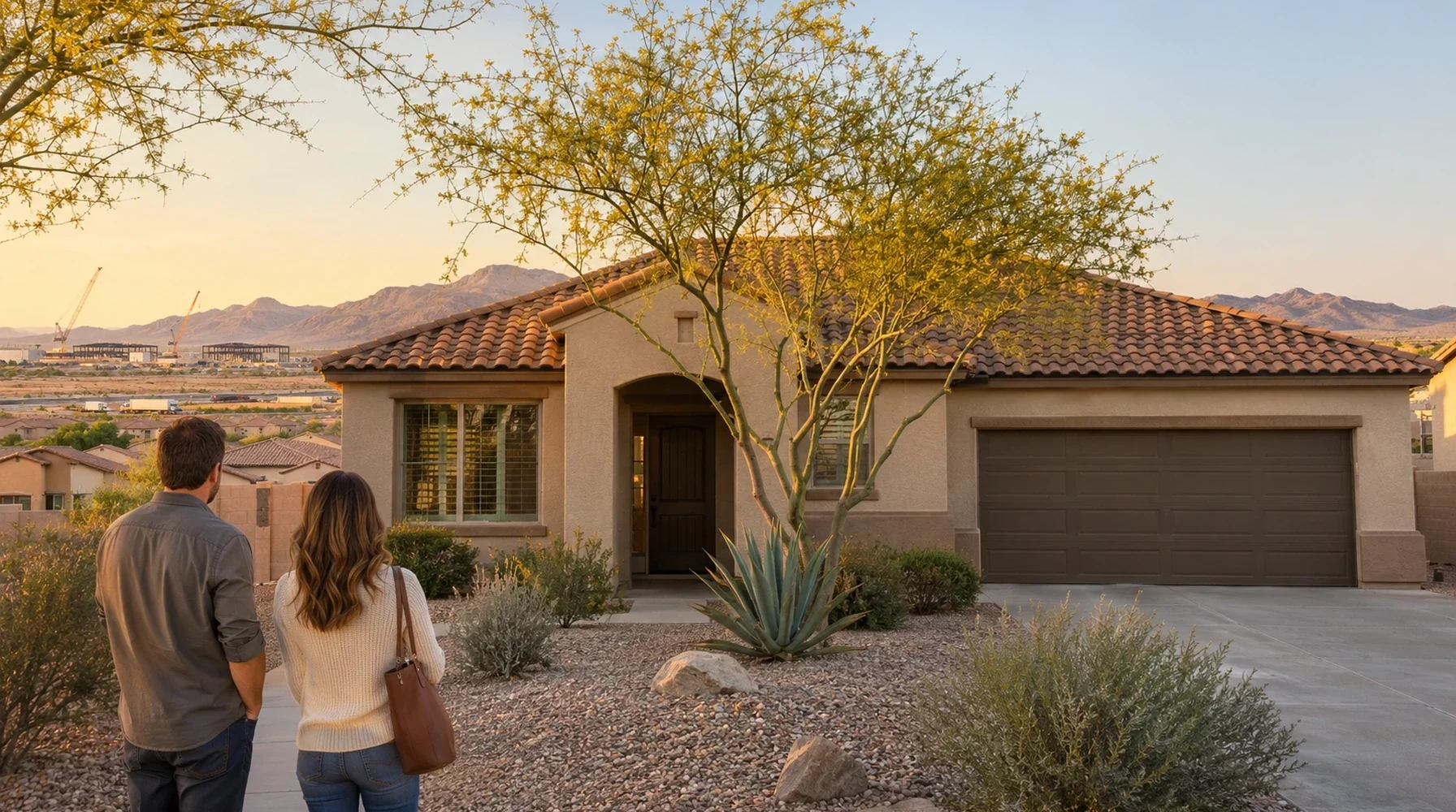
Should I buy a house in Peoria now before the TSMC corridor fully lands, or wait for rates to drop?
If you can comfortably afford a Peoria home today, buying now and refinancing later is usually the stronger move, because home values in an expansion area like the Loop 303 corridor tend to rise over time, and buying early, then being patient, is how you get the benefit of that increase. You can always refinance a rate later, but you can’t undo getting priced out of the neighborhood you really wanted.
If you’re weighing this, you’re not overthinking it; you’re doing exactly what a careful buyer should. Right now, a lot of Peoria buyers feel caught between two fears: locking in a rate that feels high, or waiting and watching the homes they love get more expensive as the North Valley fills in. The Loop 303 corridor is one of the most active growth stories in Greater Phoenix, and Peoria sits right in the middle of it. That makes the timing question feel bigger than it is. This is usually where I slow buyers down and separate the two things that actually drive your monthly payment: the rate, and the price of the house itself. Once you see them side by side, the decision gets a lot clearer.
Why the TSMC Corridor Changes the Peoria Math
The TSMC corridor changes the Peoria math because the jobs and infrastructure it brings reach well past a city line, even though the TSMC fabs themselves are not in Peoria. Let’s clear up that common misconception first: TSMC’s campus sits in North Phoenix, at Loop 303 and I-17 near 43rd Avenue and Dove Valley Road. But the effect of that investment doesn’t stop at a city line. It radiates along the Loop 303 and the broader North Valley, pulling jobs, infrastructure, and housing demand into Peoria, North Surprise, and North Glendale. Peoria isn’t a bystander next to a Phoenix facility; it’s a corridor community riding the same wave.
The most concrete Peoria connection is Amkor Technology’s advanced semiconductor packaging campus, which the City of Peoria’s North Peoria planning efforts confirm is being built inside the Peoria Innovation Core along the Loop 303. That is the facility that packages the chips coming out of the nearby fabs. The City of Peoria is also investing $500 million in infrastructure and utility improvements for the Peoria Innovation Core, and it bought 834 acres along Loop 303 on August 27, 2025, according to Peoria Economic Development.
Layer on the ADOT Loop 303 corridor work and the industrial buildout following it, and you have an employment and infrastructure story that’s still in its early innings. That matters for a buyer, because the corridor isn’t “done”; it’s ramping. Amkor’s packaging campus and the city’s infrastructure are still under construction. For you, that means the jobs arrive over years, not all at once, so the decision in front of you is about the home and the payment, not about beating a single announcement. Getting in while the area is still growing is usually more valuable than getting in after it has arrived.
Rates Are One Lever, Home Price Is the Other
Your monthly payment on a Peoria home depends on two levers, the mortgage rate and the price of the home, and waiting only helps you if the rate falls more than the price rises. Here’s the piece most buyers miss when they fixate on the rate: your affordability is a product of the rate and the price of the home. In today’s rate environment, it’s tempting to wait for a better number. But if you wait six or twelve months for a modest rate improvement and prices tick up in the meantime, the lower rate gets quietly swallowed by a higher purchase price, and you may end up with a similar payment on a home you like less, in an area that’s now more competitive.
It also helps to know that the rate you see in a headline is not your rate. Your actual rate depends on your credit, your debt-to-income ratio (DTI, the share of your monthly income that already goes to debt payments) and your loan type. A lender can show you your real rate and payment, which is the number this decision should rest on.
That’s the logic behind “marry the house, date the rate.” The house is the part you can’t easily change later; the rate is. Refinancing means replacing your loan with a new one at a lower rate. It comes with its own closing costs and you have to qualify again, so treat it as an option rather than a promise. If rates fall after you buy, you refinance and keep the home you wanted. If they don’t fall, you’ve still locked in your price in a corridor that is still growing. What I watch for here is whether the home is genuinely affordable now, not whether the rate is perfect. A perfect rate on a house you got priced out of is worth nothing.
The Soft-Market Window in New-Build Areas
There’s a timing advantage in Peoria right now that’s easy to overlook. In areas with active new construction, builders and their new inventory compete directly with nearby resale homes. That competition tends to produce a softer, more negotiable market: more room to ask for concessions (money or terms a seller gives to help you buy, such as paying part of your closing costs), more patience from sellers, and less of the multiple-offer pressure that shows up when inventory tightens. When you pair a softer negotiating environment with an expansion period, you’re buying at a favorable moment inside a rising area. That combination, room to negotiate today with growth baked in for tomorrow, is exactly the window that closes when demand catches up to supply. I help clients recognize that window for what it is, because it doesn’t announce itself.
What Waiting Actually Costs You
The real cost of waiting to buy in Peoria usually isn’t the rate; it’s the neighborhood. I’ve worked with many buyers over the years who set out to wait for the “perfect” rate, and what happens more often than not is that the people who wait get priced out of the exact neighborhoods they wanted to be in. That’s not a number on a spreadsheet you can recover later; it’s a door that quietly closes. So my guidance is consistent: if a specific location and community matter to you, and you can afford the home now, make the move now. You either refinance later if rates drop, or, if they don’t, you’ve bought into a soft market during an expansion period, which historically translates into rising home values. That’s baked-in wealth, and it’s the part of the decision that can’t be undone once you’ve missed it.
– Dan and Lori G, Sun City, AZ
To make the tradeoff concrete, here’s how buying a Peoria home now compares to waiting for a better rate in a corridor that’s still growing:
| What’s at stake | Buying Now | Waiting for a Lower Rate |
|---|---|---|
| Purchase price exposure | Locked at today’s price before corridor demand builds | Exposed to price increases as the area fills in |
| Negotiating leverage | Stronger in a softer, new-build-competitive market | Weaker if inventory tightens and multiple offers return |
| Neighborhood availability | You secure the community you actually want | Risk of being priced out of your first-choice area |
| The rate itself | Refinance later if rates fall, no need to time it | You can’t lock a price you never bought at |
| Long-term equity | Appreciation during an expansion period accrues to you | Appreciation you waited through benefits the seller |
If you’re comparing corridor-area options, it’s worth reading how Vistancia in North Peoria fits the TSMC-area picture and how the Peoria Innovation Core is expected to shape local home values. If the rate question is what’s really holding you back, my breakdown of whether to wait for mortgage rates or buy now and refinance in the West Valley walks through the same math in more detail, and whether now is a good time to buy in Peoria covers the broader market picture.
Frequently Asked Questions About Buying in Peoria Now or Waiting for Rates
Is the TSMC plant actually in Peoria?
No. The TSMC fabs are in North Phoenix, at Loop 303 and I-17. Peoria benefits through the Loop 303 corridor and Amkor’s semiconductor packaging campus in the Peoria Innovation Core, which is tied to the same supply chain.
Will buying in Peoria now mean I overpay before rates drop?
Not necessarily. In areas with active new construction, resale homes compete with builder inventory, which often creates a softer, more negotiable market now, sometimes more valuable than a modestly lower rate later.
Can I refinance later if rates fall after I buy?
Yes, if you qualify. Refinancing replaces your loan with a new one at a lower rate and has its own closing costs. You keep the home and the price you locked in. You can change a rate; you can’t rebuy a home you passed on.
Does new construction competition make Peoria a buyer’s market right now?
In areas with active new construction, builder inventory competes with nearby resale homes, which tends to produce a softer, more negotiable market. Conditions vary by neighborhood and price point.
What’s driving home demand along the Loop 303 corridor?
Semiconductor-related investment, infrastructure like the Loop 303 improvements, and job growth are drawing residents to the North Valley. That demand tends to firm up home prices in nearby communities over time.
What mortgage rate will I get on a Peoria home?
Your rate depends on your credit, your debt-to-income ratio and your loan type, not on the headline rate. A lender can quote your actual rate and payment before you decide whether to buy now or wait.
What is Amkor building near Peoria?
Amkor Technology is building its advanced semiconductor packaging campus in the Peoria Innovation Core along Loop 303, the facility that packages chips coming out of the nearby fabs.
What is the Peoria Innovation Core?
It is the City of Peoria’s planned growth area along the Loop 303 corridor in north Peoria, where Amkor is building. The city bought 834 acres there on August 27, 2025, and is investing $500 million in infrastructure and utilities.
The Bottom Line
Timing a purchase around a single rate movement is the wrong frame. Your payment depends on both the rate and the price, and in an expansion area like this one, home values tend to rise over time, and the buyers who get in early and stay patient are the ones who benefit from that increase. If a Peoria home is genuinely affordable for you today, buying now lets you lock your price, negotiate from a position of strength in a softer market, and refinance later if rates cooperate. If they don’t, you’ve still bought into an expansion period where growth works in your favor. The buyers who wait for perfect conditions are too often the ones who get priced out of the neighborhoods they loved, and that’s the one part of this decision you can’t undo.
Separating the rate from the price is how you make your move with clarity and confidence. That’s how I work with every buyer: we run your real numbers, look at the homes you would actually compete for, and build clear, personalized guidance around today’s market and your unique situation.
If you want to talk through how buying in Peoria now or waiting for rates affects your specific situation, let’s explore your options. You can reach me, Kasandra Chavez with the Chavez Dream Home Team, at 928-910-7401, or grab a time on my calendar.