
Mortgage Rates Over 7% in Surprise, AZ? How to Pay Less
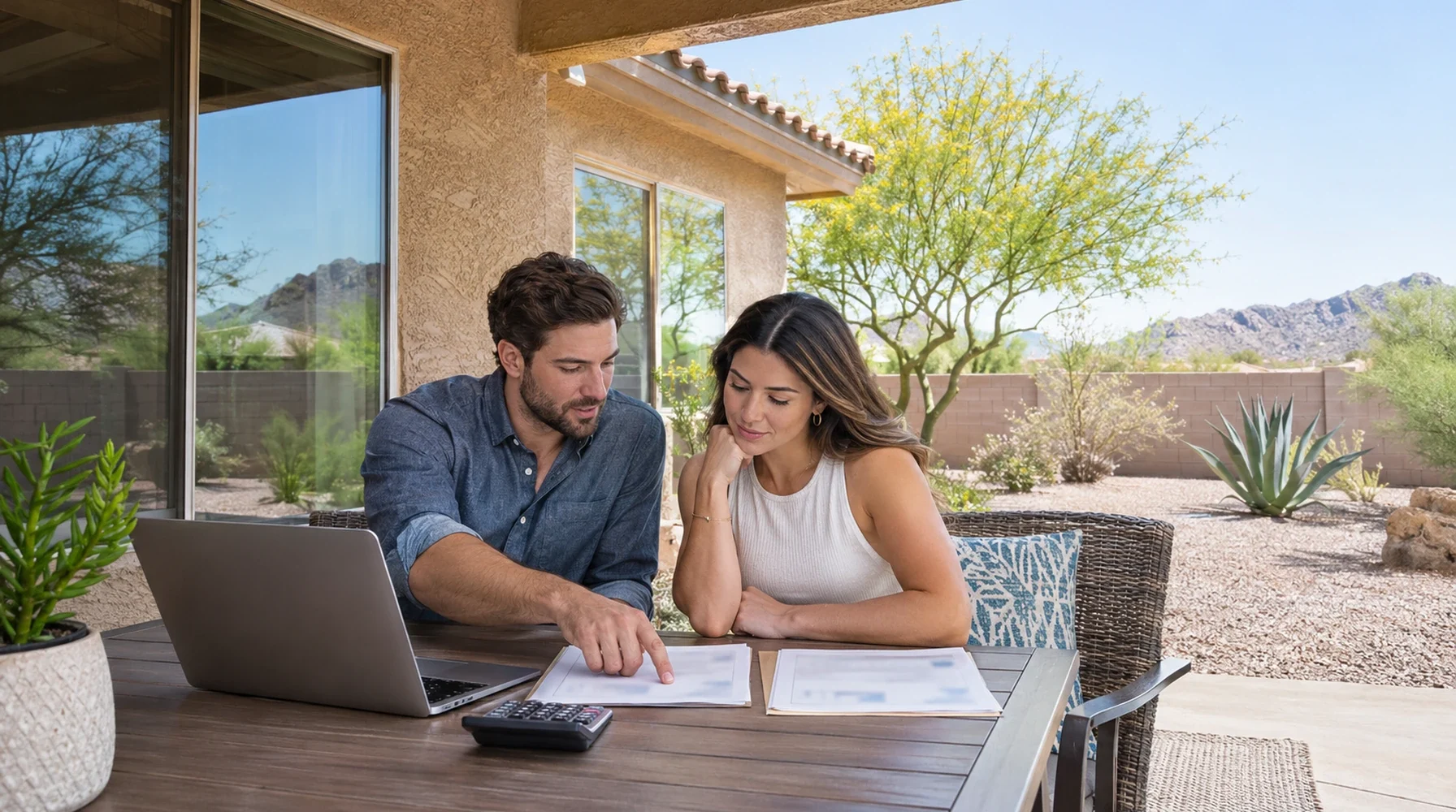
Mortgage rates are over 7%. Does that mean I’m stuck paying 7% or more to buy a home in Surprise, AZ?
Not necessarily. The 7.11% you’re seeing is a national weekly average, and your own rate depends on your credit, your down payment, your loan type and how the purchase is put together. A seller or builder can pay to buy your rate down, you can pay discount points for a lower rate, and if you find a home with an assumable FHA or VA loan, you may be able to take over the seller’s rate.
Here’s how each option works, what the loan rules allow a seller to contribute, and why the Surprise market gives you room to ask.
What Are Mortgage Rates Right Now?
The 30-year fixed rate averaged 7.11% in Freddie Mac’s weekly survey for November 12, 2026, down from 7.18% the week before. A year earlier it was 6.24%.
That number is an average across thousands of loan applications nationwide. The rate a lender quotes you can land above or below it depending on your credit score, your debt compared with your income, how much you put down and which loan you use. Ask your lender to quote a conventional loan and an FHA loan side by side, plus a VA loan if you’re eligible, so you’re comparing real numbers for your situation instead of a headline.
If you’re still deciding whether to buy now or hold off, I walk through that choice in waiting for rates to drop versus buying now.
Do Surprise Buyers Have Room to Negotiate Right Now?
Yes. The Cromford Market Index for Surprise was 53.9 on November 16, 2026. Greater Phoenix as a whole read 62.9 on November 17, which the Cromford Report calls a buyer’s market, and Surprise sits lower still. On that scale, a lower number means more supply compared with demand.
That gives you more room to ask a seller to help with your rate or your closing costs. It doesn’t guarantee a yes, because every negotiation comes down to the home, its competition and the seller’s own plans. The housing market also slows for the holidays until the first week of January, so a home that has been listed through the fall is worth a closer look. For more on reading your leverage, see how much negotiating room you have on a West Valley home.
How Does a 2-1 Buydown Lower Your Payment?
A 2-1 buydown is a temporary rate reduction paid for up front by the seller, the builder or you. Your rate is 2 points lower in the first year, 1 point lower in the second year, and then it settles at the full rate on your loan from the third year on.
Here’s an example on a $400,000 loan with a 7.00% rate. The payments below are principal and interest only, before property taxes, insurance and any HOA dues.
| Year | Rate you pay | Monthly principal and interest | Savings vs. 7.00% |
|---|---|---|---|
| Year 1 | 5.00% | $2,147 | $514 a month |
| Year 2 | 6.00% | $2,398 | $263 a month |
| Year 3 on | 7.00% | $2,661 | None |
The money that pays for those two years of savings is set aside at closing. In this example it comes to about $9,300, which is the difference in payments added up over the 24 months. Your lender calculates the exact amount for your loan.
A temporary buydown lowers your first two years, not the life of the loan. Plan your budget around the full payment in year three. If rates fall later, refinancing may be an option, but no one can promise that, so the full payment needs to work for you on its own.
On new construction, ask the builder what financing incentives come with the home and whether they require the builder’s lender, then compare that offer with what the same money would do as a price reduction. I compare those trade-offs in resale versus a new build with builder incentives.
How Much Can a Seller Pay Toward Your Rate?
Each loan type caps how much a seller, builder or other interested party can contribute toward your costs, and a seller-paid buydown counts toward that cap. The limits below are for a home you’ll live in.
| Loan type | Most a seller or builder can contribute | Source |
|---|---|---|
| Conventional (Fannie Mae), less than 10% down | 3% of the price or appraised value, whichever is less | Fannie Mae Selling Guide |
| Conventional, 10% to just under 25% down | 6% | Fannie Mae Selling Guide |
| Conventional, 25% or more down | 9% | Fannie Mae Selling Guide |
| FHA | 6% of the sale price, including rate buydowns | HUD Handbook 4000.1 |
| VA | No cap on normal closing costs; extras such as paying your funding fee are capped at 4% of the VA reasonable value | VA.gov |
These are ceilings, not amounts you’re owed. What a seller actually contributes is negotiated, and it can go toward your closing costs, a buydown or both, as long as the total stays inside your loan’s limit. My guide to closing costs to negotiate as a West Valley buyer covers how that request fits into an offer.
– Ashley Palomo
Can You Take Over a Seller’s Lower Rate With an Assumable Loan?
Sometimes. FHA and VA loans can be assumed by a buyer who qualifies with the seller’s loan servicer, which means you take over the seller’s existing loan, including its rate, balance and remaining term. Most conventional loans can’t be assumed.
I helped a client get a 3% rate through an assumable mortgage. It took a willing seller and agents who knew the process, and an assumption like that can close in about 45 days.
A few things to know before you go looking:
- You cover the seller’s equity. You take over the loan balance, not the sale price, so the difference between the two has to come from your cash or other financing.
- You don’t have to be a veteran to assume a VA loan. You do have to qualify with the servicer, and the VA funding fee for an assumption is 0.5% of the loan.
- The seller has to agree. An assumption takes more steps than a standard sale, and a veteran seller’s VA benefit can stay tied to the loan if the buyer isn’t a veteran who substitutes their own.
Should You Buy Discount Points or Shop Lenders?
Both can lower your rate for the life of the loan. A discount point costs 1% of your loan amount, paid at closing, in exchange for a lower rate. How much each point lowers the rate depends on the lender, the loan and the market that day, according to the Consumer Financial Protection Bureau.
To see whether points pay off, divide what the points cost by how much they lower your monthly payment. That tells you how many months you’d need to keep the loan to break even. If you expect to sell or refinance before then, points usually aren’t worth it.
Rates and fees also differ from one lender to the next for the same buyer. Get a Loan Estimate from at least three lenders on the same day, for the same loan type and the same points, and compare the rate and the fees in Section A together.
Frequently Asked Questions About Lowering Your Mortgage Rate in Surprise, AZ
Can I get a mortgage rate below 7% in Surprise, AZ?
It’s possible. The national average was 7.11% on November 12, 2026, but your rate depends on your credit, down payment and loan type, and a seller-paid buydown, discount points or an assumable FHA or VA loan can bring it lower.
What is a 2-1 buydown?
A 2-1 buydown lowers your rate by 2 points in the first year and 1 point in the second year, then returns to the full rate in year three. The cost is paid up front at closing by the seller, the builder or you.
How much can a seller contribute toward my rate?
It depends on your loan. Conventional loans allow 3% to 9% depending on your down payment, FHA allows up to 6% of the sale price, and VA caps extras such as a paid funding fee at 4% of the home’s reasonable value.
Who can assume an FHA or VA loan?
A buyer who qualifies with the seller’s loan servicer. You don’t need to be a veteran to assume a VA loan, but you pay a 0.5% VA funding fee and cover the difference between the price and the loan balance.
How long does an assumable mortgage take to close?
Longer than a standard purchase. With a willing seller and agents who know the process, an assumption can close in about 45 days.
Are discount points worth it?
They’re worth it if you keep the loan past the break-even point. Divide the cost of the points by the monthly savings to find how many months that takes.
The Bottom Line
A 7% average doesn’t have to be your rate. In a Surprise market that favors buyers, a seller-paid buydown, discount points or an assumable FHA or VA loan can lower what you pay, as long as you plan around the full payment and stay inside your loan’s limits.
Helping you weigh a buydown, points or an assumable loan against your budget, so you know which one fits before you write an offer, is how I help buyers make their move with clarity and confidence.
If you’re shopping in Surprise and want to see what these options could do for your payment, I’d love to help. You can reach me, Kasandra Chavez, with the Chavez Dream Home Team at 928-910-7401, or grab a time on my calendar.