


Newcomer’s Guide to Peoria, AZ: Where to Eat, Do & Settle In
How do I get settled in Peoria, AZ: where to eat, what to do, and what to handle first?
Start by finding your home-base districts: P83 and the Park at P83 for dining and nights out, historic Old Town for coffee and character, and the Lake Pleasant Parkway “Four Corners” for north-end local spots. For things to do, Lake Pleasant and 40-plus miles of trails anchor the outdoors, with spring training, Park West, and a real arts scene filling the calendar. To get settled, line up your City of Peoria water and electric service, plan for a car-dependent metro, handle your Arizona license and registration, and choose the part of town that fits your daily routine.
Moving to a new city is two jobs at once: the logistics of getting set up, and the slower work of figuring out where you belong. After helping a lot of out-of-state families land in the West Valley, I’ve found the people who settle in fastest are the ones who treat both jobs on purpose: they sort the practical stuff early and start building their personal map of favorite spots right away. Here’s the version of that map I’d hand a friend moving to Peoria.
Where to Eat: Your Peoria Dining Map
Peoria’s food scene has grown up, and the easiest way to learn it is by district. The P83 Entertainment District near the Sports Complex is the social heart: the Park at P83 brought in North Italia, Postino, and Blanco Cocina + Cantina around a small event park, and the surrounding blocks add local Mexican favorites like Revolu and steakhouse date-night options. Down in historic Old Town, you’ll find coffee at spots like Driftwood and a quieter, heritage feel.
Head north and the dining shifts again. Along Lake Pleasant Parkway, the area locals call “Four Corners” has become a cluster of well-loved local spots: think scratch-kitchen American at Haymaker, authentic Neapolitan pizza at Fabio On Fire, and craft beer at Peoria Artisan Brewery. Over at Park West, Hash Kitchen and The Sicilian Butcher anchor a walkable shopping-and-dining center with a movie theater. What I tell newcomers is to pick one district to “adopt” first rather than trying to eat everywhere at once; your favorites tend to cluster near home. You can keep tabs on current openings and events through Visit Peoria.
What to Do: Getting Outside and Filling the Calendar
The outdoors is the easiest entry point to Peoria life. Lake Pleasant Regional Park sits on the city’s northern edge with boating, kayaking, paddleboarding, fishing, and shoreline trails, a genuine open-water escape that most Valley cities can’t match. Closer in, Peoria maintains 40-plus miles of multi-use trails (including the Sunrise Mountain Preserve) and big community parks like Paloma, with lighted fields, pickleball, and playgrounds.
When you want to be entertained rather than active, the calendar fills out fast. Spring training brings the San Diego Padres and Seattle Mariners to the Peoria Sports Complex every February and March, the Arizona Broadway Theatre and Peoria Center for the Performing Arts cover the arts, and neighboring Glendale’s Westgate district and State Farm Stadium put NFL games and major concerts a short drive away. At this stage, I help clients match a neighborhood to the life they actually want: lake weekends and trail runs point one direction, walkable dining and events point another.
– Jackson S, Phoenix, AZ
Getting Settled: The Practical First Steps
Getting settled in Peoria, AZ comes down to a few practical steps: utilities, transportation, your Arizona license and registration, and timing your move around the heat. Water service in most of the city runs through the City of Peoria, so that’s an early call, and your electricity will come from the regional utility serving your address, worth confirming before move-in so the lights are on day one. You can start with city services and utility setup through the City of Peoria. Plan your life around driving: the Valley is car-dependent, and while Valley Metro runs some bus service, most newcomers rely on their own vehicle for daily errands. It’s also worth lining up trash and recycling pickup, internet service, and a home and auto insurance review early, so nothing lapses in the gap between your old address and your new one. Taking ten minutes to locate your nearest grocery store, pharmacy, and urgent care before move-in saves a surprising amount of stress in week one.
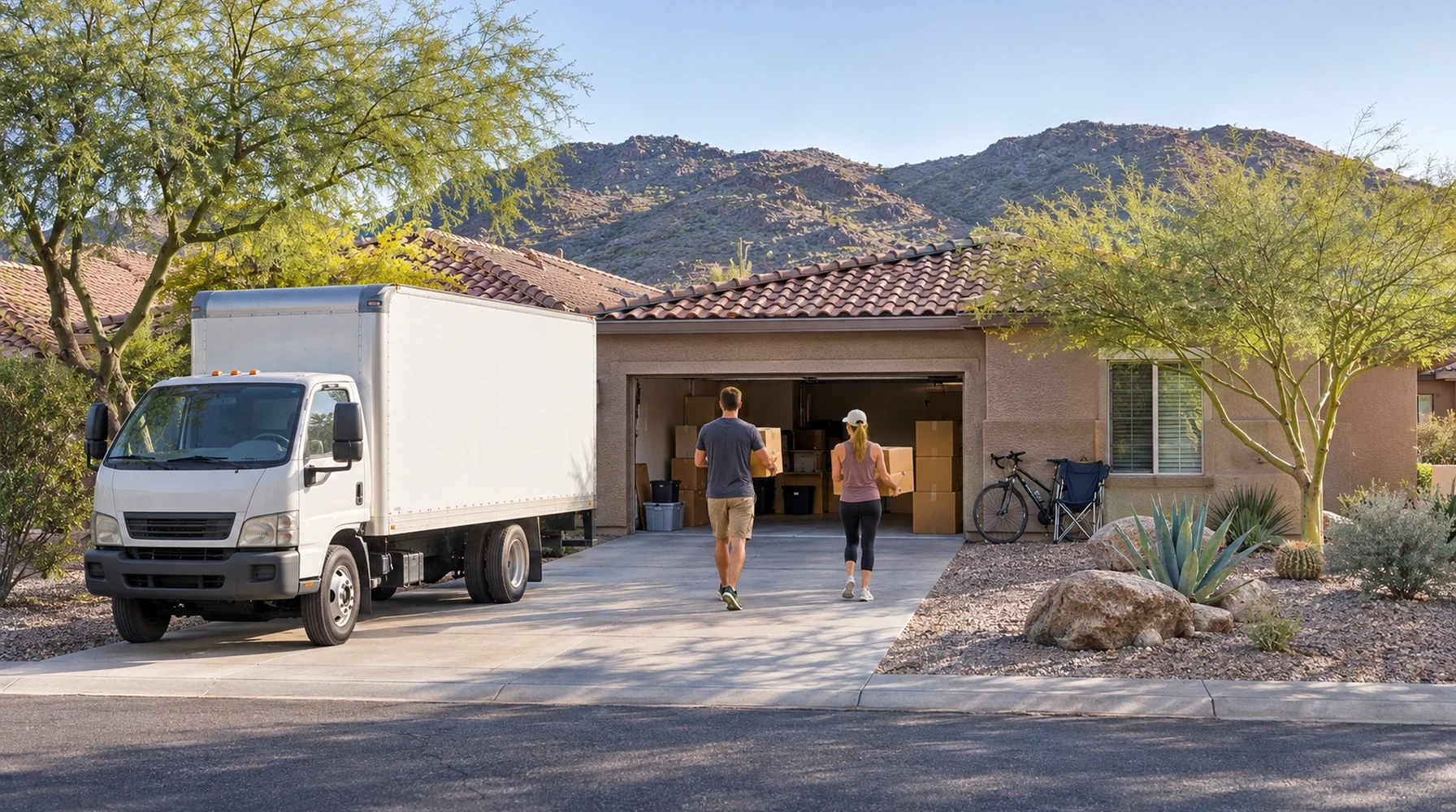
If you’re moving from out of state, you’ll also need to handle your Arizona driver’s license and vehicle registration, which you can take care of through the Arizona MVD. One local tip worth planning around: the seasonal rhythm. Arrive in the mild months if you can, and if you’re moving in summer, schedule the heavy lifting for early morning. Settling in is far smoother when you’re not unloading a truck in the afternoon heat. For relocating buyers timing a purchase around the move, our guide to the Peoria relocation home-buying process from virtual tour to closing lays out the sequence, and our relocation home-prep checklist for inspections, HOAs, and new-build walkthroughs covers what to expect once you’re under contract.
Picking the Right Part of Town for Your Routine
Peoria is long and varied, and where you land changes your daily life more than almost anything else. The established south and central parts of the city sit closer to Old Town, Grand Avenue, and the P83 district, with more mature neighborhoods and generally more accessible pricing. Head north toward Lake Pleasant Parkway and the newer master-planned communities, including the Vistancia area, and you trade a longer reach into central Phoenix for newer homes, mountain views, and the closest access to the lake.
This is usually where I slow buyers down. The “best” part of Peoria is simply the one that matches your routine: your commute, where you’ll shop and eat, how often you’ll get on the water, and how new you want your home to be. Newcomers who anchor on those daily realities tend to be far happier than those who chase a neighborhood name. For a closer look at how the two ends of the city compare, see our guide to which part of Peoria, AZ you should move to. If you’re still deciding when to make the move, our read on whether now is a good time to buy in Peoria and our guide to writing an offer that protects you after inspections are good next steps.
Frequently Asked Questions About Getting Settled in Peoria, AZ
Where are the best places to eat in Peoria, AZ?
Peoria’s dining clusters by district: the P83 Entertainment District and Park at P83, the Lake Pleasant Parkway Four Corners (Haymaker, Fabio On Fire, Peoria Artisan Brewery), Old Town for coffee and heritage spots, and Park West for shopping-center dining.
What is there to do in Peoria for newcomers?
Lake Pleasant for boating and hiking, 40-plus miles of trails and big community parks for the outdoors, spring training at the Peoria Sports Complex, the Arizona Broadway Theatre and Peoria Center for the Performing Arts for the arts, and Glendale’s nearby Westgate for major events.
What do I need to set up when moving to Peoria, AZ?
Line up City of Peoria water service and your electric provider before move-in, plan for a car-dependent metro, and handle your Arizona driver’s license and vehicle registration through the Arizona MVD if you’re coming from out of state.
When is the best time of year to move to Peoria?
The mild months from roughly October to April are the most comfortable for moving. If you move in summer, schedule the heavy lifting for early morning to avoid the afternoon heat.
Which part of Peoria is best for newcomers?
It depends on your routine. Established south and central Peoria sit closer to Old Town and central Phoenix with more accessible pricing, while north Peoria offers newer homes, mountain views, and the closest access to Lake Pleasant.
Which teams hold spring training in Peoria, AZ?
The San Diego Padres and Seattle Mariners hold spring training at the Peoria Sports Complex every February and March, near the P83 Entertainment District and its restaurants.
Do I need a car to live in Peoria, AZ?
For most newcomers, yes. The Valley is car-dependent, and while Valley Metro runs some bus service, most people rely on their own vehicle for daily errands, so plan your routine around driving.
What else should I set up before move-in day in Peoria?
Line up trash and recycling pickup, internet service, and a home and auto insurance review early so nothing lapses between addresses, and locate your nearest grocery store, pharmacy, and urgent care before you arrive.
The Bottom Line
Settling into Peoria comes down to a short list: adopt a dining district, get outside early and often, knock out the practical setup (water, electric, license, registration), and choose the part of town that fits how you actually live. Do those four things and the city stops feeling like a map and starts feeling like home surprisingly fast. The newcomers I’ve worked with who follow that pattern settle in within weeks, not months. And if part of getting settled is buying the right home in the right pocket of the city, let’s chat about which part of Peoria fits you best.
Knowing where you’ll eat, where you’ll spend your weekends, and which part of town fits your routine before the boxes are unpacked is how you make your move with clarity and confidence.
If you want to talk through which part of Peoria fits your routine and your home search, let’s chat. You can reach me, Kasandra Chavez with the Chavez Dream Home Team, at 928-910-7401, or grab a time on my calendar.