


Budgeting for Summer Electric Bills in Goodyear, AZ
How much extra should I budget for summer electric bills if I buy a 2,500 sq ft house in Goodyear?
There’s no single number that fits every household, but plan for summer electric bills to run meaningfully higher than your mild-season bills, often two to three times as much, because air conditioning drives most of the cost. As of July 2026, Goodyear’s year-round residential average is about $262 a month (per EnergySage), and a 2,500-square-foot home in peak summer sits well above that. Your actual bill depends heavily on the home’s efficiency and how you live in it.
This is one of the most common questions I get, and I always wish I could hand over one clean number. The real answer is that I can’t, and neither can anyone else, because the same house can produce very different summer bills depending on who lives in it and how. Two identical floor plans on the same street can be hundreds of dollars apart in July. So instead of a made-up figure, here is the framework I use with buyers: a grounded baseline, the factors that actually move your bill, and how to read a seller’s utility history without being misled by it.
Here’s a snapshot of what electricity looks like in Goodyear as a starting point. A kWh (kilowatt-hour) is the unit your utility bills you for, so monthly usage times the rate is roughly what you pay before fees.
| Goodyear electricity snapshot | Figure |
|---|---|
| Average monthly electric bill (year-round) | About $262 / month |
| Average electricity rate | About 15¢ / kWh |
| Average monthly usage | About 1,735 kWh / month |
As of July 2026. Source: EnergySage (Goodyear local electricity data). These are year-round averages across all home sizes; summer months for a larger home run well above them.
Why There’s No One-Size Budget Number
A summer electric budget for a Goodyear home can’t be quoted in advance because everybody uses their home completely differently. Some households are gone at work all day and barely touch the thermostat until evening; others are home all day, or work nights and run the AC hard when it’s hottest. What time of day you run your major appliances (laundry, dishwasher, oven, pool pump) matters just as much as how big the home is.
On the time-of-use plans common in this area, running everything during the late-afternoon peak costs far more than shifting it to mornings or nights. Time-of-use simply means the price of power changes by the hour, with the highest price in a set peak window. So before we ever talk dollars, the real question is: how will you actually live in this house? That single answer shapes the budget more than the square footage does, which is why two neighbors in identical homes can open very different bills in the same month.
What Actually Drives Your Summer Bill
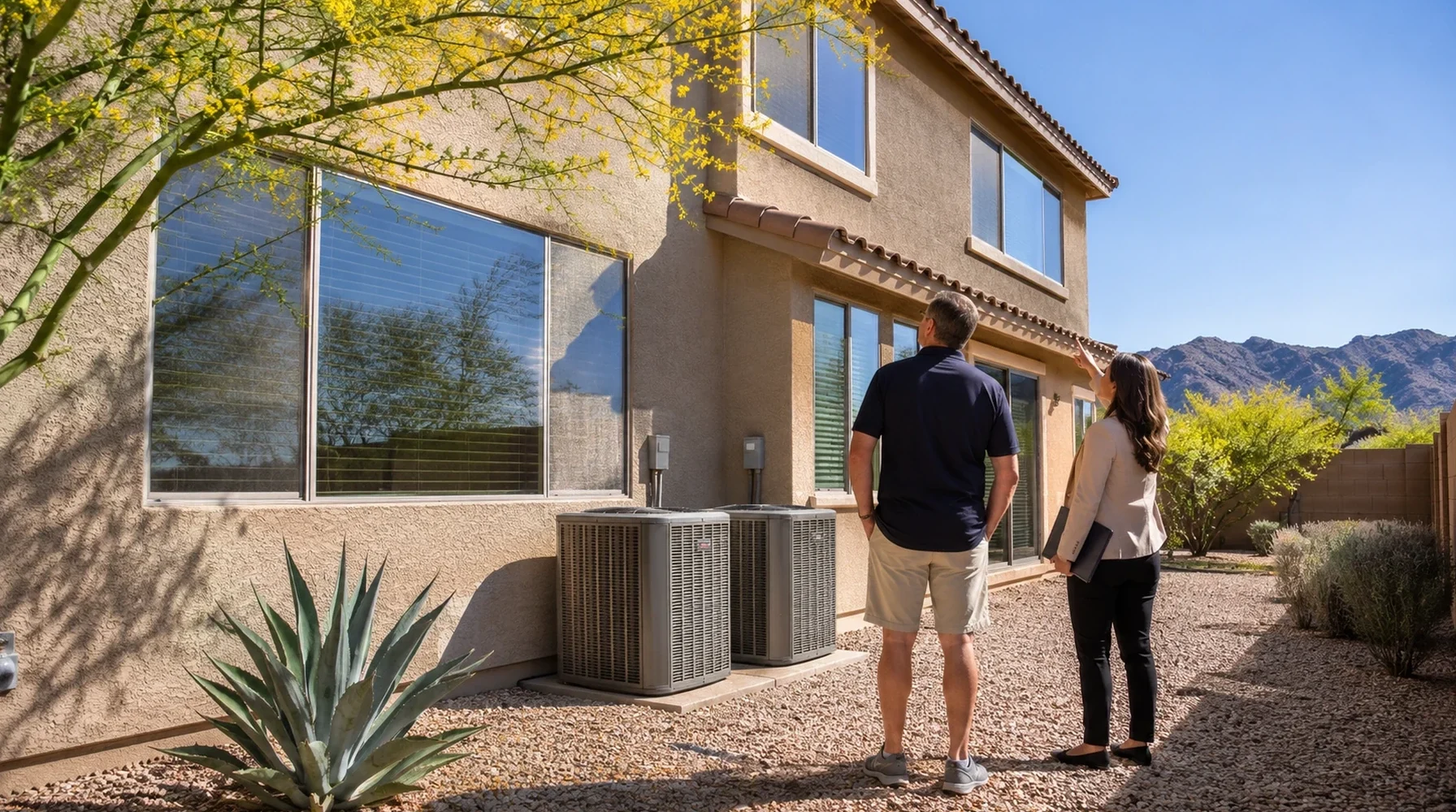
Once you know your own habits, the Goodyear home itself is the other half of the summer bill. When I walk a 2,500-square-foot Goodyear home with a buyer, these are the features I’m looking at, because each of them moves what you pay in July and August:
- Age of the windows: Older single-pane or tired windows leak cooled air, while newer or solid windows hold it.
- Attic insulation: How much insulation there is, and how good it is, directly affects how hard the AC has to work against 150-degree attic temperatures.
- Home orientation: Which direction the main glass faces (north and south versus east and west) changes how much direct sun the home absorbs across the day.
- Single-story or two-story: A two-story home has more surface area taking a direct hit from the sun, which usually means a bigger cooling load.
- Solar or no solar: Whether the home has solar panels changes how much of its summer power comes from the utility at all.
- Wall construction: Exterior walls framed with 2×6 lumber leave room for thicker insulation and hold conditioned air better than 2×4 walls.
The age of the home tends to travel with several of these at once. None of these features show up in a listing photo, but together they explain why two same-size Goodyear homes can be hundreds of dollars apart in August. What it means for you: two homes at the same price can carry very different monthly costs, so the home’s bones belong in your budget, not just its price.
APS, SRP, and When You Use Power
Goodyear is served primarily by APS, with some pockets on SRP, and the provider is determined by the specific address, not the city, so confirm it for any home you’re serious about. This matters because the two utilities reward different behavior.
Both use time-of-use pricing that charges more during a late-afternoon/early-evening peak window, and SRP plans commonly add a demand charge based on your single highest hour of on-peak usage. A demand charge is a fee set by your biggest burst of use, not your total use, so running the AC, oven and dryer at the same time on a peak afternoon can raise the whole month’s bill. Practically, that means pre-cooling the home before the peak window and easing off during it, and running big appliances in the morning or late at night, can meaningfully lower a summer bill without you being any less comfortable.
A programmable or smart thermostat set to cool the home down before the peak window and coast through it does a lot of this work automatically, and simply shifting laundry and dishwasher loads to the morning takes real money off the demand-charge side of an SRP plan. None of these steps change the home you buy; they change how the same home performs in July. That’s why, when I help a buyer budget, I look at both levers together, the home’s efficiency and the way you’ll run it, rather than assuming the square footage tells the whole story.
You can compare Arizona’s rate context through the U.S. Energy Information Administration’s electricity data and the Goodyear local electricity breakdown I sourced above. If you’re relocating, my guide to Arizona utility, vehicle, and license setup walks through getting service started, and the truth about Arizona summers sets realistic expectations for the season.
– Gloria B, Buckeye, AZ
About Those Seller Utility Bills
A seller’s past utility bills on a Goodyear home tell you more about the seller’s habits than about your future bill. Buyers often ask me to request the seller’s past utility bills, and it’s a reasonable instinct, but I always make sure my clients understand what those bills actually tell us.
A seller’s utility history reflects the energy use of the family currently living there: their thermostat habits, their schedule, how many people are home, whether they run the pool pump at 4 p.m. It tells you very little about what your bills will look like, because you’ll live in the home differently. That said, it’s not useless information. If we’re looking at an energy-efficient home with newer or solid windows and good attic insulation, then at least we know we’re starting from the best possible position: the home isn’t fighting you.
That’s the lens I want buyers to use: don’t budget off someone else’s habits; budget off the home’s bones and your own routine. For the bigger affordability picture, my breakdown of whether you can realistically afford Greater Phoenix on your income puts utilities in context with the rest of your monthly costs, and moving to Phoenix from California compares housing costs, property taxes and utilities side by side.
Frequently Asked Questions About Summer Electric Bills in Goodyear
Who provides electricity in Goodyear, APS or SRP?
Goodyear is served primarily by APS, with some areas on SRP. Your provider is set by the specific address, not the city, so confirm it for any home you’re seriously considering.
Why are summer electric bills so high in Goodyear?
Extreme desert heat forces air conditioning to run heavily for months, and AC is the single largest driver of a summer bill. Peak-hour time-of-use pricing can add cost if major appliances run in the late afternoon.
Should I ask the seller for their past utility bills?
You can, but read them carefully. They reflect the current owner’s habits and schedule, not yours. They’re most useful as a rough signal of the home’s efficiency, not a forecast of your future bills.
Does a two-story home cost more to cool than a single-story?
Often, yes. A two-story home has more surface area exposed to direct sun, which can raise the cooling load. Insulation, windows, orientation, and AC efficiency still matter as much or more.
Will solar lower my Goodyear summer electric bill?
It can, but savings depend on the system, your usage, and your utility’s net-billing rules. Solar changes the math on a home, so it’s worth factoring in when you compare properties.
What is the average electric bill in Goodyear?
As of July 2026, EnergySage put Goodyear’s year-round average at about $262 a month, at about 15 cents per kWh and about 1,735 kWh of use. Summer bills on a larger home run well above that average.
What is a demand charge on an SRP plan?
A demand charge is a fee based on your single highest hour of on-peak usage rather than your total usage, so running several big appliances at once during the peak window can raise the whole month’s bill.
How can I lower my summer electric bill without being less comfortable?
Pre-cool the home before the peak window and ease off during it, use a programmable or smart thermostat to do that automatically, and run laundry and the dishwasher in the morning or late at night.
The Bottom Line
If you want a number to plug into a spreadsheet, here’s the realistic version: budget for summer to be your expensive season, with electric bills running well above your mild-month baseline, but don’t anchor to someone else’s figure. The amount you’ll actually pay comes down to how you live in the home and the home’s own efficiency: its windows, insulation, orientation, story count, construction, and whether it has solar, layered on top of your habits and which utility serves the address.
When we tour homes together, I’ll point out the features that quietly raise or lower that bill, so you’re budgeting off the house’s real bones and your own routine, not a guess. That’s how you avoid a July surprise and buy with clarity and confidence.
If you want to talk through how summer electric costs fit into your budget for a Goodyear home, let’s chat. You can reach me, Kasandra Chavez with the Chavez Dream Home Team, at 928-910-7401, or grab a time on my calendar.