

Positioning an Older Deer Valley Home for Relocating Buyers
How do I position my older Deer Valley home for buyers relocating to work in the semiconductor corridor?
Position it for the way relocation buyers actually shop: they shortlist by photo and video from another state, they run on a compressed timeline set by a start date, and they cross-shop your resale against warrantied new construction up the I-17 corridor. That means presentation quality, a clean inspection story, and flexible possession terms do more for you than any single renovation.
A quick note on the name, because “Deer Valley” means different things in north Phoenix. It can mean Deer Valley Road, the I-17 tech corridor that connects to Deer Valley Airpark, or the established north Phoenix area around I-17 and Loop 101. This post uses that last meaning: the older resale neighborhoods around I-17 and Loop 101, south of TSMC’s campus at Loop 303 and I-17 (43rd Avenue and Dove Valley Road).
It helps to separate what can and cannot be known here, because there is a lot of loose talk in north Phoenix right now. No one can tell you who is buying homes in Deer Valley by employer. The MLS does not record a buyer’s occupation or company, and anyone claiming otherwise is guessing. What is documented is that a large employment build-out is underway along the corridor: according to Arizona’s Family, TSMC added $100 billion to its Arizona plans in July 2026, bringing its planned spending in the Valley to $265 billion, with its second fab on track for 2027 and its third for 2030. What is also clear is that relocation buyers behave differently from local move-up buyers. That behavioral difference is what you can actually position for, and it is enough.
What Relocating Buyers Need That Local Buyers Do Not
A household relocating for a corridor job is usually working against a start date, shopping from out of state, and making decisions with less in-person time than a local buyer would ever accept. Those three constraints drive everything else about how you should prepare an older Deer Valley home.
A local buyer can drive by three times, sit in the neighborhood on a Tuesday evening, and come back for a second showing. A relocating buyer often gets one trip, sometimes none before an offer. So the shortlist gets made on a screen, from photos, video, and floor plans, and a home that photographs poorly never makes the trip at all. Meanwhile the start date sets a hard closing window, which makes certainty enormously valuable. Here in Arizona, closing usually takes about 30 days through a title company. A seller who can close in thirty days and offer a short rent-back (you stay in the home for an agreed period after closing) or a flexible possession date is solving a real problem for that household, and problems solved are what get paid for.
– La Maja, Avondale, AZ
Why Your Older Deer Valley Home Competes With New Construction
Your real competition is often not the house down the street. It is a warrantied new build farther up the I-17 corridor, and understanding that changes what you prepare and what you say.
A relocating buyer weighing your older Deer Valley home against new construction is weighing known risk against unknown risk. The new build has new systems, a builder warranty, and nothing to fix. Your home has a mature neighborhood, established landscaping, a completed street, and no construction wait, genuine advantages that a builder cannot manufacture. But a worn, dated presentation hands that comparison straight to the builder, because it converts your home’s age from a feature into a liability in the buyer’s mind.
This is usually where I slow sellers down. The instinct is to conclude you need a remodel. Usually you do not. I work through that specific trade-off in whether to remodel an older north Phoenix home before selling, and the short version is that targeted preparation returns money where full renovations generally do not.
How to Market an Older Deer Valley Home to Out-of-State Buyers
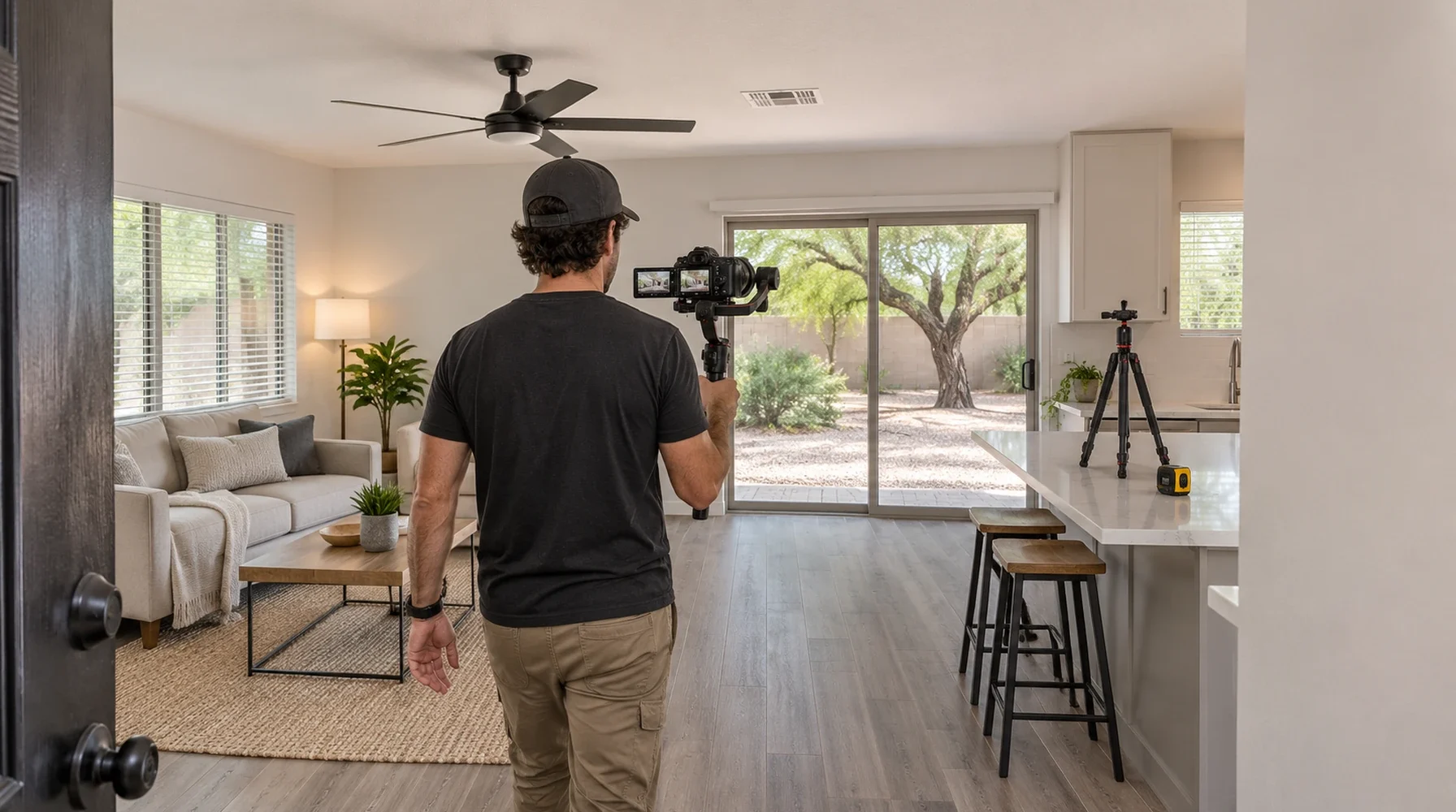
Market an older Deer Valley home so the entire decision can be made remotely, because for many relocating buyers it will be. That means video and floor plans, not just stills, and an agent who will act as your buyer’s eyes on the ground.
Concretely: professional photography is table stakes, but a walkthrough video that shows how rooms connect is what prevents a floor plan from being misread on a phone screen. A dimensioned floor plan answers the furniture question a buyer three states away cannot answer any other way. Detailed neighborhood context in the listing narrative (what the street is like, what surrounds it, what is being built nearby) does work that a photo cannot. The Deer Valley industrial and logistics build-out is something your buyer will discover eventually; addressing it in your own materials is far better than letting them find it late and wonder what else was omitted.
My full approach to this is in marketing a home to out-of-state relocating buyers, and it applies to the north Phoenix corridor without modification.
What to Fix Before Listing an Older North Phoenix Home
Fix the mechanical items that Arizona summers punish and the deferred maintenance a buyer can see, and get a pre-listing inspection so you find them before your buyer’s inspector does.
On an older north Phoenix home, the predictable list is the HVAC system, the water heater, pool equipment if you have one, and tile-roof underlayment, all of which age hard here and all of which will surface during the buyer’s ten-day inspection period under the AAR Residential Resale Purchase Contract. Discovering them mid-escrow puts the negotiation on the buyer’s terms. Finding them first lets you repair, disclose with a credit strategy, or price accordingly, and it keeps your SPDS disclosure clean and confident. The SPDS, or Seller’s Property Disclosure Statement, is the Arizona form where you tell buyers what you know about the home’s condition.
That certainty matters more than usual with a relocating buyer, because a buyer on a start-date deadline has the least tolerance in the market for a deal that wobbles at day eleven. For the spending side of this, what to fix versus leave as-is before selling breaks down where the money actually returns.
Frequently Asked Questions About Selling an Older Deer Valley Home
Can I find out whether semiconductor workers are buying in my neighborhood?
Not reliably. The MLS does not record a buyer’s employer or occupation, so nobody can tell you that with confidence. What you can do is position for how relocation buyers shop, which is observable and actionable.
Do relocating buyers pay more for move-in-ready homes?
They tend to favor move-in-ready, because a household on a start-date deadline has little time for projects and is often comparing your home to warrantied new construction up the corridor.
Should I remodel my older Deer Valley home before listing?
Usually not. Full pre-listing remodels rarely return their cost. Targeted preparation such as paint, flooring, lighting, deep cleaning, curb appeal, and deferred maintenance returns far more reliably.
What marketing matters most for out-of-state buyers?
Walkthrough video and a dimensioned floor plan, on top of professional photography. Many relocating buyers build their shortlist entirely on a screen before they ever book a trip.
Is a pre-listing inspection worth it in north Phoenix?
It is especially valuable on an older home. It surfaces the items a buyer’s ten-day inspection would find anyway and lets you decide how to handle them from a position of control rather than under pressure.
What does Deer Valley mean in north Phoenix?
It depends on context. It can mean Deer Valley Road, the I-17 tech corridor that connects to Deer Valley Airpark, or the north Phoenix area around I-17 and Loop 101. This post uses the area around I-17 and Loop 101.
Should I offer a rent-back to a relocating buyer?
It can help. A short rent-back or a flexible possession date lets you line up closing with the buyer’s start date and your own move, and that certainty has real value to a household on a deadline.
How long is the inspection period when selling a home in Arizona?
Under the AAR Residential Resale Purchase Contract, the buyer’s inspection period is 10 days. A pre-listing inspection lets you find and handle issues before that clock starts.
The Bottom Line
You cannot market to an employer, and you should not try. What you can do is recognize that a meaningful share of your buyer pool is arriving from out of state, on a deadline, shopping through a screen, and comparing your older Deer Valley home to something brand new. Every one of those facts points the same direction: present the home so it survives a phone screen, handle the inspection story before it handles you, and make your closing terms the easiest part of their move. Sellers who do that do not need a renovation to compete. They need a plan, and the plan is knowable well before the sign goes in the yard.
Building that plan around today’s market and your unique situation is how I help sellers make their move with clarity and confidence: walking the home with you, deciding what to fix and what to leave, and shaping the marketing around how this buyer pool shops.
If you want to talk through how relocating buyers from the semiconductor corridor fit your specific Deer Valley home, let’s chat. You can reach me, Kasandra Chavez with the Chavez Dream Home Team, at 928-910-7401, or grab a time on my calendar.